

Key findings
-
THCP (tetrahydrocannabiphorol) is a rare, naturally occurring cannabinoid that was only discovered in 2019 by Italian researchers and is only present in trace amounts in the cannabis plant.
-
Laboratory data show an approximately 33 times stronger binding to CB1 receptors compared to THC – however, this number refers to receptor affinity, not to the subjective experience in humans, and is not scientifically proven to reflect the actual effect.
-
Since June 27, 2024, the manufacture, sale and trade of THCP and similar substances have been prohibited in Germany. novel cannabinoids Substances such as HHC, Delta 8 THC and Delta 10 THC are prohibited, while possession and consumption are currently not punishable.
-
There are hardly any human studies on effects, side effects and long-term consequences – the high potency poses increased risks if dosed by an inexperienced person.
-
Despite the risks, THCP could be an interesting candidate for future medical research, as it might be able to achieve therapeutic effects at lower doses.
What exactly is THCP?
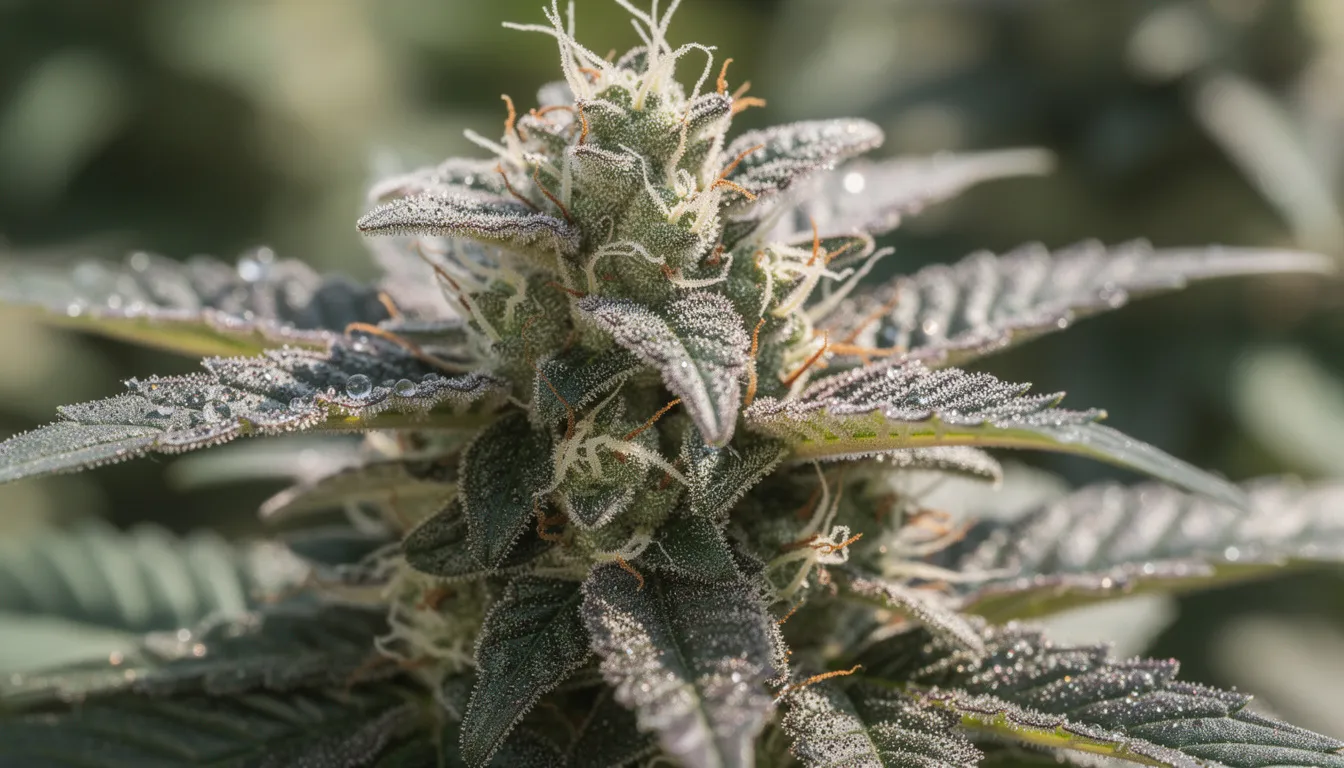
THCP, scientifically known as Δ9-tetrahydrocannabiphorol, is a rare, naturally occurring phytocannabinoid from Cannabis sativa L. Unlike the more well-known cannabinoids such as THC or CBD, this substance remained undiscovered for a long time – and for good reason.
THCP was only discovered in 2019 when an Italian research team led by Citti et al. isolated this compound in the medical cannabis strain FM2 and described it in the renowned journal "Scientific Reports." This finding was a milestone in cannabis research and expanded our understanding of chemical complexity of the plant significant.
Interestingly, the cannabis plant produces over 150 known cannabinoids. These include THC and CBD, as well as CBG, CBN, THCV – and THCP in trace amounts. Structurally, THCP is closely related to Δ9-THC, but differs by a longer alkyl side chain. This seemingly minor difference explains its exceptional potency.
The reason THCP remained undiscovered for so long is that it occurs in the plant only in minute quantities – in the microgram range per gram of flower. Only modern analytical methods such as advanced chromatography made its detection possible.
Significance and chemical properties of THCP
The abbreviation THCP stands for tetrahydrocannabiphorol. In scientific literature, you will also find the names Δ9-THCP or THC-heptyl. These names already point to the key chemical characteristic of this molecule.
Chemical identity at a glance
|
Characteristic |
Details |
|---|---|
|
Full name |
Δ9-Tetrahydrocannabiphorol |
|
Sum formula |
C₂₃H₃₄O₂ |
|
CAS number |
54763-99-4 |
|
classification |
Homolog of Δ9-THC |
|
Side chain |
Heptyl (7 carbon atoms) |
The crucial structural difference to classic THC lies in the carbon chain: While THC has a pentyl side chain with 5 carbon atoms, THCP has a heptyl side chain with 7 carbon atoms.
This lengthening may seem minimal, but it has far-reaching consequences. Even small changes in structure can dramatically alter the binding strength to cannabinoid receptors. The longer chain increases fat solubility and improves the molecule's fit within the receptor's binding pocket.
Interestingly, this structure brings THCP close to highly potent synthetic cannabinoids – without THCP itself being a classic “fully synthetic” legal high. It is a naturally occurring product of the cannabis plant.
Natural occurrence and production of THCP
THCP was first detected in the medical strain FM2. The original study documented a concentration of approximately 29 micrograms of THCP per gram of plant material – a negligible amount compared to THC, which can reach 25-30 percent in potent cannabis strains.
Natural levels in cannabis strains
The natural THCP levels are extremely low in most varieties:
-
Typical concentration: below 0.1 percent
-
Only a few chemoprofiles have been systematically investigated for THCP.
-
No natural varieties with high THCP content are known.
-
Sativa varieties may show slightly elevated trace levels.
Semi-synthetic production in the laboratory
Industrial products with a significant THCP content almost never originate from direct plant extraction. Instead, they are produced through the semi-synthetic conversion of other cannabinoids – primarily CBD or THC.
This process is similar to the production of Delta 8 THC and Delta 10 THC, as well as of HHC Vapes :
-
Raw material: Hemp CBD (legally available)
-
Chemical reactions with acids and solvents
-
Isomerization and chain elongation
-
Purification of the final product
With disreputable manufacturers, there is a significant risk of contamination from residual solvents or byproducts. Standard laboratory tests for pharmacy products often fail to detect THCP at all, or only through specialized analyses.

How does THCP work in the body?
To understand the effects of THCP, a brief look at the endocannabinoid system (ECS) is helpful. This endogenous signaling system consists of two main receptor types:
-
CB1 receptors : Predominantly in the brain and central nervous system – responsible for psychoactive effects
-
CB2 receptors : Primarily found in the immune system and peripheral tissues – involved in inflammatory responses
THCP binds to both receptor types, similar to THC. The crucial difference: In animal models, THCP shows a significantly higher binding affinity.
Research findings
The 2019 study provided remarkable data:
|
parameter |
THC |
THCP |
Relationship |
|---|---|---|---|
|
CB1 binding affinity |
base |
33x higher |
1:33 |
|
CB2 activity |
Moderate |
Significantly increased |
Significant |
In animal studies, typical cannabinoid effects occurred at significantly lower doses than with THC:
-
Analgesia (pain reduction)
-
Hypothermia (lowering of body temperature)
-
Catalepsy (temporary immobility)
Important: This data comes from animal models and in-vitro experiments. It should not be directly extrapolated to human experience.
THCP vs. THC: Structure and receptor binding
The difference between THC and THCP lies in the side chain – C5 versus C7. This extension significantly affects both fat solubility and receptor binding.
For cannabinoids, the following applies: CB1 affinity increases with increasing chain length up to approximately C7-C8, before decreasing again. THCP optimally hits this "sweet spot".
In binding studies, THCP achieves values comparable to those of potent synthetic reference ligands such as CP55940. Higher affinity usually—but not necessarily—means stronger and longer-lasting psychoactive effects.
Is THCP really “33 times stronger” than THC?
This question deserves special attention because the number 33 is used excessively in marketing materials and articles.
Clarification: The number 33 refers exclusively to the binding affinity at the CB1 receptor – not to the subjective high in humans.
The following factors help determine how “strong” a cannabinoid is actually perceived:
-
Pharmacokinetics (distribution in the body, absorption)
-
Metabolism (breakdown, active metabolites)
-
Bioavailability (how much reaches the brain?)
-
Individual tolerance and sensitivity
There are currently no controlled human studies that demonstrate a 33-fold stronger effect. Realistic assessments tend to suggest "significantly more potent, but the exact amount is unknown".
Warning: This advertising-effective figure is often used uncritically in product marketing and can lull consumers into a false sense of security.
Opportunities and potential medical applications
Despite a lack of clinical data, THCP could theoretically possess interesting properties for medicine. Research in this area is still in its early stages, but some hypotheses are emerging.
Potential benefits
-
Improved analgesia : Animal data suggests pain reduction at lower doses compared to THC – potentially relevant for patients requiring high doses of THC.
-
Explanation of differences in effect : THCP could help to understand why different flowers with similar THC content have different effects – and thus enable more precise strain profiles.
-
More consistent potencies : A defined THCP content in medical products could theoretically ensure more predictable therapeutic effects.
-
Lower dosages : In diseases resistant to standard cannabinoids, THCP could be a possible alternative. alternative represent.
As of early 2026: There are no approved drugs that specifically use THCP as an active ingredient. Research into therapeutic applications is still in its very early stages.
Risks, side effects and open questions
The potentially high potency of THCP also means an increased risk of unwanted effects – especially with inexperienced dosing.
Short-term side effects
Based on experience with THC, the following side effects can be derived, which may be stronger or last longer with THCP:
-
Anxiety and panic attacks
-
paranoia
-
Strong sedation
-
Dizziness and disorientation
-
drop in blood pressure
-
Impairment of reaction and coordination
-
Increased heart rate
-
Dry mouth and red eyes
Theoretically more severe risks
Due to the higher receptor activity, more severe side effects are theoretically conceivable:
-
Circulatory problems
-
Psychotic episodes in predisposed individuals
-
Prolonged impairment
-
More intense nausea
Open questions
For many aspects, there is practically no reliable data available:
|
Area |
status |
|---|---|
|
Long-term consequences |
Unknown |
|
Tolerance development |
Not investigated |
|
Risk of addiction |
Unclear |
|
Drug interactions |
Not researched |
|
Risks for teenagers/pregnant women |
No data |
|
Dose-response relationship in humans |
Not established |
Full agonist or partial agonist? What risks does that entail?
This distinction is central to understanding the risk profile:
Partial agonist (e.g., THC):
-
The effect increases up to a certain plateau.
-
After that, hardly any stronger effect (“ceiling effect”)
-
Built-in overdose protection
Full agonist (e.g., some synthetic cannabinoids such as AM2389, CP55940):
-
Can maximally activate the receptor
-
No natural plateau
-
Higher risk of overdose
-
Severe poisoning is possible
Laboratory data suggest that THCP behaves more like a very potent agonist, possibly similar to a full agonist. A final classification is still pending.
Warning: Full agonists in the realm of "legal highs" have been linked to severe poisoning, seizures, psychoses, and even deaths. THCP It should therefore not be downplayed.
Legal status of THCP (as of Germany and EU)
Since then June 27, 2024 In Germany, the manufacture, distribution, and trade of certain "novel psychoactive cannabinoids" are prohibited. These substances include:
-
THCP
-
HHC (Hexahydrocannabinol)
-
Delta 8 THC
-
Delta 10 THC
-
THC-O
Legal basis
The ban was implemented through specific regulations, including amendments to the New Psychoactive Substances Act (NpSG) and corresponding ordinances. The focus is on the free sale and trade of these substances.
What is allowed, what is not?
|
Plot |
Legal status |
|---|---|
|
Production |
Forbidden |
|
sale |
Forbidden |
|
trade |
Forbidden |
|
possession |
Not currently a criminal offense |
|
consumption |
Not currently a criminal offense |
|
import |
Grey area, risk of confiscation |
Products can be confiscated and destroyed by authorities, even though mere possession is not punishable.
Situation in other EU countries
Other EU countries have rules that are partly similar and partly different. The situation is constantly evolving. Consumers should always check the current national laws.
Online shops based abroad often operate in a legal gray area. Orders to Germany involve risks of customs duties and confiscation.
Detectable THCP in drug tests
Common rapid urine tests and laboratory tests react to THC-COOH and related metabolites – not to individual cannabinoid names.
Key points:
-
THCP is structurally so similar to THC that THC-like metabolites are produced during its breakdown.
-
Drug tests are highly likely to come back positive.
-
No routine standard tests specifically differentiate between THC and THCP.
-
A positive THC test result can have legal consequences (driving license, workplace checks)
THCP products on the market: forms, quality and caution
By the time of the ban in 2024, various product categories had become established in the German market. Examining these products helps to understand the quality problems associated with novel cannabinoids.
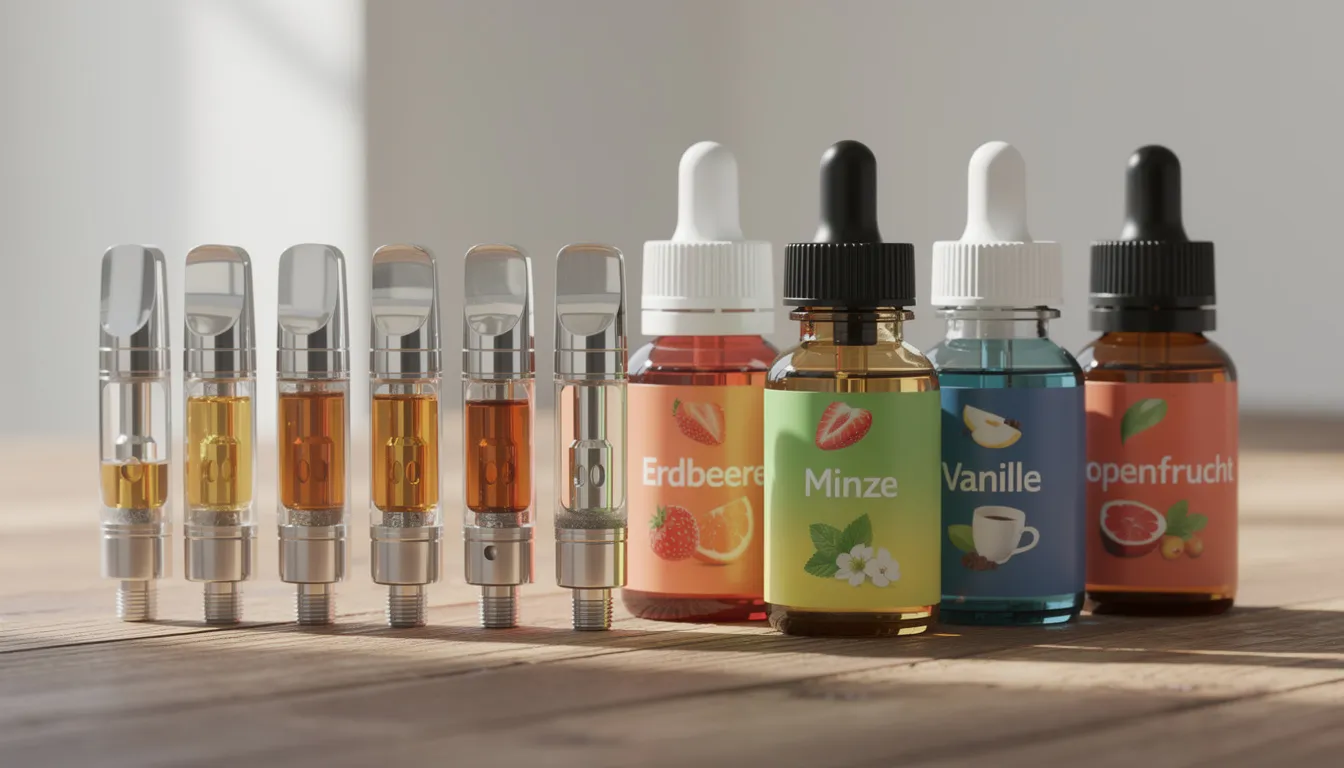
Product forms
|
category |
Description |
|---|---|
|
Vapes & Liquids |
Cartridges for e-cigarettes |
|
Edibles |
gummy bears, cookies, chocolate |
|
Concentrates |
Dabs, Wax, Shatter |
|
“Enriched” flowers |
Hemp flowers sprayed with THCP |
|
Tinctures |
Oils for sublingual administration |
The truth about “THCP flower”
So-called THCP flowers are generally not naturally high-THCP varieties. They are conventional hemp or CBD flowers that have been subsequently sprayed or treated with THCP extracts.
Advertising claims such as "50% THCP" on flowers or vapes should be viewed critically. Such high levels are pharmacologically and technically questionable.
Quality problems
Due to a lack of regulation before the ban, products with problematic properties were frequently in circulation:
-
Unclear content and incorrect declaration
-
Residual solvents from manufacturing
-
Unknown byproducts
-
Missing or forged laboratory certificates
-
Highly fluctuating THCP concentrations
Recommendations for caution
Given the current legal situation and gaps in knowledge, interested parties should be particularly cautious:
-
When buying historical or foreign products, look for laboratory certificates (COAs).
-
Reliable analysis with verifiable test results is required.
-
Extremely low prices should be understood as a warning sign of inferior quality.
-
Don't confuse the availability of questionable products with safety.
Conclusion: A highly potent cannabinoid with many question marks
THCP is a naturally occurring cannabinoid discovered in 2019 that is structurally similar to THC but binds much more strongly to CB1 and CB2 receptors. This discovery significantly expands our understanding of the chemical complexity of cannabis.
The popular claim "33 times stronger than THC" is a gross oversimplification. This figure refers to laboratory measurements of receptor affinity – it is not scientifically proven to reflect the actual effects in humans.
The Risk profile THCP results from several factors:
-
Lack of clinical data in humans
-
Possible full agonist traits
-
Product-related quality problems in illegal offers
Current German law prohibits THCP products from being sold, thus severely restricting the recreational market. Scientific research remains possible.
THCP demonstrates just how complex cannabis truly is. Future studies must clarify whether and how this substance can be used safely and for medical purposes. Until then, extreme caution is advised in any use.
FAQ about THCP
Is THCP a natural or a synthetic cannabinoid?
THCP is a phytocannabinoid naturally produced by the cannabis plant, but it occurs only in trace amounts. Commercial products are mostly based on semi-synthetic production from CBD or THC, as direct extraction is not economically viable. The molecule itself is therefore chemically of natural origin, while the production processes of many products involve synthetic steps.
Does THCP occur in every cannabis strain?
THCP has so far only been definitively detected in a few strains, such as the Italian FM2. It is suspected that THCP is present in many cannabis plants, but in extremely low concentrations below the usual detection limit. Since standard analyses rarely specifically test for THCP, its actual prevalence in different cannabis strains has not yet been conclusively determined scientifically.
Is it possible to achieve a "milder high" with THCP by simply taking less of it?
Theoretically, lower doses could lead to milder effects. However, the high potency of THCP, combined with a lack of experience, significantly increases the risk of dosing errors. Even very small amounts can produce surprisingly strong effects. Safe dosing would require clinical data and standardized products, which do not currently exist.
Are there already medications that specifically contain THCP?
No, as of early 2026, there are no approved medicinal products containing THCP as a defined active ingredient. Medicinal cannabis flowers may contain minimal traces of THCP, but these are neither specifically declared nor utilized. The therapeutic application of THCP remains an area of future research without current practical relevance in the pharmaceutical sector.
Is THCP suitable for beginners in cannabis use?
This is strongly discouraged. The unclear dose-response relationship, high potency, and lack of safety data make THCP particularly risky for inexperienced users and sensitive individuals. The risk of unpleasant or potentially dangerous experiences such as severe anxiety, paranoia, or circulatory problems is significantly increased. Anyone wishing to use cannabis for medical reasons should only do so under medical supervision and with regular, approved preparations.
Share:
THCV Effects: What the “diet cannabinoid” can really do
Cannabinoid receptors – How they control relaxation