
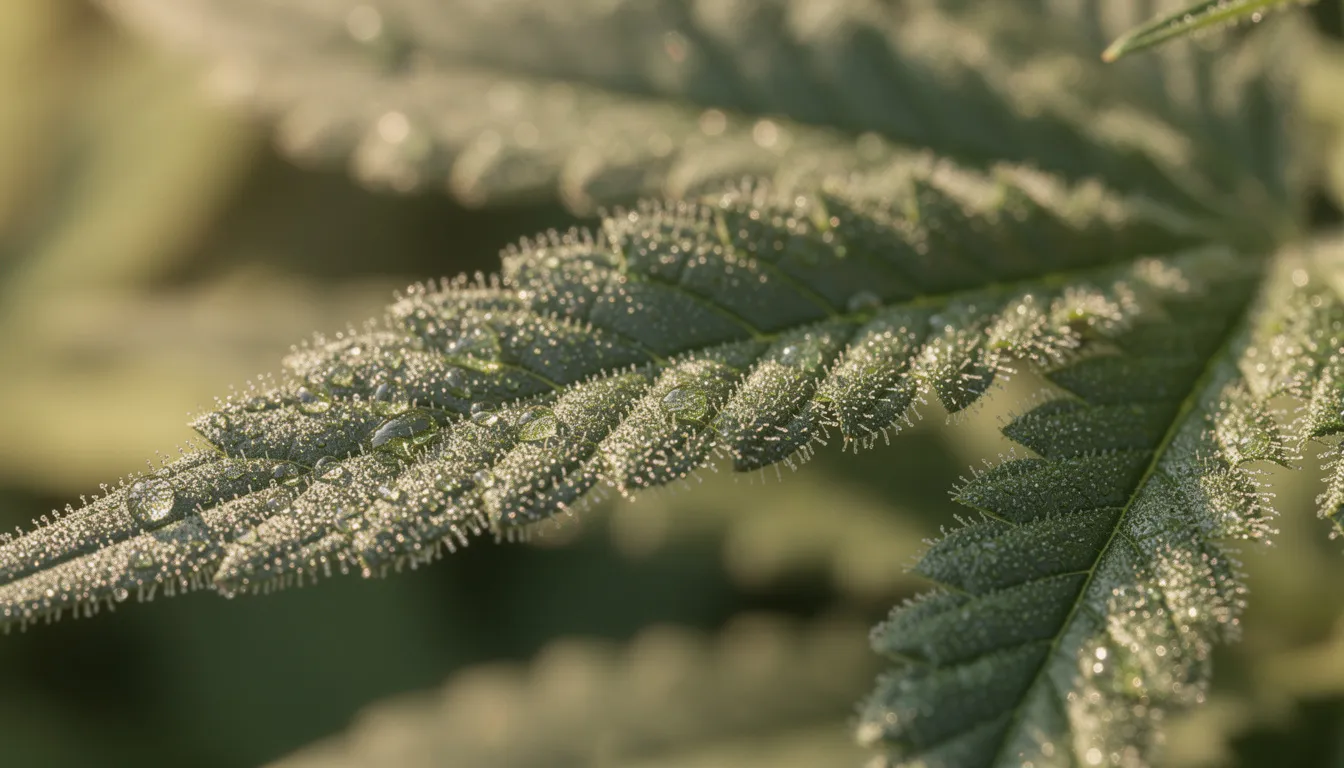
The World of Cannabinoids It's far more complex than many people realize. While THC and CBD have long since entered the mainstream, a lesser-known cannabinoid is increasingly coming into focus in cannabinoid research: tetrahydrocannabivarin, or THCV for short. What makes this compound so special? It combines seemingly contradictory properties – appetite suppressant instead of craving-inducing, energizing instead of sedating, and, depending on the dosage, sometimes similar to THC and sometimes its antagonist. In this article, you'll learn what research has revealed about the effects of THCV, its therapeutic potential, and what you should consider regarding products and application.
What is THCV? (A short, quick explanation of the basics first)
Tetrahydrocannabivarin (THCV) is a naturally occurring phytocannabinoid produced in the cannabis plant. It is considered an appetite suppressant and, under certain conditions, psychoactive cannabinoid – however, with a very distinct effect profile that differs significantly from other cannabinoids. THC differs.
-
Chemical structure: THCV is closely related to THC, but differs in having a shorter side chain. While THC has a pentyl chain with 5 carbon atoms, THCV only has a propyl side chain with 3 carbon atoms. This seemingly small change fundamentally alters the effects of THCV.
-
Discovery: THCV was first described in the early 1970s by British research groups. For a long time, the cannabinoid remained largely unnoticed and was considered a scientific footnote.
-
Happen: Higher THCV concentrations are found primarily in African sativa strains and landraces such as Durban Poison, Malawi, or Swazi Gold. In most commercially available cannabis strains, the content is below 1%.
-
Biosynthesis: THCV is produced from cannabigerovarinic acid (CBGVA), which is first converted to THCVA. Decarboxylation – i.e., the application of heat during vaporization, smoking, or baking – transforms this into the active THCV.
-
Growing attention: Although THCV is considered a “minor cannabinoid ”, it has gained significant attention between 2020 and 2024 due to medical studies on metabolism, appetite and neuroprotective effects.
How does THCV work? (Explain the dose-dependent effects of THCV in an easy-to-understand way)
The effects of THCV are complex and depend crucially on the dose. In small amounts, THCV tends to have a clear-headed, alert, and appetite-suppressing effect – in higher doses, it can produce THC-like, psychoactive effects.
-
Low doses (antagonism): At low doses, THCV acts as an antagonist or partial antagonist at the CB1 receptor. This means it can dampen the effects of THC, promote mental clarity, and reduce the typical munchies. Users often report improved focus and less drowsiness compared to THC.
-
Higher doses (agonism): At medium to high doses, THCV becomes a partial CB1 agonist. The effects are stimulating and can produce a short-lived psychoactive effect—a clearer, more energetic high that feels less "stoned" than THC. The effects come on faster and usually subside more quickly as well.
-
CB2 receptors: THCV also binds to CB2 receptors in the immune system. This results in potential anti-inflammatory and pain-relieving effects, which have been observed in preclinical mouse and cell models.
-
Subjective effects: Users often describe THCV as energizing, stimulating, and sometimes mood-enhancing. It is more suitable for daytime use than for evening use. The typical "munchies" do not occur – instead, many report a slight suppression of appetite.
-
Possible side effects: At higher doses, the following side effects may occur: dry mouth, slightly increased heart rate, nervousness or restlessness, and occasionally fatigue after the effects wear off. These side effects are usually milder than with THC.
-
Important NOTE: Much of the data comes from animal studies and small human studies. Individual reactions can vary greatly, so caution is advised.
THCV and the endocannabinoid system (ECS)
The endocannabinoid system is a regulatory system in the body, consisting of endocannabinoids, cannabinoid receptors (CB1 and CB2), and degrading enzymes. Among other things, it controls appetite, pain, mood, and glucose and fat metabolism.
-
CB1 receptors: These are primarily located in the brain and nervous system. THCV exhibits biphasic behavior: at low doses, it blocks CB1 receptors (antagonistically), while at higher doses, it partially activates CB1 receptors (agonistically). This dose-response relationship is crucial for understanding its effects.
-
CB2 receptors: These are primarily located in the immune system and bones. THCV acts as a partial agonist here, which could explain its potential effects on inflammation, immune response, and bone health.
-
Contrast with THC: THC is primarily a CB1 agonist – it produces a high and increases appetite. THCV, on the other hand, is more of a CB1 blocker at low doses and can therefore lessen the THC high and reduce appetite.
-
Interaction with other cannabinoids: Recent data from 2020–2023 indicate that THCV has a different effect when combined with THC and CBD than when used alone. The so-called "entourage effect" may play a role here – however, this term should not be overemphasized.
-
State of research: The exact ECS effect of THCV in humans is not yet fully understood. Important studies such as Jadoon et al. (2016) on type 2 diabetes provide initial indications, but further research is needed.
Medical potential of THCV effects
The therapeutic potential of THCV is being intensively researched. It is important to know that a large portion of the data comes from animal models and early human studies. THCV is not approved as a medicinal product in the EU or Germany (as of 2024/2025).
-
Weight control and obesity: Animal studies show appetite-suppressing and weight-modulating effects – reduced food intake and altered fat burning. The CB1 antagonism is reminiscent of rimonabant, a drug that was withdrawn from the market due to severe psychiatric side effects. According to preclinical evidence, THCV does not appear to exhibit these problems.
-
Diabetes and metabolism: In a human study with type 2 diabetes patients, THCV improved fasting blood glucose, insulin sensitivity, and beta-cell function. The results are positive, but not sufficient for a treatment recommendation.
-
Neuroprotective effects: Preclinical models in Parkinson's disease, epilepsy, and other neurodegenerative disorders show antioxidant, neuroprotective, and, in some cases, anticonvulsant properties. However, controlled human data are largely lacking.
-
Pain relief and inflammation: Mouse studies have documented reduced inflammation and pain relief. A potential application in inflammatory diseases such as arthritis is being discussed, but remains hypothetical.
-
Bone health: Cell and animal studies suggest that THCV may modulate osteoblasts and osteoclasts via CB2 receptors and thus influence bone density. Potential benefits in osteoporosis are conceivable, but are based solely on experimental data.
Can THCV suppress appetite?
Since around 2020, the media has often referred to THCV as "diet weed" or "diet cannabinoid." However, the scientific evidence is still limited.
-
Mechanism: THCV acts as a CB1 antagonist in the hypothalamus and other brain regions. This leads to reduced hunger signals, less reward from eating, and possibly increased satiety.
-
Animal studies: Rats and mice treated with THCV showed reduced food intake and, in some cases, improved energy metabolism. Even at a dose of 3 mg/kg, obese mice significantly reduced their food intake – both in fasted and fed states. The appetite suppression lasted 6-8 hours without a rebound effect.
-
Human studies: Initial small studies show changes in brain regions involved in reward processing and, in some cases, a reduction in cravings. However, large, long-term studies on actual weight loss are lacking.
-
Practical relevance: Users report the absence of the "munchies" even with THC-containing products when THCV is present. However, THCV is currently not an approved weight-loss medication.
-
Caution advised: Self-administered diets using high-dose THCV products without medical supervision are risky. Long-term consequences, interactions, and psychological effects are insufficiently researched.
THCV, obesity and metabolism
Obesity is considered a chronic metabolic disease. CB1 blockers such as rimonabant were a promising, but ultimately problematic, approach in the 2000s.
-
Rimonabant comparison: This CB1 antagonist was approved in Europe in 2006 and withdrawn from the market in 2008 due to reports of depression and suicidality. THCV also acts on CB1 receptors, but according to preclinical data, it appears to have less severe psychiatric side effects.
-
Animal testing: THCV showed hypophagic effects (less food intake), improved glucose tolerance and reduced fat accumulation in the liver – without always dramatically lowering the body weight.
-
Possible mechanisms: The effects on lipid metabolism, insulin pathways and brown adipose tissue (fat burning) are discussed.
-
State of development: Despite promising data, there are currently no approved THCV medications for obesity. Only controlled studies will allow for a sound benefit-risk assessment.
THCV and diabetes (type 2 diabetes & metabolic syndrome)
In Germany, over 7 million people live with type 2 diabetes – the interest in new therapy options is correspondingly high.
|
Study parameters |
Result with THCV |
|---|---|
|
fasting blood sugar |
Significantly reduced |
|
Insulin sensitivity |
Improved |
|
Beta cell function |
Increased |
|
Adiponectin production |
Increased |
|
Side effects |
Minimal |
-
Human study (Jadoon et al. 2016): In this randomized, placebo-controlled study with 62 type 2 diabetes patients over 13 weeks, THCV improved several metabolic parameters. Cannabidiol (CBD) showed other, partly complementary effects in the same study.
-
Metabolic syndrome: Animal models showed improvements in blood sugar, liver triglycerides and inflammatory markers – even without massive weight loss.
-
Clinical relevance: This data is interesting, but THCV is currently only being studied experimentally. It must not replace conventional diabetes medication.
-
Security: Previous studies have reported few serious side effects. However, data on long-term use, elderly patients, and polypharmacy are lacking.
Neuroprotective and psychological effects (Parkinson's disease, epilepsy, schizophrenia)
In the laboratory, THCV shows neuroprotective and anticonvulsant effects that could be of interest for conditions such as Parkinson's disease, epilepsy, and schizophrenia.
-
Parkinson's disease: Animal models with induced damage showed that THCV can protect dopaminergic neurons in the substantia nigra—the brain region whose cell death causes Parkinson's disease—and alleviate motor symptoms. A 2011 study in the British Journal of Pharmacology documented these neuroprotective effects.
-
Epilepsy: Rodent models showed reduced susceptibility to seizures even at low doses. THCV may have anticonvulsant effects similar to CBD, but it is significantly less well researched.
-
Schizophrenia and dopamine: Evidence suggests that THCV may modulate dopamine release via 5-HT1A receptors and other binding sites. Theoretically, it has potential effects on negative symptoms, cognition, and anxiety – primarily based on preclinical data.
-
Clinical status: Large-scale human studies are largely lacking. THCV is not an approved therapy for these diseases and should under no circumstances replace existing medications.

THCV vs. THC & CBD: Differences in effect
To understand the role of THCV in the spectrum of cannabinoids, a direct comparison with the more well-known representatives is worthwhile. THC and CBD.
|
Characteristic |
THC |
CBD |
THCV |
|---|---|---|---|
|
Psychoactivity |
Strong |
No |
Weak to moderate (dose-dependent) |
|
appetite |
Increasing (“Munchies”) |
regulating/indirect |
Restraining |
|
Typical effect |
Intoxicating, sedating |
Relaxing, anxiety-relieving |
Clear, alert, short-acting |
|
State of research |
Very well researched |
Well researched |
Only small studies |
|
Approved medications |
Yes (e.g., dronabinol) |
Yes (Epidyolex) |
No |
-
Psychoactive potency: THC is highly psychoactive, CBD is not. THCV is weakly to moderately psychoactive, and only at higher doses – at low doses it even has a THC-suppressing effect.
-
Appetite: Unlike THC, THCV does not increase appetite. Instead, it suppresses or neutralizes it. CBD affects appetite more indirectly.
-
Everyday effects: THC is intoxicating and sedating, THCV is clear-headed, alert and short-lived, CBD is relaxing without a high.
-
Legal situation (Germany/Europe, as of 2024/2025): CBD is largely regulated, but problematic as a food/novel food. THC is considered a narcotic with medical exceptions. THCV exists in a legal gray area – not explicitly listed in the German Narcotics Act (BtMG), but not approved as an isolated active ingredient in food supplements.
Similarities and interaction of cannabinoids
Cannabinoids rarely occur in isolation in the hemp plant. In full-spectrum extracts, they influence each other – a phenomenon often referred to as the "entourage effect".
-
Common target structures: THC, CBD and THCV all act on the endocannabinoid system, but with different affinities and directions at CB1 and CB2 receptors.
-
Potential synergies: THCV can attenuate the THC high at low doses. CBD can modulate the effects of both THCV and THC. However, clinical data on these interactions are limited.
-
Product variation: Depending on the product (flowers, extracts, vapes), the cannabinoid combination varies greatly, which influences the effect profile and side effects.
Application, products & dosage of THCV
In practice, THCV is primarily consumed via specialized products, as natural cannabis plant flowers usually only contain trace amounts.
-
THCV flowers: There are specially bred strains with increased THCV content (e.g., Durban Poison hybrid or Doug's Varin). These are usually only available in specialized cannabis dispensaries or regulated markets in some US states.
-
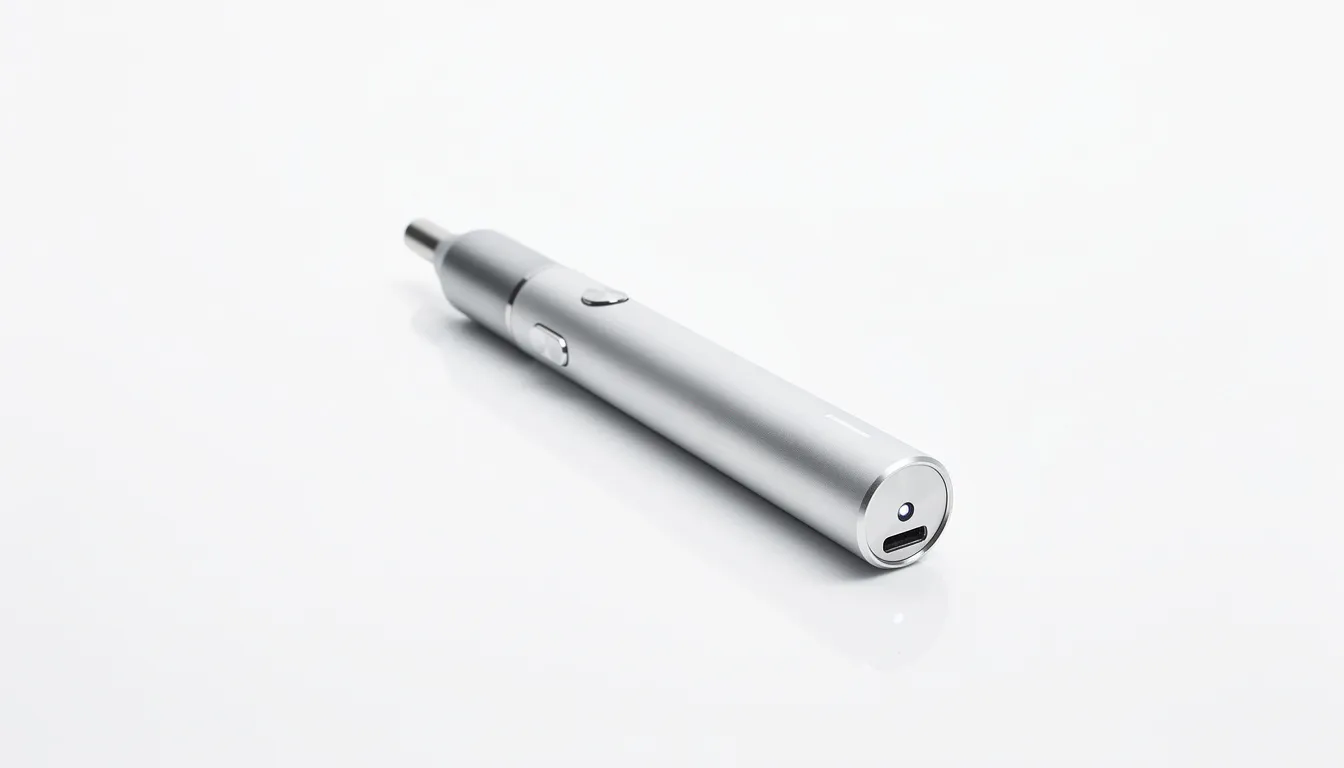
Vapes and concentrates : THCV cartridges, cartridges, and pens containing isolated or enriched THCV offer rapid onset of action (minutes) with a short duration of effect (approximately 1–2 hours). Ensure controlled dosing and reliable laboratory documentation (COAs).
-
Oils and edibles: THCV oils, capsules, and gummies with precise mg dosages have a delayed onset of action (30–90 minutes) and a longer duration of action (3–6 hours). Always start with a very low dose.
-
Typical dose ranges (not a treatment recommendation):
-
Beginners: 2–10 mg THCV
-
Experienced users: 10–30 mg THCV
-
Note: Scientifically sound dosage guidelines are lacking.
-
-
Comparison of consumption patterns:
|
aspect |
inhalation |
Oral administration |
|---|---|---|
|
Onset of effect |
1–5 minutes |
30–90 minutes |
|
Duration of effect |
1–2 hours |
3–6 hours |
|
Controllability |
Good |
More difficult |
|
Respiratory strain |
Available |
No |
-
Warning notices: Never use in combination with driving or operating machinery. If you have pre-existing medical conditions (heart, psychiatric, metabolic), always seek medical advice. Consider potential interactions with other medications.
THCV Vape & Inhalation
Vapes are popular because of their rapid onset of effects, good controllability, and lower temperature compared to combustion.
-
Typical sequence of events: Take 1-2 short puffs, assess the effect for 10-15 minutes, and only then, if necessary, take another dose. This gradual approach prevents overdosing.
-
Risks: Aerosols irritate the respiratory system. Added terpenes or thinners can pose health risks. Use only certified, laboratory-tested products.
-
Target audience: More suitable for experienced users who are already familiar with THC, CBD, or 10-OH-HHC Vapes are familiar. Not the first choice for complete beginners.
THCV in flowers & extracts
Most traditional cannabis strains contain only trace amounts of THCV. Special genetics have been bred to achieve 1–5% THCV or more.
-
Example varieties from the international market: Doug's Varin, Pineapple Purps, Durban hybrids and similar crosses.
-
Extracts: THCV-enriched full-spectrum extracts combine THCV with THC, CBD, CBG, and terpenes. Their effects are more complex and harder to predict.
-
Medical context: In countries where medical cannabis is legal (certain US states, Canada, Israel), THCV-rich products are sometimes used experimentally for metabolic or neurological problems. However, this is not standard practice outside of controlled studies.
Safety, side effects & risks of THCV
THCV is currently considered to be relatively well-tolerated. However, long-term data in humans are largely lacking.
-
Short-term side effects: Dry mouth, mild dizziness, palpitations, sleep disturbances or nervousness (especially in sensitive individuals or at high doses), occasional headache or rebound fatigue.
-
Psychological effects: In higher doses, THCV, like THC, can trigger restlessness, anxiety, or paranoia – especially in individuals with a history of mental health issues. People with a history of psychosis or anxiety should be particularly cautious.
-
Cardiovascular risks: A short-term increase in heart rate and blood pressure is possible. Caution is advised for individuals with cardiovascular disease, high blood pressure, or those taking corresponding medication.
-
Interactions: Potential risks exist with antidiabetic drugs, blood pressure medications, antidepressants, and other drugs that affect metabolism or the endocannabinoid system (ECS). Always seek medical advice.
-
Special groups: Pregnant women, breastfeeding women, adolescents and people with serious chronic illnesses should avoid THCV until reliable safety data is available.
-
Product quality: Laboratory analyses are essential (determination of THCV/THC content, heavy metals, solvents, pesticides). Look for reputable certificates of authenticity (COAs) and avoid cheap products of unclear origin.
Risk management & responsible handling
Responsible consumption significantly reduces the risks.
-
Start-low-go-slow principle: Always start with a very low dose, especially with new products or combinations containing THC/CBD. Observe the reaction over several days.
-
Setting: Conduct initial tests only in a safe environment – at home, without obligations. Do not participate in road traffic or dangerous activities.
-
Documentation: Keep a consumption diary, noting the dose, product type, time, effects, and side effects. This will help you find the right dose for you.
-
Termination criteria: In case of severe side effects such as panic, rapid heartbeat, chest pain or hallucinations, stop immediately and seek medical help if necessary.
Legal status of THCV in Germany & Europe
The legal situation is dynamic and has changed. 2024/2025 about cannabis in Germany Significantly changed. The following information is provided without guarantee and is valid for a limited time.
-
Germany (as of 2024/2025): THCV is not explicitly listed in the Narcotics Act. However, isolated cannabinoids are often not legally considered food supplements and may fall under pharmaceutical or novel food law.
-
Cannabis Act 2024: Medical cannabis (containing THC, CBD, THCV, etc.) can be prescribed through pharmacies. However, THCV is only listed as a component, not as a separate, approved drug.
-
THCV isolates and lifestyle products: There is a gray area here. Depending on the origin (hemp vs. marijuana), THCV content, residual THC content and advertising (health claims), these products may be classified as not marketable.
-
EU and other countries: The situation varies from country to country. Some Eastern European countries have stricter regulations, while parts of Switzerland or the Netherlands have more liberal markets. Always check the current national regulations.
-
Import & Online Trade: Orders from non-EU countries (e.g., the USA) can cause legal problems with customs – even if the products are legal there. This also applies to... legal alternatives to THC As with HHC, the legal status in the respective country must be checked.
-
Recommendation: Check the current legal situation yourself and seek legal advice if you have any questions. The legality is not yet fully clarified in many countries.
Conclusion: How meaningful is the effect of THCV known so far?
THCV It is a fascinating cannabinoid with clearly distinct effects compared to THC and CBD. Its appetite-suppressing, energizing, and potentially neuroprotective properties make it an exciting candidate in medical research. While the term "diet weed" is good for marketing, it only reflects part of its potential.
-
Promising data: Preclinical and early clinical studies suggest that THCV may offer benefits in obesity, type 2 diabetes, neurodegenerative diseases, and inflammation. However, a breakthrough in clinical practice has not yet been achieved.
-
Research gaps: Safety and long-term effects are insufficiently researched. These products are primarily found in the lifestyle and experimental sectors, not in conventional medicine.
-
Practical recommendation: Currently, consider THCV primarily as a research subject and a niche cannabinoid. Those wishing to use it should dose very carefully, pay attention to quality, and absolutely seek medical advice. Professional support is recommended for all questions.
-
A look into the future: Phase II/III trials with clearly defined endpoints will be crucial in determining whether THCV can actually be approved as a drug. Until then, it remains a promising but not yet fully understood cannabinoid – an update on the state of research is definitely worthwhile in the coming years.
Share:
HHC (Hexahydrocannabinol): Effects, risks and legal situation in Germany
THCP – The most powerful cannabinoid at a glance