

More than 30 percent of respondents in Germany trust the endocannabinoid system when it comes to lasting relaxation. For cannabis enthusiasts in Central Europe, a closer look at the complex cannabinoid receptors that operate in the nervous and immune systems is worthwhile. Those who consume high-quality, lab-tested products want to know how CB1 and CB2 receptors influence personal well-being and support the optimal relaxation experience.
Table of contents
- What are cannabinoid receptors and their purpose?
- CB1 vs. CB2: Differences and tasks
- How cannabinoid receptors enable relaxation
- Risks associated with receptor activation
- Legal aspects for consumers in Central Europe
Key findings
| Point | Details |
|---|---|
| Cannabinoid receptors (CB1 and CB2) | CB1 receptors are predominantly active in the central nervous system, while CB2 receptors are mainly located in the immune system and regulate inflammation. |
| Relaxing effect | Activating CB1 receptors can reduce anxiety and promote inner peace by modulating neuronal activity. |
| Risks of receptor activation | Excessive stimulation of CB1 receptors can cause psychological side effects such as addiction and cognitive impairment. |
| Legal aspects | The legal framework for cannabis varies considerably in Central Europe; inform yourself about local laws, especially in Germany, Austria, Switzerland and the Czech Republic. |
What are cannabinoid receptors and their purpose?
Cannabinoid receptors are highly specialized binding sites in our body that play a crucial role in the endogenous cannabinoid system (ECS). These molecular receivers function like keyholes into which cannabinoids lock like precise keys, triggering biochemical reactions in various cell types.
There are two primary cannabinoid receptors with different functions: CB1 and CB2 . CB1 receptors are mainly concentrated in the central nervous system and influence processes such as pain perception, motor skills, and cognitive functions. CB2 receptors are predominantly located in the immune system and regulate inflammatory reactions and immune responses.
What makes these receptors special is their ability to modulate signals via G-protein-coupled mechanisms. They interact not only with external cannabinoids from cannabis, but also with the body's own endocannabinoids. These natural messenger substances help balance various physiological processes and contribute to the homeostasis of our organism.
Pro tip: When choosing cannabis products, look for high-quality, lab-tested sources to ensure optimal interaction with your cannabinoid receptors.
CB1 vs. CB2: Differences and tasks
The two cannabinoid receptors, CB1 and CB2, differ fundamentally in their distribution and function in the human body. While CB1 receptors are primarily concentrated in the central nervous system, CB2 receptors play a central role in the immune system.
CB1 receptors are predominantly located in brain regions such as the hippocampus, cerebellum, and basal ganglia. They influence neurological processes such as pain perception, motor control, and emotional regulation. These receptors interact intensively with the endocannabinoid system and regulate neurotransmitter activity that controls our cognitive and motor functions.

In contrast, CB2 receptors are primarily distributed on immune cells such as B and T lymphocytes. Their primary function is to control inflammatory responses and modulate the immune system. They play a crucial role in combating inflammatory processes and regulating the immune response without directly affecting neurological functions.
Pro tip: Consult a specialist to understand the individual interactions of CB1 and CB2 receptors in your personal health context.
For a better overview, here are the most important differences between CB1 and CB2 receptors in the human body:
| receptor | Main distribution in the body | Impact on health | Typical examples |
|---|---|---|---|
| CB1 | brain, central nervous system | Control of pain, motor skills, mood | Memory performance, motor coordination |
| CB2 | Immune cells, peripheral nervous system | Regulation of inflammation and immune response | Combating inflammation, immunomodulation |
How cannabinoid receptors enable relaxation
Relaxation via cannabinoid receptors is a complex neurobiological process deeply embedded in our nervous system. Activation of CB1 receptors can influence neurobiological processes directly related to mood regulation and stress reduction.
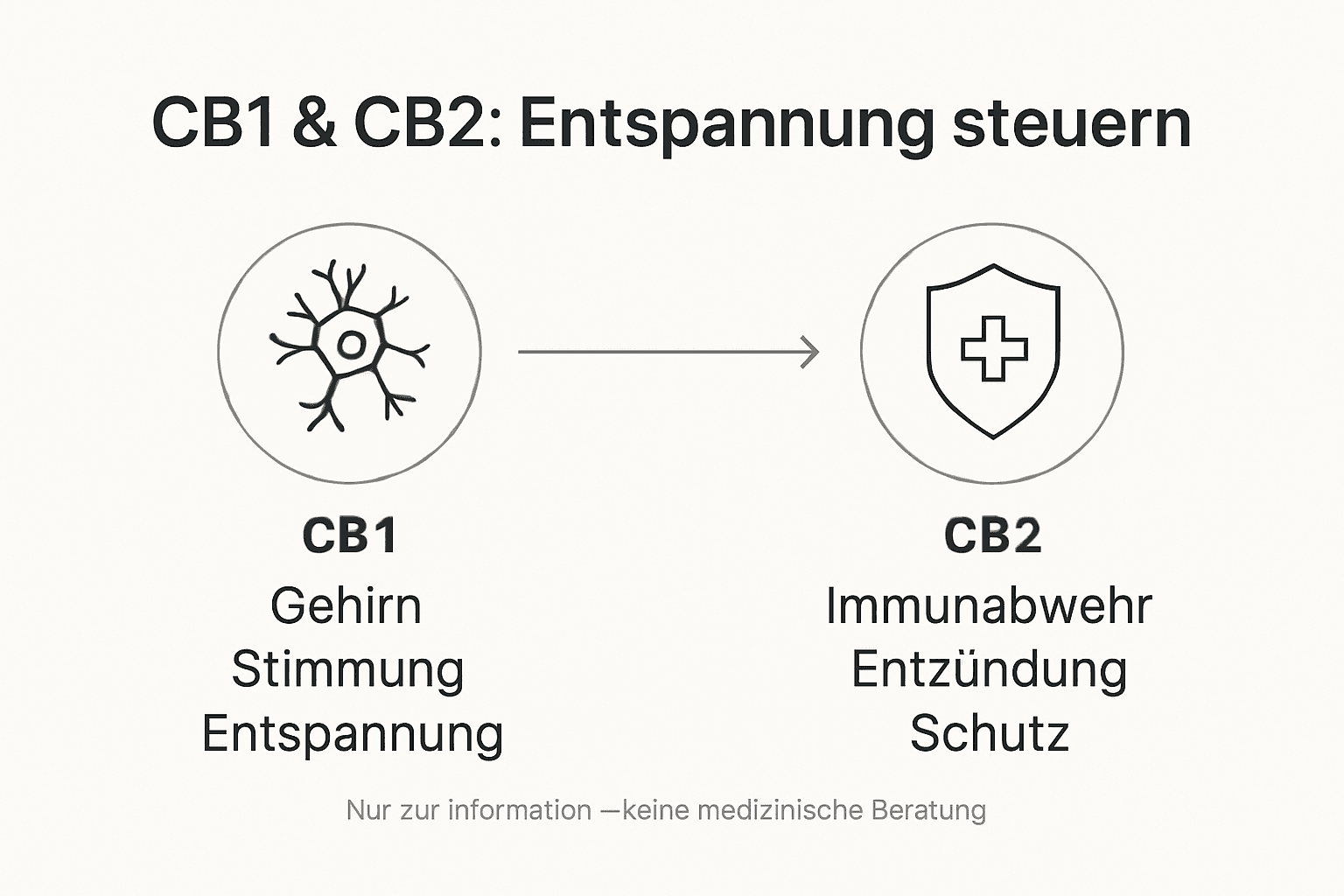
When cannabinoids bind to CB1 receptors, they modulate neurotransmitters that control our emotional state. This mechanism leads to a reduction in neuronal hyperexcitability, thereby reducing anxiety and creating a sense of inner calm. The process resembles a natural stress regulation system, bringing our body into a state of balance and serenity.
The relaxation effect is enhanced by the interaction between the body's own endocannabinoids and external cannabinoids. This interaction allows for a gentle readjustment of our neurological balance, reduces stress hormones, and promotes deep, natural relaxation.
Pro tip: Experiment carefully with different cannabinoid concentrations to find your individually optimal relaxation dose.
Risks associated with receptor activation
Activating cannabinoid receptors is not without potential risks that must be carefully considered. Treatment with cannabinoids can trigger psychiatric side effects such as addiction and psychosis , particularly in individuals with predisposing factors.
Activating CB1 receptors in the brain presents particularly complex challenges. Excessive stimulation can lead to undesirable psychoactive effects such as anxiety, cognitive impairment, and motor control disorders. These risks vary depending on individual physiology, dosage, and personal history.
Chronic cannabinoid use can also cause long-term neurochemical changes. Studies show that repeated receptor activation can modify brain chemistry and trigger potential addiction mechanisms. Particular caution is advised in cases of pre-existing medical conditions, concurrent medication use, and individual metabolic sensitivity.
Pro tip: Always consult a medical expert before using cannabinoids to accurately assess individual risks.
Legal aspects for consumers in Central Europe
The legal landscape surrounding cannabis products in Central Europe is complex and dynamic. With the 2024 Cannabis Act, Germany has taken a significant step towards controlled legalization , opening up new opportunities for consumers but also entailing new responsibilities.
The legal situation varies considerably between different Central European countries. While Germany pursues a more progressive approach, neighboring countries such as Austria, Switzerland, and the Czech Republic have different regulatory models. Crucially, the respective national regulations regarding private possession, cultivation, and medical use of cannabis differ significantly.
For consumers, this means a complex legal situation. Home cultivation is now permitted in Germany under certain conditions, but is subject to strict regulations. Medical cannabis is increasingly regulated, while recreational use remains subject to clear legal frameworks. Aspects such as youth protection, trade restrictions, and preventing traffic hazards are particularly important.
Pro tip: Stay informed about current legal changes and consult legal experts if in doubt.
The following is an overview of the legal differences regarding cannabis products in Central European countries:
| country | Private property permitted | Medical use | Homegrown rules |
|---|---|---|---|
| Germany | Restricted, regulated from 2024 | Strict regulations, doctor required | Allowed under certain conditions |
| Austria | Possession of smaller quantities decriminalized | Medically very restrictive | Forbidden |
| Switzerland | Partially decriminalized | Medically possible, strictly regulated | Not allowed |
| Czech Republic | Possession of small amounts is legal. | Medically available, medical supervision | Limited availability |
Natural relaxation through targeted cannabinoid interaction
Understanding the cannabinoid receptors CB1 and CB2 clearly demonstrates the importance of controlled activation for deep relaxation and well-being. Many people are looking for safe, lab-tested cannabinoid products to positively influence the complex interplay within the endocannabinoid system and thus reduce stress. This is precisely where Weedforfriends comes in – with a selection of high-quality vapes, flowers, edibles, and CBD oils from Germany that can specifically promote balance within the body.
Experience firsthand how precision in product selection makes all the difference. Benefit from our expertise and certified quality to find your optimal relaxation dose and minimize side effects. Visit Weedforfriends and discover your personal premium cannabinoid experience for greater inner peace and balance.
Frequently Asked Questions
What are cannabinoid receptors?
Cannabinoid receptors are specialized binding sites in the body that play a role in the endogenous cannabinoid system (ECS). They are responsible for regulating various physiological processes by interacting with cannabinoids.
How do CB1 and CB2 receptors affect our health?
CB1 receptors are primarily located in the central nervous system and influence pain perception, motor skills, and cognitive functions. CB2 receptors, on the other hand, are mainly found in the immune system and regulate inflammatory processes and immune responses.
How do cannabinoid receptors promote relaxation?
Activation of CB1 receptors can influence the production of neurotransmitters that regulate mood and stress levels. This can lead to a reduction in anxiety and a feeling of inner peace.
Are there risks associated with the activation of cannabinoid receptors?
Yes, activation of cannabinoid receptors, especially CB1, can lead to undesirable side effects such as psychological disorders or addiction. Careful dosage and medical advice are therefore recommended.
Recommendation
- Účinky kanabinoidů: Jak ovlivňují tělo i mysl – Weedforfriends
- THCA: Function, effects and differences to THC - What is tetrahydrocannabinolic acid? – Weedforfriends
- CBG9: What is CBG9, its origins, effects, uses and buying recommendations – Weedforfriends
- CBG9 Effects: All about the new cannabis wonder – Weedforfriends
Share:
THCP – The most powerful cannabinoid at a glance
What is PHC cannabinoid? Facts about the cannabinoid – marketing hype or effectiveness?