
THCA in Germany 2025 – a quick overview
Since the Cannabis Act (CanG) came into force on April 1, 2024, the cannabis landscape in Germany has fundamentally changed. At the same time, THCA flowers have exploded in online shops – marketed as a "legal high" for people looking for alternatives. However, legal uncertainty remains: what is advertised as a harmless precursor to THC can quickly become a problem.
The most important information at a glance:
|
Ask |
Short answer |
|---|---|
|
What is THCA? |
Tetrahydrocannabinolic acid – the non-psychoactive precursor of THC in the cannabis plant |
|
Does THCA make you high? |
Raw: No. Heated (smoking, vaping): Yes, as it is converted to THC. |
|
Will it be legal in Germany in 2025? |
Gray area – highly controversial from a legal standpoint; authorities often assess it like THC. |
|
Where is caution advised? |
Online orders, driver's license, drug tests, high potency |
What you will learn in this article:
-
How THCA works in the body and when it becomes psychoactive THC
-
The current legal situation in Germany in 2025 (CanG, BtMG, grey areas)
-
Which THCA products exist on the German market?
-
What happens during drug tests and what risks lurk in road traffic
-
What you should look out for when buying – and why many promises are misleading
What is THCA? Basics explained for Germany
THCA stands for tetrahydrocannabinolic acid and is the direct precursor of Δ9-THC in fresh cannabis flowers. Its chemical distinguishing feature: THCA carries an additional carboxyl group (COOH) on its molecule, which differentiates it from its famous successor.
In its raw state, THCA is not psychoactive. The reason lies in the molecule's structure: the carboxyl group prevents effective binding to the CB1 receptors in the brain – the docking sites responsible for the typical cannabis high.
Laboratory analyses often calculate a "total THC" value, which takes into account both THCA and THC. Typical analysis results for premium THCA flowers often show 20–25% THCA with less than 0.3% Δ9-THC. This combination is at the heart of the legal debate.
The biosynthetic pathway in the plant proceeds from CBGA (cannabigerolic acid) via THCA to THC – a process that is triggered by heat or long storage.
THCA vs. THC vs. CBD – the most important differences
|
Characteristic |
THCA |
THC |
CBD |
|---|---|---|---|
|
Psychoactive |
No (raw) |
Yes |
No |
|
Legal status DE 2025 |
Grey zone – often assessed like THC |
Only via CSCs, medicine, or home cultivation |
Largely legal (with THC limits) |
|
Typical areas of application |
Aroma/collector's items, raw cannabis |
Leisure, Medicine |
Wellness, Medicine |
|
Occurrence in flowers |
Main cannabinoid in fresh flowers |
Produced by heating |
Our own varieties (CBD hemp) |
The term "prodrug" aptly describes THCA: it is a precursor that only becomes the active ingredient THC through decarboxylation (heating). CBD will remain largely legal in Germany in 2025, as long as the THC limits are observed. Novel cannabinoids such as... HHC-A They are gaining increasing attention. THC itself is only accessible through cannabis clubs, medical programs, and permitted home cultivation under CanG regulations.
Practical example: 1 g of flower contains 22% THCA and 0.2% THC. After complete decarboxylation, the theoretical THC content is: 22% × 0.877 + 0.2% = approximately 19.5%. Details of the formula will follow later.
How does THCA work in the body – and when does it become THC?
The Research on THCA It is still in its early stages. Most of the available data comes from in-vitro studies and animal models – human studies are rare. Therefore: no promises of cures, no medical recommendations.
Raw THCA does not produce a high. Possible effects are described as subtle: mild relaxation, subjective improvement in well-being. These perceptions are highly individual and not scientifically proven.
Potential properties of THCA discussed in studies:
-
Anti-inflammatory
-
Neuroprotective
-
Antiemetic (against nausea)
-
Anticonvulsant
However, the available data is limited. Above all, one thing should be clear: most "user reports" on THCA flowers actually describe the effects of the THC produced during heating.
Decarboxylation: From THCA to psychoactive THC
Decarboxylation is the chemical process by which THCA loses its carboxyl group and becomes THC. This is triggered by heat or very long storage.
Specific values:
-
In the oven: approx. 100–120 °C for 30–45 minutes
-
When smoking/vaping: immediate conversion (very fast, but not 100% efficient)
-
Typical complete decarboxylation: from 110 °C for at least 30 minutes
Here's how to calculate the actual THC potency of your THCA flowers:
THC (active) ≈ THCA × 0.877 + existing Δ9-THC
Calculation example: With 20% THCA, after heating the product yields: 20% × 0.877 = approximately 17.5% THC. Adding any Δ9-THC present (e.g., 0.2%) results in approximately 17.7% total THC. This corresponds to the potency of classic THC-rich cannabis.
Subjective effect: Raw vs. heated THCA
Raw THCA (e.g. in smoothies or juices):
-
No intoxicating effect
-
Possibly some light physical relaxation
-
THC does not impair driving ability.
Heated THCA (vaping, smoking, baking):
-
Typical cannabis high, like with THC flowers
-
Psychoactive effects (euphoria, altered perception of time, relaxation)
-
Positive drug tests for THC metabolites
At high THCA levels of 20–25%, heated THCA flowers can have virtually the same effect as classic THC-rich cannabis.
⚠️ Warning for beginners:
High potencies carry risks: anxiety, palpitations, circulatory problems – especially with infrequent use or lower tolerance. This article does not constitute medical advice or a recommendation for use.
THCA in Germany: Legal situation & grey areas 2025
Since the Cannabis Act came into force on April 1, 2024, and the developments up to the beginning of 2025, the legal landscape for cannabis and cannabinoids has changed considerably. The legal assessment of THCA is primarily based on three factors: the Δ9-THC content, the product form, and the identifiable intended use.
Legal precedent and administrative practice are constantly evolving. Status: Early/Mid 2025 Changes are possible at any time.
Important NOTE: This section does not constitute legal advice, but serves as a generally understandable overview for consumers and interested users.

Is THCA legal in Germany?
THCA itself is not explicitly listed in the German Narcotics Act (BtMG). The crucial point, however, is the THC potential that develops after heating.
Relevant limit values:
-
Industrial hemp in the EU: max. 0.3% Δ9-THC
-
Different treatment of industrial hemp vs. recreational cannabis under CanG
-
Since 2024: THCA is included in the calculation of "total THC".
The prevailing view among authorities is that products which release significant amounts of THC when heated can be classified like traditional THC products. In practice, this means that THCA flowers with 20+% THCA can be legally treated like THC flowers.
The debate surrounding THCA shops in Germany in 2024/2025 presents a mixed picture: raids in some federal states, investigations against providers, and differing assessments from public prosecutors depending on the region. Bavaria is conducting particularly strict controls, while other states like Berlin are focusing more on education – but all deny their legality.
CanG, BtMG & THCA: Where the risks lie
The Cannabis Act (CanG) has regulated recreational cannabis use in Germany since 2024, including cultivation associations (Cannabis Social Clubs) and personal cultivation. The Narcotics Act (BtMG) remains in effect in parallel and defines prohibited substances.
The problem with THCA: As a "precursor" for THC, it can be a criminal offense – especially when sold with a clear intention to consume it. Ready-made vapes, pre-rolls, or flowers labeled "ready to smoke" significantly increase the risk.
Why authorities often classify THCA flowers as THC flowers:
-
Theoretical THC content after decarboxylation is often between 15 and 25%.
-
Obvious intent for consumption (smoking, vaping)
-
Packaging and marketing suggest a euphoric effect.
⚠️ Legal risks:
-
Grey area with considerable legal uncertainty
-
Possible criminal liability under the German Narcotics Act (BtMG) in cases of large quantities or intent to trade.
-
Regional differences in interpretation (Bavaria vs. Berlin vs. North Rhine-Westphalia)
-
Seizure of products and possible criminal proceedings
Differences compared to Austria, Switzerland & EU
|
country |
Rough estimate (as of 2025) |
|---|---|
|
Austria |
Tendency towards stricter THC regulations; high-potency THCA products are usually prohibited. |
|
Switzerland |
Own THC limit of 1%; special hemp policy, CBD cannabis legal |
|
France |
Very restrictive; CBD flowers are temporarily banned, THCA is problematic. |
|
Italy |
Varying regulations; “Cannabis Light” with restrictions |
|
Netherlands |
Doggerel, but no explicit THCA regulation |
Shipping THCA flowers across borders is legally very sensitive. Customs issues are likely, as measurement methods vary between countries, and some include THCA in the total value while others do not. Those interested in related cannabinoids can learn more about... Effects of HHCA experience.
Always check the current national laws before traveling and placing orders – no guarantee of completeness or accuracy.
THCA products in Germany: Flowers, hash & vapes
The actual market situation in German online shops in 2024/2025 shows a diverse range of products: THCA flowers with 15–25% THCA, THCA hash, vapes and cartridges, as well as some THCA concentrates. The shop market has developed rapidly.
Many suppliers label their products as "not for consumption" or "for laboratory use only" to minimize legal risks. In practice, however, the marketing clearly targets consumers seeking an alternative to traditional cannabis.
THCA flowers
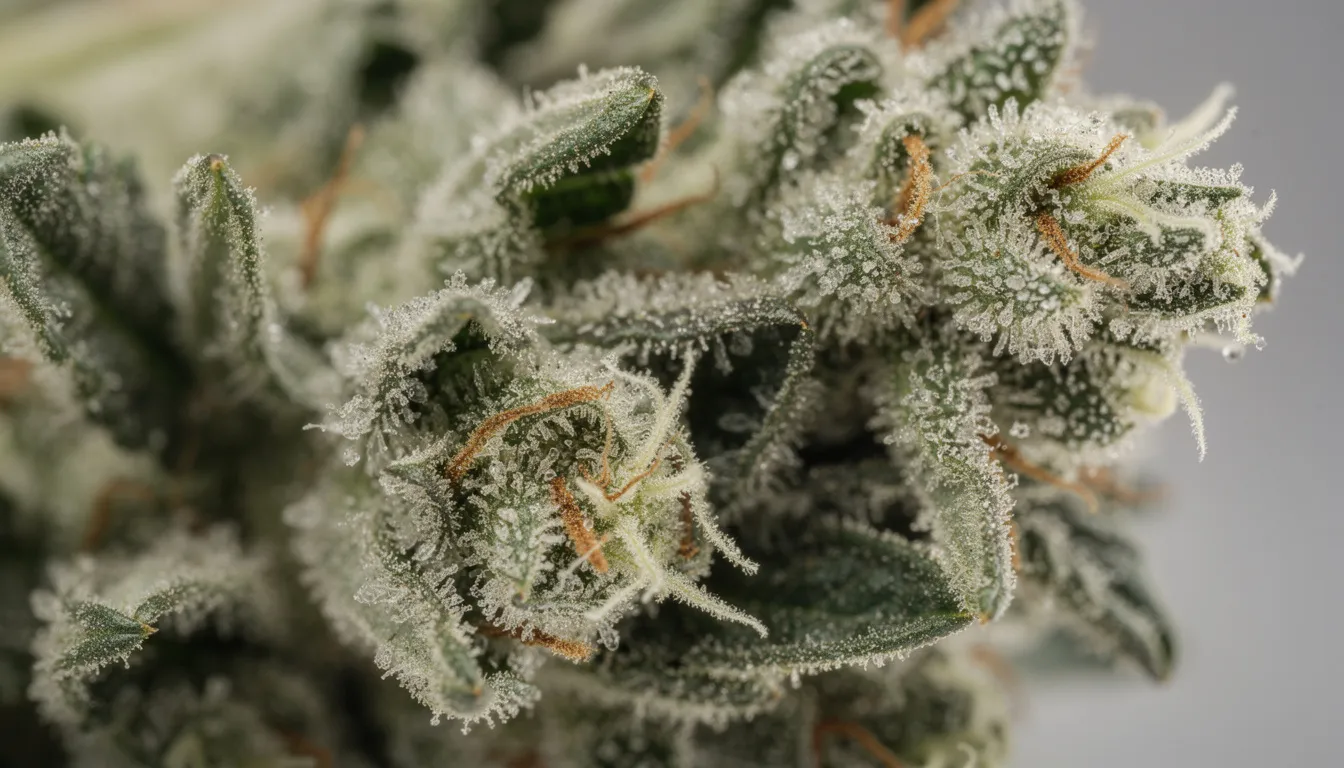
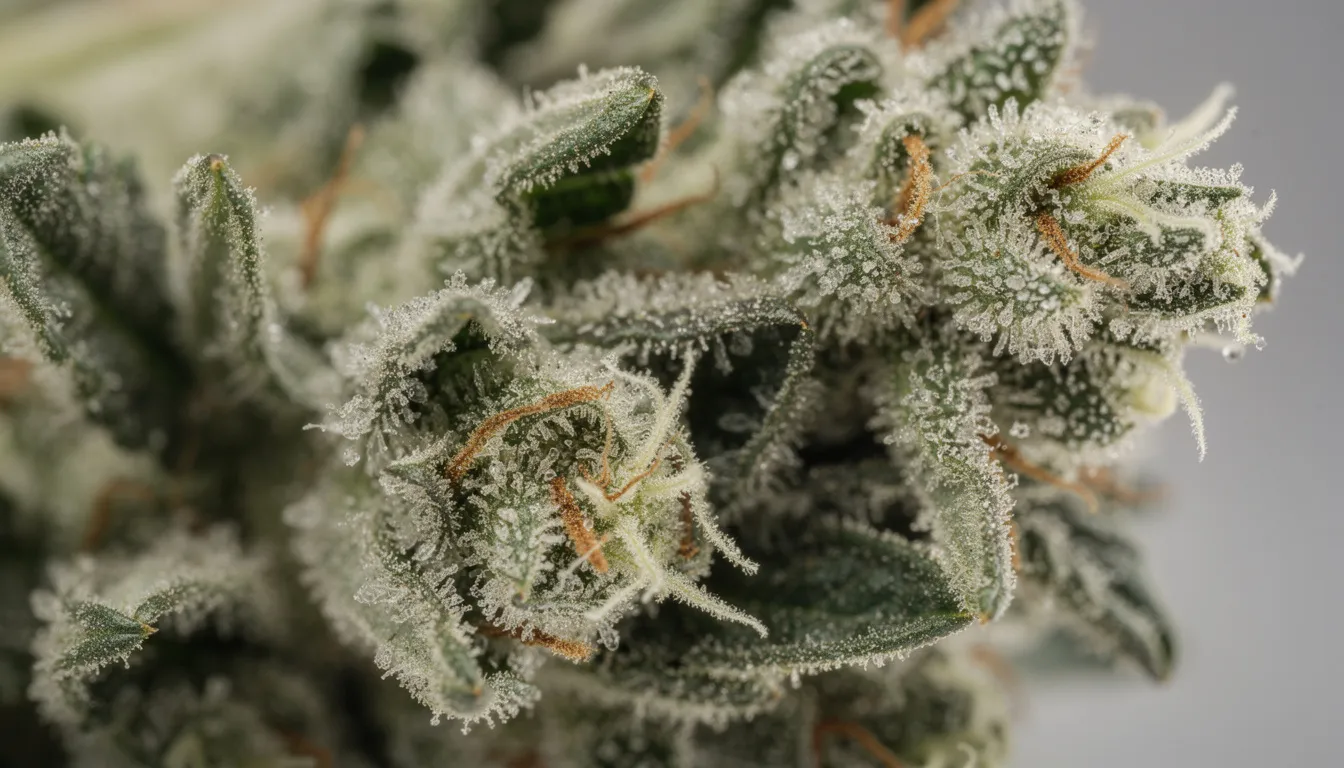
THCA flowers visually resemble classic THC cannabis: dense buds, visible trichomes, intense aroma, and a distinctive terpene profile. They are usually grown indoors or in greenhouses within the EU or imported.
Typical lab values:
-
Δ9-THC: < 0.3%
-
THCA: 18–26%
-
CBD: usually less than 1%
Laboratories issue certificates of analysis (CoA) that document the levels of THCA, THC, CBD, and other cannabinoids. Quality and purity vary significantly depending on the provider.
Marketing arguments and their pitfalls:
|
Claim |
reality |
|---|---|
|
“Legal in Germany” |
Grey area – legally controversial |
|
“Non-psychoactive” |
Only in its raw state, heated = THC |
|
"Laboratory tested" |
Says nothing about legality |
Examples of varieties (fictitious for illustration purposes):
-
“Lemon Haze THCA” – approx. 22% THCA, citrus aroma
-
“OG Kush THCA” – approx. 24% THCA, earthy terpene profile
-
“Purple Punch THCA” – approx. 19% THCA, fruity-sweet scent
THCA hash and concentrates
THCA hash consists of pressed pollen and resins with a high THCA content – often 30–40% or more. THCA crystals or isolates can even reach 90%+.
Typical uses in other countries include dabbing and vaping. In Germany, this is particularly problematic from a legal standpoint: the high THC potency after heating leaves little room for legal interpretations.
Concentrates Privately owned drugs can quickly be classified as a clear case under the Narcotics Act (BtMG), as their purpose for intoxication seems obvious.
⚠️ Warning: High potency = high risk – Learn more about HHC cartridges and their safe application.
Concentrates containing 30%+ THCA can reach THC levels of 25%+ after heating. The risk of overdose and legal consequences is considerable.
THCA Vapes & Prerolls
Vapes and pre-rolled joints are particularly problematic from a legal standpoint. The reason: The direct, intended heating and inhalation clearly results in a conversion to THC – the purpose of consumption is obvious.
In 2023/2024, some German online shops offered vapes containing THCA and other cannabinoids such as HHC variants, HHCP, or 10-OH-HHC. The legal assessment in 2025 is sometimes very strict.
The typical retailer strategy: labeling as "flavoring product" or "research material". In practice, this offers little protection for consumers during inspections.
Example scenario: Police check with THCA vape in car. Possible consequences:
-
THC detection in blood via rapid test
-
Blood test and positive laboratory test for THC metabolites
-
Driving licence revocation and MPU order
-
Criminal proceedings for possession of narcotics
Practical use: forms of consumption, application & storage
Distancing: This section is intended solely for the information of adult readers in Germany. It is not an encouragement to consume illegal substances.
Overview of common uses:
-
Vaping/Smoking: THC effect through heating
-
Raw consumption: e.g. in smoothies – no psychoactive effects
-
Evaporation at low temperature: Partial decarboxylation
-
Infusions as an aroma product: Marketing concept with questionable practical benefit
In Germany, the medical use of cannabis should only take place within the framework of a medical therapy with approved cannabis medicines.
Eating raw vs. heating
Raw consumption could theoretically look like this: hemp juice from fresh flowers, finely ground flowers in smoothies, or cold oil infusions. In Germany, this is practically unheard of due to a lack of standardized products.
Comparison:
|
Raw consumption |
Heated consumption |
|---|---|
|
Hardly psychoactive |
Clearly psychoactive |
|
Potentially health-related motivation |
Designed for intoxication |
|
Legally less critical |
Legally, it is to be assessed as similar to THC. |
|
Intensely vegetal flavor |
Typical cannabis aromas |
During cooking or baking (e.g., brownies), complete decarboxylation occurs quickly. Edibles containing THCA flowers can have an extremely strong effect.
⚠️ Edibles warning: Learn more about alternative products such as the 10-OH-HHC Vape and their safe application.
-
Delayed onset of action (30–90 minutes)
-
Risk of overdose from adding more
-
Long duration of effect (4–8 hours)
-
Unpredictable individual reactions
Vaping and smoking
Typical vaporizer temperatures range from 160–220 °C. Complete decarboxylation of THCA occurs from approximately 180 °C.
Under the Cannabis Act (CanG), vaping and smoking cannabis in Germany is now generally regulated – but only for legally acquired cannabis from growers' associations, medical sources, or home cultivation. THCA flowers from online shops are not covered.
When THCA flowers are vaporized, THC is produced. Positive drug tests for THC metabolites are therefore very likely.
⚠️ Road traffic law:
-
Threshold for THC in blood: currently under discussion (as of 2025)
-
Evidence leads to driver's license revocation.
-
MPU (Medical-Psychological Assessment) often required
-
Even small amounts can have consequences.
Storage & Shelf Life
Practical storage tips:
-
Airtight containers (glass with screw-top lids are ideal)
-
Temperature: cool, approx. 16–20 °C
-
Store in the dark (light accelerates degradation)
-
Keep dry (moisture promotes mold)
During prolonged storage, THCA partially converts spontaneously into THC and other breakdown products. Older flowers can therefore have higher THC levels than fresh ones.
Checklist: How to store THCA flowers correctly
-
✅ Use an airtight glass container
-
✅ Store in a cool, dark place
-
✅ Avoid moisture (Boveda packs optional)
-
✅ Maximum storage period: 6–12 months
-
✅ Check regularly for mold and unpleasant odors
After this time, loss of aroma and changes in potency are to be expected.
THCA Germany FAQ – Frequently Asked Questions answered briefly
This section compiles the most important practical questions regarding THCA in Germany 2025. The answers are short, precise, and formulated with legal caution.
Will THCA still be legal in Germany in 2025?
Only to a limited extent and in a significant gray area. The focus is on the THC potential after heating. Authorities often classify THCA flowers as THC products, especially if high THCA levels are present. There is no clear legal definition.
Does THCA cause a positive drug test result?
Consuming raw THC is generally unproblematic, as no THC enters the system. However, heated consumption (vaping, smoking, edibles) leads to THC metabolites in the body and thus to positive tests. Standard drug tests do not differentiate between THC from... legal and illegal sources .
Can I legally order THCA flowers online to Germany?
Many vendors claim otherwise, but there are significant legal risks. Customs can confiscate shipments, and public prosecutors can investigate. Advertising as "legal" offers no protection from prosecution. Before clicking "add to cart," you should be aware of the consequences. If you're looking for high-quality products, do thorough research beforehand, for example, at [website/source - context needed]. Weedforfriends: Buy premium THCP flowers .
How does THCA-rich cannabis differ from legal CBD-rich cannabis?
Visually, they are very similar – dense buds, visible trichomes, intense aroma. The crucial difference: THCA flowers have a significantly higher THC potential after heating (15–25%), while CBD cannabis remains below 0.2–0.3% THC and produces no psychoactive effects.
Are THCA products safe?
The quality depends heavily on the provider. Risks include:
-
Contaminants (pesticides, heavy metals, mold)
-
Missing or falsified laboratory tests
-
Very high potencies without dosage instructions
-
No regulation or quality control
Important NOTE: For legal questions, you should consult a specialist lawyer. For medical questions, consult a doctor. This article does not replace professional advice.
Conclusion: THCA in Germany should be understood and classified consciously and with information.
THCA is the non-psychoactive precursor to THC and has attracted enormous attention in recent years – primarily through online shops that advertise it as a legal alternative. However, the facts in 2025 paint a different picture: THCA flowers are not a "harmless gray area" but operate in legally complex territory with significant risks.
Heated THCA flowers have virtually the same effects as THC-rich cannabis. This puts them at risk under consumer law, traffic law, and potentially criminal law. While scientific research on raw THCA is promising, it is still in its early stages – any health claims made about it are not credible.
Those interested in cannabis in Germany are better off with the legal structures of the CanG (Cannabis Act): Cultivation associations offer regulated access, medical care is established, and adults are allowed to grow up to three plants for personal use. These avenues offer legal certainty and quality.
The world of cannabinoids is constantly evolving, and the legal landscape is likely to change further in the coming years. Personal responsibility, up-to-date legal information, and a conscious approach to potent cannabinoids remain the best foundation for informed decisions.
Stay informed, act responsibly – and when in doubt: steer clear of legal gray areas.
Share:
THC limit for road traffic: What applies to cannabis use while driving since 2024
THCA: Effects, differences to THC, legality & use (as of 2025)