
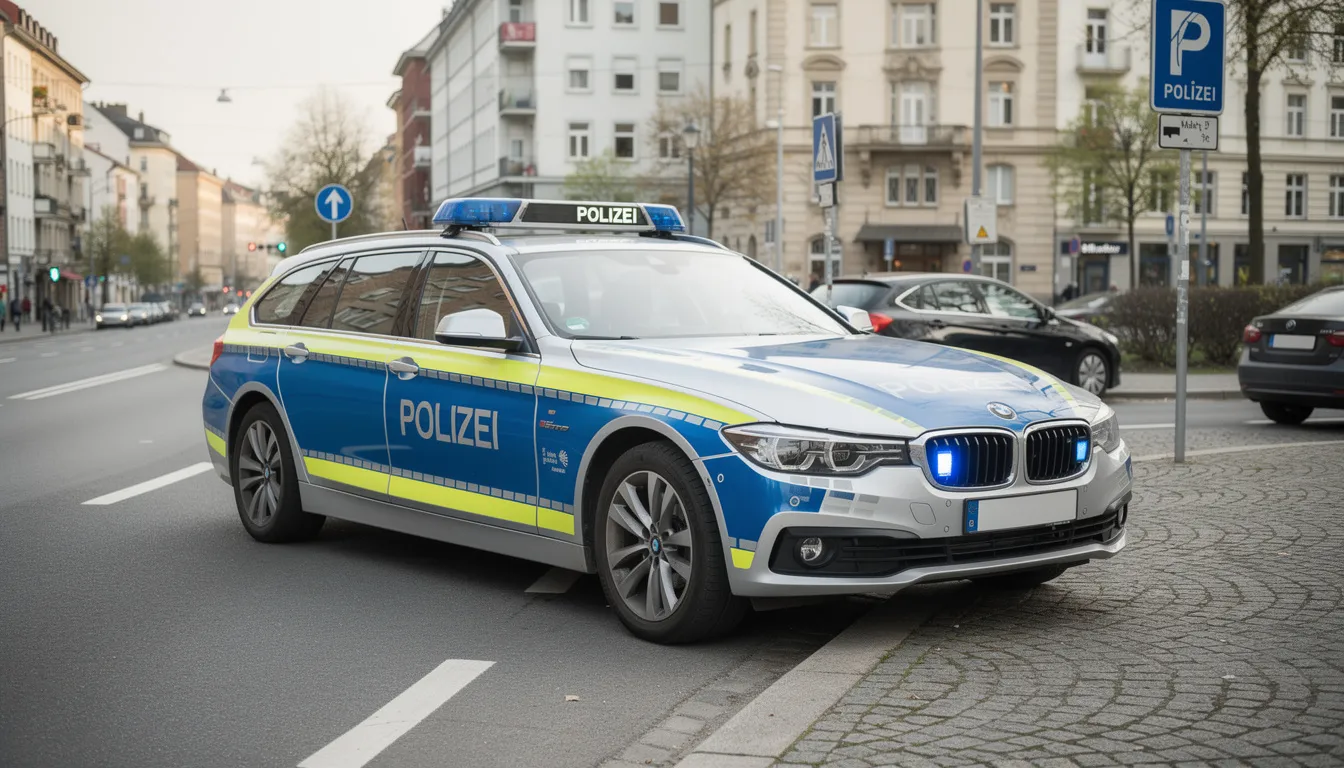
Brief overview: New THC limit for road traffic since August 22, 2024
Since April 1, 2024, cannabis has been partially legal in Germany. Possession of certain quantities and private cultivation are now permitted for adults. But what does cannabis legalization mean for drivers? This is precisely where the THC limit for driving comes into play – and it has been fundamentally redefined.
The new limit is 3.5 ng/ml of THC per milliliter of blood serum and has been in effect since August 22, 2024. This change represents a significant increase compared to the previous practical value of 1.0 ng/ml, which served only as the analytical detection limit.
The most important facts at a glance:
|
aspect |
Details |
|---|---|
|
New THC limit |
3.5 nanograms per milliliter of blood serum |
|
Come into effect |
August 22, 2024 |
|
Previous value |
1.0 ng/ml (legal practice) |
|
Comparable risk |
Approximately 0.2 per mille alcohol |
|
Fine for first offense |
500 euros |
|
Driving ban |
1 month |
|
Points in Flensburg |
2 points |
The limit of 3.5 ng/ml is intended to create greater legal certainty and is based on an actual risk to road safety. For comparison: The 0.5 per mille limit for alcohol serves as a rough guideline, although experts emphasize that THC and alcohol have different effects.
THC limit in road traffic: Legal situation in detail for 2024
The new regulation of the THC limit is directly enshrined in the Road Traffic Act. With the decision of the Bundestag on June 6, 2024, and the approval of the Bundesrat on July 5, 2024, cannabis in road traffic was regulated for the first time with a specific legal limit.
The legal key points at a glance:
-
The limit value in road traffic of 3.5 nanograms per milliliter is now explicitly stipulated in the Road Traffic Act (§ 24a para. 2 StVG).
-
The previous value of 1.0 ng/ml was merely developed through case law – not a real law, but an analytical detection limit.
-
A level of 3.5 ng/ml or higher is considered likely to cause impairment relevant to driving ability.
-
The legal situation treats THC offenses similarly to alcohol offenses starting at 0.5 per mille.
-
Same consequences: fine, penalty points and driving ban for exceeding the speed limit.
The Federal Government's decision is based on the recommendation of an independent expert working group appointed by the Federal Ministry in 2023/2024. These experts were tasked with determining a scientifically sound threshold beyond which the safe operation of a motor vehicle is no longer guaranteed.
This change has significantly clarified the legal situation. Drivers now know exactly which THC level in their blood will lead to sanctions – unlike before the partial legalization, when the line between legal and illegal driving was blurred.
Penalties for exceeding the THC limit
What happens if the police detect a THC level above 3.5 ng/ml during a check? The consequences are clearly tiered and increase significantly with each further violation.
Sanctions based on the number of violations
|
violation |
fine |
Driving ban |
Points |
|---|---|---|---|
|
First offense |
500 euros |
1 month |
2 |
|
Second offense |
1,000 euros |
3 months |
2 |
|
Third-party violation |
1,500 euros |
3 months |
2 |
Repeated violations may also result in:
-
Order for a medical-psychological assessment (MPU)
-
Driving licence revocation by the driving licence authority
-
Longer-term waiting periods for reissuance
The situation becomes particularly critical in cases of concrete danger or an accident. In such cases, additional criminal regulations apply under Sections 315c or 316 of the German Criminal Code (StGB). The penalty can then go far beyond a simple administrative offense – up to and including imprisonment.
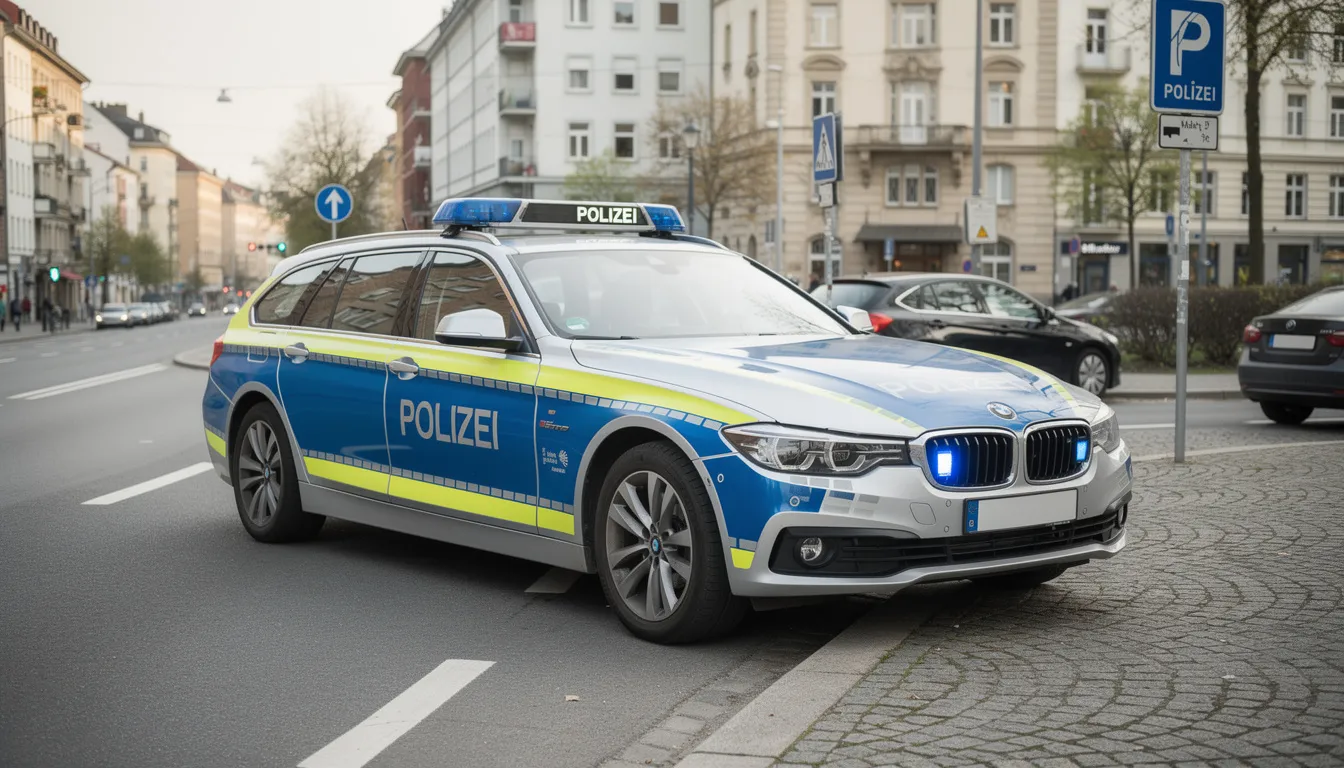
Special rules for novice drivers and drivers under 21 years of age
Significantly stricter regulations apply to young drivers and those in their probationary driving period. For this group, the ban on cannabis while driving is virtually absolute.
The background: According to Section 24c of the German Road Traffic Act (StVG), a zero-tolerance policy already applies to alcohol for novice drivers. This logic has been extended to cannabis. This means:
-
For drivers under 21 and those in their probationary period, there is an absolute ban on THC while driving.
-
The 3.5 ng/ml limit does not offer a "safety zone" here.
-
Even small detectable amounts of THC can be considered a Class A violation.
Typical consequences for novice drivers:
-
€250 fine
-
1 point in Flensburg
-
Extension of the probationary period by 2 years
-
Mandatory advanced seminar
If a young driver also exceeds the 3.5 ng/ml threshold, the regular penalties (500 euros fine, driving ban) are added on top. This combination can quickly lead to the revocation of the driver's license.
Scientific basis: Why exactly 3.5 ng/ml?
The limit of 3.5 nanograms per milliliter is not an arbitrarily chosen value. In 2023/2024, the German Federal Government appointed an interdisciplinary group of experts, bringing together specialists from medicine, traffic law, and toxicology.
These experts came to the following conclusions:
-
3.5 ng/ml corresponds to an accident risk comparable to approximately 0.2 per mille alcohol.
-
Below this value, studies show no significantly increased probability of failure among experienced cannabis users.
-
This value is therefore significantly below the 0.5 per mille limit for alcohol – a deliberately conservative approach.
The German Bar Association and lawyer Andreas Krämer cite studies that only demonstrate actual impairments at THC levels of 2–4 ng/ml. The ADAC (German Automobile Club) emphasizes that the limits of what is acceptable with regard to road safety are reached at 3.5 ng/ml.
One key problem remains: THC is detectable in the blood for significantly longer than the acute effects last. While the high subsides after a few hours, THC can still be detected in the blood serum days or even weeks later with regular use.
The limit value is ultimately a statistical compromise. It is intended to guarantee road safety while also being proportionate – a balance that does not satisfy all parties involved.
Measurability and practical problems with THC tests
Unlike alcohol, there is no simple breath test for THC in the blood. The measurement is more complicated and less informative about the current level of impairment.
This is how a THC test typically works:
-
If there is suspicion, the police conduct a preliminary test (urine or saliva test).
-
Only a blood sample taken in a laboratory is legally relevant for sanctions.
-
The blood sample will be tested for the THC content in the blood serum.
Overview of verification times:
|
Consumer behavior |
Detectable in blood |
|---|---|
|
One-time consumption |
1–2 days |
|
Occasional consumption |
3–5 days |
|
Regular consumption |
Up to 30 days |
It's important to understand that a positive test result doesn't necessarily mean someone is currently under the influence of drugs or alcohol. Alternative testing methods, such as saliva tests or measurements in oral fluid, are being tested abroad, but are not yet universally accepted as evidence in Germany.
Even with levels below 3.5 ng/ml, driving impairment may be present if specific signs of impairment are documented. The police therefore also pay attention to external signs such as red eyes, slowed reactions, or unsafe driving behavior.

THC in the blood: What the limit means in practice
The actual THC level after consumption depends on many factors. Blanket statements like "it's all out after 6 hours" are simply wrong and can be costly.
Factors influencing THC levels:
-
Method of consumption (smoking, vaping, eating)
-
THC content of the product (between 5 and over 25%)
-
Body weight and metabolism
-
Frequency and quantity of consumption
-
Time of last intake
A single joint with a THC content of approximately 10–15% can cause THC levels to rise significantly above 3.5 ng/ml in the short term. In occasional users, the level often only drops below the threshold after more than 24 hours. Regular users can show measurable residual levels for several consecutive days – even without experiencing an acute high.
The clear recommendation is: consistently separate consumption and driving. Blanket "waiting times" offer no legal certainty. Anyone who is unsure should refrain from using their car.
Medical cannabis and participation in road traffic
Since 2017, medically prescribed cannabis has been legal in Germany. Many people regularly take THC-containing medications – and are faced with the question of whether they are still allowed to drive.
The legal situation for cannabis patients:
-
Section 24a of the Road Traffic Act provides for an exception if the medication is taken according to a doctor's prescription.
-
Prerequisite: The person is not unfit to drive.
-
Health and fitness to drive must be guaranteed.
Practical recommendations for cannabis patients:
-
Carry the medical certificate confirming the prescription.
-
Show your cannabis patient ID card during checks.
-
If you are unsure about your own driving ability, do not drive.
-
Documentation of dosage and administration times
Even with a prescription, the rule is: anyone who feels intoxicated or significantly impaired is not allowed to drive. Police and courts examine each case individually. If there are doubts about a person's fitness to drive, a medical-psychological assessment (MPU) or a driving ban may be imposed despite a doctor's prescription.
Mixed use: Cannabis and alcohol at the same time
The combination of cannabis and alcohol is particularly dangerous. The risk of accidents increases significantly more with mixed use than with either substance alone.
Why mixing substances is so risky:
-
Alcohol and THC enhance each other's effects
-
The reaction time deteriorates drastically.
-
Attention and concentration drop significantly
-
Self-assessment of driving ability is becoming even more unreliable.
The new THC limit of 3.5 ng/ml does not protect against driving under the influence of alcohol. Even low blood alcohol concentrations (from about 0.3 per mille) in combination with 3.5 ng/ml THC can lead to criminal driving under the influence.
Consequences of proven mixed drug use:
|
violation |
fine |
Driving ban |
Points |
|---|---|---|---|
|
Cannabis + Alcohol |
Minimum 1,000 euros |
Minimum 1 month |
2 |
For novice drivers and those under 21, the combined ban on alcohol and cannabis during the probationary period means virtually zero tolerance. Even the smallest amounts of either substance can lead to the revocation of the driver's license.

Cannabis legalization and its impact on road traffic
The partial legalization of cannabis since April 1, 2024, has fundamentally changed the rules regarding possession. However, caution is still advised when driving under the influence.
What has been allowed for adults since April 2024:
-
Possession of up to 25 g cannabis in public
-
Possession of up to 50g in one's own home
-
Cultivation of up to 3 plants for personal use
However, decriminalizing possession does not mean that driving under the influence of cannabis is permitted. Road traffic remains deliberately strictly regulated to limit the risk of accidents.
Regional restrictions also apply: Bavaria, for example, prohibits cannabis consumption at folk festivals, in beer gardens, and in certain public areas. These prohibitions can also indirectly affect mobility.
The police continue to conduct drug tests in cases of suspected drug use. Legalization has not created a grace period for checks. On the contrary: With the new legal situation and the clear limit of 3.5 ng/ml, violations can now be punished more clearly. Information about the easy access to medicinal cannabis and information on medical uses can be found here.
Public opinion and the role of associations (ADAC, police unions)
The public debate surrounding cannabis use and driving is lively. Various stakeholders hold differing positions on the new regulations.
ADAC position:
-
Surveys among ADAC members predominantly classify cannabis use while driving as dangerous.
-
Recommendation: Always drive sober.
-
Exercise caution even below 3.5 ng/ml
-
Criticism: The limits of what is acceptable have been reached.
Critical voices:
-
Police unions are calling for better pre-tests and more public awareness campaigns.
-
The German Bar Association advocates for graduated limit values between 4 and 16 ng/ml – analogous to the multi-tiered alcohol regulations.
-
Traffic lawyers sometimes question the suitability of the chosen limit value – comprehensive information on the Effects on driving ability Weedforfriends offers information on HHC and legal aspects.
Consultations with professional associations and public debate will influence the development of the regulations in the coming years. The provisions may still be amended.
FAQ on the THC limit in road traffic
What is the legal THC limit for driving since August 2024?
The legal limit is 3.5 nanograms of THC per milliliter of blood serum. This value replaces the previous legal practice of 1.0 ng/ml, which served only as the analytical detection limit. The new limit has been enshrined in the Road Traffic Act since August 22, 2024.
How long should I wait before driving after smoking marijuana?
There's no single, guaranteed timeframe. For occasional use, at least 24 hours should pass; for regular use, significantly longer. THC can remain detectable in the blood for up to 30 days. The safest strategy is to consistently separate consumption and driving.
Does the limit also apply to medical cannabis?
Yes, the limit of 3.5 ng/ml generally applies to cannabis patients as well. However, a special assessment is carried out if prescribed by a doctor. The decisive factor is the actual ability to drive. A doctor's certificate should be carried during checks.
When are medical-psychological assessments (MPU) and driver's license revocation threatened due to THC?
A medical-psychological assessment (MPU) can be ordered in cases of high THC levels, repeated offenses, indications of regular consumption, or combined use with alcohol. The decision rests with the driver's license authority and varies depending on the federal state. Even for a first offense, a fitness-to-drive assessment can follow if the levels are particularly high.
Could my driver's license be at risk even with a blood level below 3.5 ng/ml?
Yes, that's possible. If additional signs of impairment are documented, or if there are indications of a lack of separation between consumption and driving, unfitness to drive can be determined even with values below the legal limit. The police always assess the overall picture.
Conclusion: Safe travels despite cannabis legalization
The legalization of cannabis since April 1, 2024, has partially decriminalized possession for adults. However, strict rules still apply to driving under the influence. While the new THC limit of 3.5 ng/ml of blood serum provides greater legal certainty, it is not a free pass for cannabis users to drive.
The limit merely marks the lower limit for sanctions. Even below this threshold, impairment may be present if signs of impairment are present. The core message remains: consistently separate cannabis use and driving – especially with regular use or combined use with alcohol.
Novice drivers, young drivers under 21, and cannabis patients have special obligations of care. Stricter regulations or specific documentation requirements apply to them in some cases.
If you are unsure about your legal situation, it is advisable to seek expert advice – whether from a traffic law attorney or your doctor in the case of medical cannabis. Ultimately, it's not just about fines and penalty points, but about the health of all road users.
Share:
7 ways to understand the effects of different terpenes
THCA Germany: Effects, Legality & Products 2025