
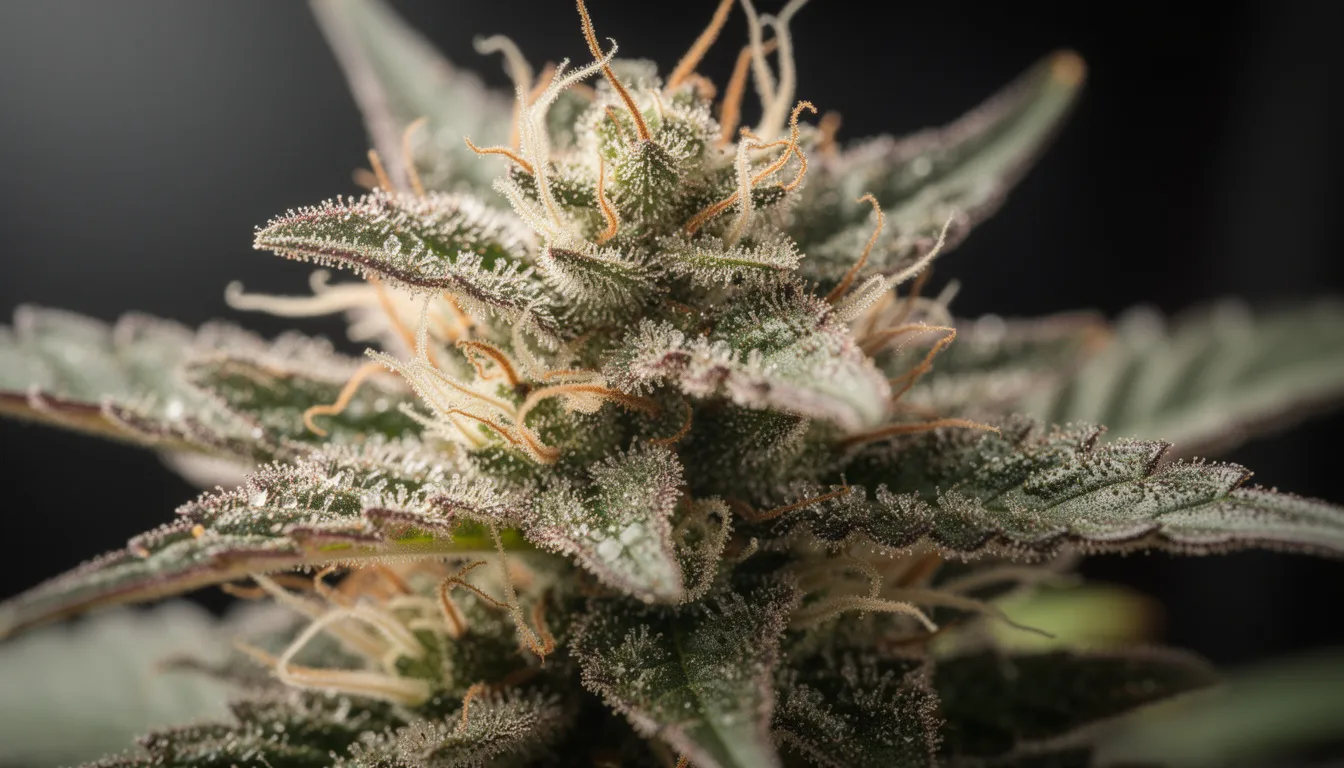
THC (Tetrahydrocannabinol): Effects, risks, legal issues & detection
Introduction: What readers want to know directly about THC
Tetrahydrocannabinol – THC for short – is the main psychoactive ingredient in the cannabis plant and is responsible for the characteristic "high" experienced when consuming cannabis. This article brings together medical, legal, and practical aspects of the substance, as well as new cannabinoids such as... HHCPM : from the effects in the body to the detectability in the blood, to the consequences in road traffic and the new EU rules for hemp-containing foods.
Key facts in advance:
-
THC exerts its psychoactive effects by binding to cannabinoid receptors in the brain.
-
Detection in the body ranges from hours (blood) to several weeks (urine in regular users).
-
New cannabis regulations have been in effect in Germany since April 2024 under the Cannabis Act (CanG).
-
Since August 2024, a THC limit of 3.5 ng/ml in blood serum has applied to road traffic.
Important NOTE: This article is for informational purposes only and does not replace medical or legal advice. For health or legal questions, please consult appropriate professionals.
Basics: What is THC (Δ9‑tetrahydrocannabinol)?
Delta 9 tetrahydrocannabinol, scientifically known as Δ9 THC, is one of over 100 identified cannabinoids in the Cannabis sativa L. plant. It is the main compound responsible for the intoxicating effects of marijuana and hashish.
The isolation of Δ9‑THC in pure form was first achieved in 1964 by the Israeli researchers Yechiel Gaoni and Raphael Mechoulam – a milestone that established the modern understanding of the effects of cannabis and paved the way for research into the endocannabinoid system.
Important basic facts about THC :
-
Chemical formula: C₂₁H₃₀O₂ (21 carbon, 30 hydrogen, 2 oxygen atoms)
-
Molecular weight: 314.4 g/mol
-
Structure: Tricyclic 21-carbon ring system with dibenzopyran backbone
-
Natural occurrence: Exclusively in the hemp plant (Cannabis sativa L.)
Chemistry, biosynthesis and activation of THC
In the living plant, THC is predominantly not present in its active form, but as tetrahydrocannabinolic acid (THCA-A). This precursor is not psychoactive and must first be converted into active Δ9-THC by heating – a process known as decarboxylation.
The biosynthesis pathway in the cannabis plant:
-
Formation of cannabigerolic acid (CBGA) as a common precursor of all cannabinoids
-
Conversion by the enzyme THCA synthase to THCA-A
-
Decarboxylation by heat (smoking, vaporizing, baking) to psychoactive Δ9‑THC
The pronounced lipophilicity (fat solubility) of THC has far-reaching significance: it enables extraction with fat-based solvents for the production of hash oil and explains its storage in human fatty tissue, which is why it can be detected for a long time after consumption.
Typical THC levels by product: (More about alternative cannabinoids like DNT9, which acts like THC ).
|
product |
THC content |
|---|---|
|
Natural flowers (conventional) |
4–10% |
|
High-potency varieties |
15–25% |
|
hashish |
10–20% |
|
Hash oil/extracts |
50–90% |
Where is THC found? Plant parts, products, and typical levels.
THC is primarily produced in the trichomes – the resin-producing glandular hairs – of female, unfertilized flowers of the hemp plant. The concentration is significantly lower in leaves, while hemp seeds contain virtually no THC.
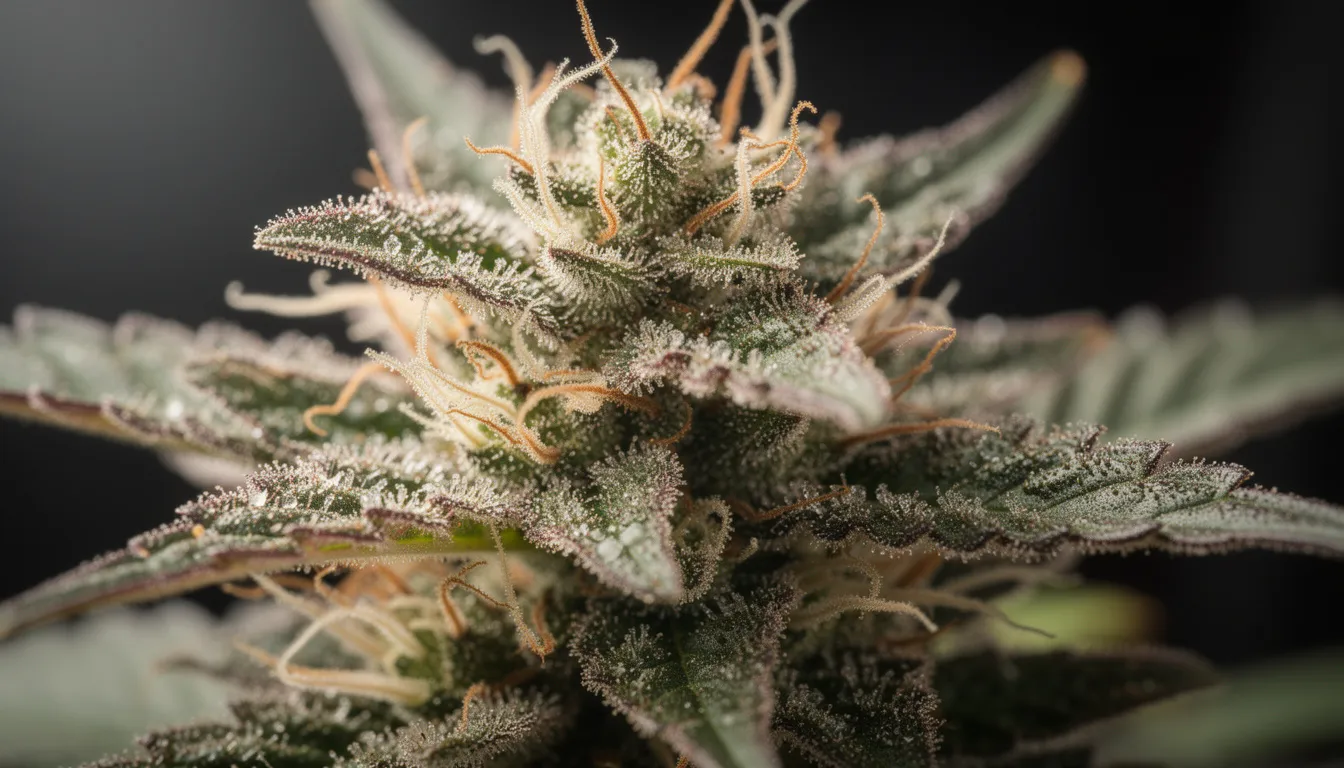
Differentiation of cannabis products:
-
Marijuana : Dried flowers and upper leaves of the cannabis plant; THC content varies greatly depending on the strain.
-
Hashish : Pressed or extracted resin, typically 10–20% THC
-
Hash oil : Highly concentrated extracts with a very high THC content (up to 90%)
-
Industrial hemp : EU-certified varieties with a THC content below 0.2–0.3%, used as a fiber or food crop
The development of modern breeding lines has significantly increased the average THC content in recreational cannabis since the 1990s – from often below 5% back then to frequently 15–25% or more in high-potency varieties today.
Forms of cannabis consumption and activation of THC
The method of consumption significantly influences how quickly and how long THC takes effect. With every method of consumption, THCA must first be decarboxylated to active THC – either by the consumer themselves or during manufacturing.
An overview of the most important forms of consumption:
-
Smoking (joint, pipe, bong) : Rapid onset of effects within minutes, duration of effects 1–3 hours. Decarboxylation occurs through combustion.
-
Inhalation with a vaporizer : A similarly rapid onset of effects as smoking, but without combustion products. THC is vaporized at temperatures of 160–220 °C.
-
Oral administration (edibles, oils, capsules) : Delayed onset of action after 30–120 minutes, but longer duration of action of 4–8 hours. Higher risk of overdose due to the delayed effect.
-
Medical sprays (e.g. Sativex) : Sublingual application with relatively rapid onset of action, standardized dosage possible.
Important to know: Raw flowers or leaves that have not been heated contain mostly THCA and therefore have little to no intoxicating effect. Only heating releases the psychoactive properties.
How does THC work in the body? The endocannabinoid system & the "high" feeling
The endocannabinoid system (ECS) is a natural signaling system found in all mammals that regulates numerous physiological processes. It consists of:
-
Endocannabinoids : Endogenous ligands such as anandamide and 2-AG
-
Cannabinoid receptors : CB1 (primarily in the central nervous system) and CB2 (primarily in the immune system)
-
Degradation enzymes : For the controlled degradation of endocannabinoids
Δ9-THC acts as a partial agonist at CB1 receptors in the brain. Its structure is so similar to the body's own anandamide that it can bind to the same sites. As a result, THC modulates perception, mood, memory, appetite, motor skills, and pain perception.
Typical acute effects of THC consumption:
|
Desired effects |
Undesirable effects |
|---|---|
|
Euphoria, a "high" feeling |
Anxiety, paranoia |
|
relaxation |
Panic attacks |
|
Altered sensory perception |
Hallucinations (at high doses) |
|
Increased appetite |
dry mouth |
|
Altered perception of time |
Elevated pulse |
Other cannabinoids, such as cannabidiol (CBD), can modulate the effects of THC. CBD is being discussed as potentially mitigating some of the undesirable psychoactive effects of THC – a phenomenon being researched in the context of the so-called entourage effect.
Pharmacokinetics: absorption, distribution, metabolism and excretion
The pharmacology of THC is complex and explains both its duration of action and its long detectability in the body.
Recording:
-
When inhaled, THC reaches its peak concentration in the blood within 3–10 minutes.
-
When taken orally, it takes 1–2 hours for the onset of action, and the bioavailability is lower (10–20% vs. 25–30% with inhalation).
Distribution: THC binds strongly to plasma proteins and, due to its lipophilicity, is rapidly distributed into fatty tissue. This accumulation is the main reason for its prolonged detectability in regular users.
Metabolism: The breakdown occurs mainly in the liver via CYP450 enzymes (especially CYP2C9):
-
Hydroxylation to 11-Hydroxy-THC (11-OH-THC) – also psychoactive
-
Further oxidation to THC COOH (11-nor-9-carboxy-THC) – inactive
Over 100 different metabolites have been identified, with 11-OH-THC and THC-COOH being the most important for effect and analysis.
Excretion:
-
Predominantly via stool (65–80%)
-
A smaller proportion via urine (20–35%)
-
Half-life highly variable: 1–2 days with occasional use, up to several weeks with chronic use.
Effects & Side Effects: Short-term and long-term
The effects of THC vary greatly depending on the dose, method of consumption, individual tolerance and the consumer's mental state.
Short-term effects:
|
Area |
Typical effects |
|---|---|
|
psyche |
Euphoria, relaxation, but also fear, restlessness |
|
Cognition |
Concentration and attention disorders |
|
Motor skills |
Slowed reaction time, coordination problems |
|
Physically |
Dry mouth, increased pulse, red eyes |
|
perception |
Altered perception of time and space |
Long-term risks associated with regular consumption:
-
Cognitive impairments : memory problems, reduced learning ability, decreased motivation – particularly pronounced when substance use begins in adolescence (studies show IQ reductions of 6–8 points in early, long-term users)
-
Risk of addiction : cannabis Use disorder develops in approximately 9% of all consumers, and is significantly more common with daily consumption.
-
Mental disorders : Increased risk of anxiety disorders and psychoses in vulnerable people
High doses can trigger acute psychotic episodes with hallucinations, especially in individuals with a genetic predisposition or pre-existing mental health conditions. The higher the THC content per dose, the greater the risk of adverse psychological effects.
THC and risk for addiction & mental health
Although THC rarely causes fatal overdoses, it carries a significant risk of addiction and psychosis that should not be underestimated.
Risk of addiction according to consumption pattern:
|
Frequency of consumption |
Estimated risk of addiction |
|---|---|
|
Occasionally (< 1x/month) |
Very low |
|
Regularly (1-4 times/week) |
Moderate (approx. 10%) |
|
Daily/Almost daily |
Increased (up to 30%) |
|
Starting before the age of 18 |
Significantly increased (approx. 17%) |
Regular use of high-potency cannabis (high THC, low CBD content) has been associated in studies with a significantly increased risk of psychosis and anxiety disorders.
Particularly vulnerable groups should avoid products containing THC:
-
Adolescents and young adults (brain development up to about 25 years)
-
People with a family history of psychosis or schizophrenia
-
People with existing anxiety disorders or depression
-
Pregnant and breastfeeding women
Chronic high-dose use can also lead to cannabinoid hyperemesis syndrome – paradoxical nausea and vomiting despite the usually antiemetic effect of THC.
THC in medicine: areas of application and preparations
Medical cannabis, or THC-containing medications, have been increasingly used therapeutically since the 2010s. In Germany, such preparations have been prescribable under certain conditions since the 2017 amendment to the law.
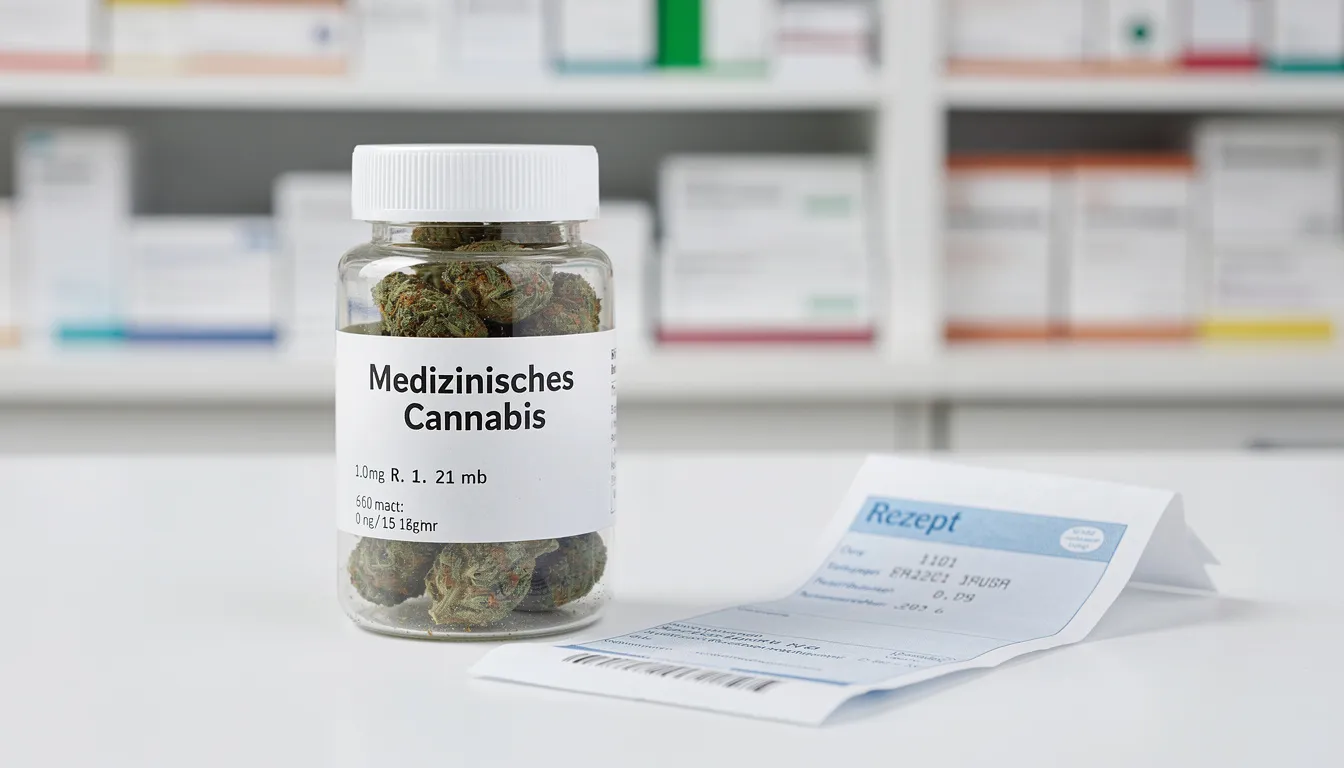
Typical applications of medicinal cannabis:
-
Chronic pain when standard therapies are not sufficiently effective
-
Spasticity in multiple sclerosis
-
Chemotherapy-induced nausea and vomiting
-
Loss of appetite and weight loss in AIDS or cancer
-
Selected rare indications (e.g., certain forms of epilepsy, Tourette syndrome)
Available preparations:
|
preparation |
Description |
|---|---|
|
Dronabinol |
Pure synthetic Δ9‑THC (e.g. Marinol), dosages typically 2.5–20 mg |
|
Medical cannabis flowers |
Standardized flowers with defined THC/CBD content |
|
Sativex |
Oral spray with THC and CBD in a 1:1 ratio, approved for MS spasticity |
|
Nabilone |
Synthetic THC analogue for chemotherapy-induced nausea |
Important: The treatment with Medical cannabis It is always carried out under medical supervision, with individual dosage and careful benefit-risk assessment. It differs fundamentally from recreational use and requires a corresponding diagnosis as well as the failure or intolerance of conventional therapies.
Legal classification of THC in Germany, EU & doping
Δ9-THC is classified as a narcotic in many countries, while less stringent regulations apply to industrial hemp with very low THC content. The legal landscape has changed considerably in recent years.
Germany since April 1, 2024 (Cannabis Act – CanG):
-
Private possession of up to 25g of cannabis is not a criminal offense for adults aged 18 and over.
-
Storing up to 50g at home is permitted.
-
Growing your own plants (up to three per adult) for personal use
-
Cultivation in growers' associations (Cannabis Social Clubs) is possible under strict conditions.
-
Consumption in the presence of minors or within sight of schools/playgrounds is prohibited.
Important limitations:
-
Synthetic THC derivatives and semi-synthetic cannabinoids remain subject to the Narcotics Act (BtMG).
-
Distribution and sale outside of legal structures remain punishable offenses.
-
Cross-border transport is not permitted.
Doping context: THC, or cannabis use, remains on the World Anti-Doping Agency's (WADA) prohibited list. A positive test during competition can lead to suspensions and other sanctions, even if consumption did not occur on the day of the competition itself.
THC in food: EU maximum levels and safety assessment
Hemp-containing foods such as hemp seed oil, hemp flour, or hemp snacks are enjoying increasing popularity. Although hemp seeds themselves contain virtually no THC, products can contain traces of THC due to contamination during harvesting or processing.
EFSA safety assessment: In 2020, the European Food Safety Authority (EFSA) established an acute reference dose (ARfD) of 1 µg Δ9-THC per kg body weight. This figure is intended to ensure that no acute psychotropic effects occur when consuming food containing this substance.
EU maximum levels (Regulation (EU) 2023/915, valid since 1 January 2023):
|
product |
Maximum THC content |
|---|---|
|
Hemp seed oil |
7.5 mg/kg |
|
hemp seeds |
3.0 mg/kg |
|
Hemp flour, partially defatted hemp seeds |
3.0 mg/kg |
Please note:
-
Children and sensitive individuals have a higher risk of adverse effects when the ARfD is exceeded.
-
Manufacturers are required to control THC levels through analysis.
-
The inspections are carried out by food safety authorities.
Different THC isomers: Δ9-THC vs. Δ8-THC
Besides the well-known Δ9-THC, other isomers exist that are increasingly appearing on the market. The most well-known is Δ8-THC.
What is Δ8‑THC? Delta-8-tetrahydrocannabinol is a structural isomer of Δ9-THC. The difference lies in the position of the double bond: in Δ8-THC it is located between C-8 and C-9, while in Δ9-THC it is located between C-9 and C-10. The mechanisms of action are similar, although Δ8-THC is considered less psychoactive.
Key differences:
|
Characteristic |
Δ9‑THC |
Δ8‑THC |
|---|---|---|
|
Occurrence in the plant |
Main cannabinoid |
Trace amounts |
|
Psychoactive potency |
Strong |
Mild to moderate |
|
Legal status |
Clearly regulated |
Partly unclear |
|
Production |
Natural or synthetic |
Mostly semi-synthetic, made from CBD |
Caution advised:
-
Δ8-THC products are often obtained through chemical conversion from CBD or Δ9-THC.
-
As part of its assessment, EFSA pointed out significant data gaps regarding toxicology and safety.
-
Legal classification and security data are still partly in flux.
-
Consumers should look for reputable manufacturers with independent laboratory analyses.
Analysis of THC, CBD and other cannabinoids
The precise analysis of cannabinoids is essential for both product quality control and for forensic and clinical purposes.
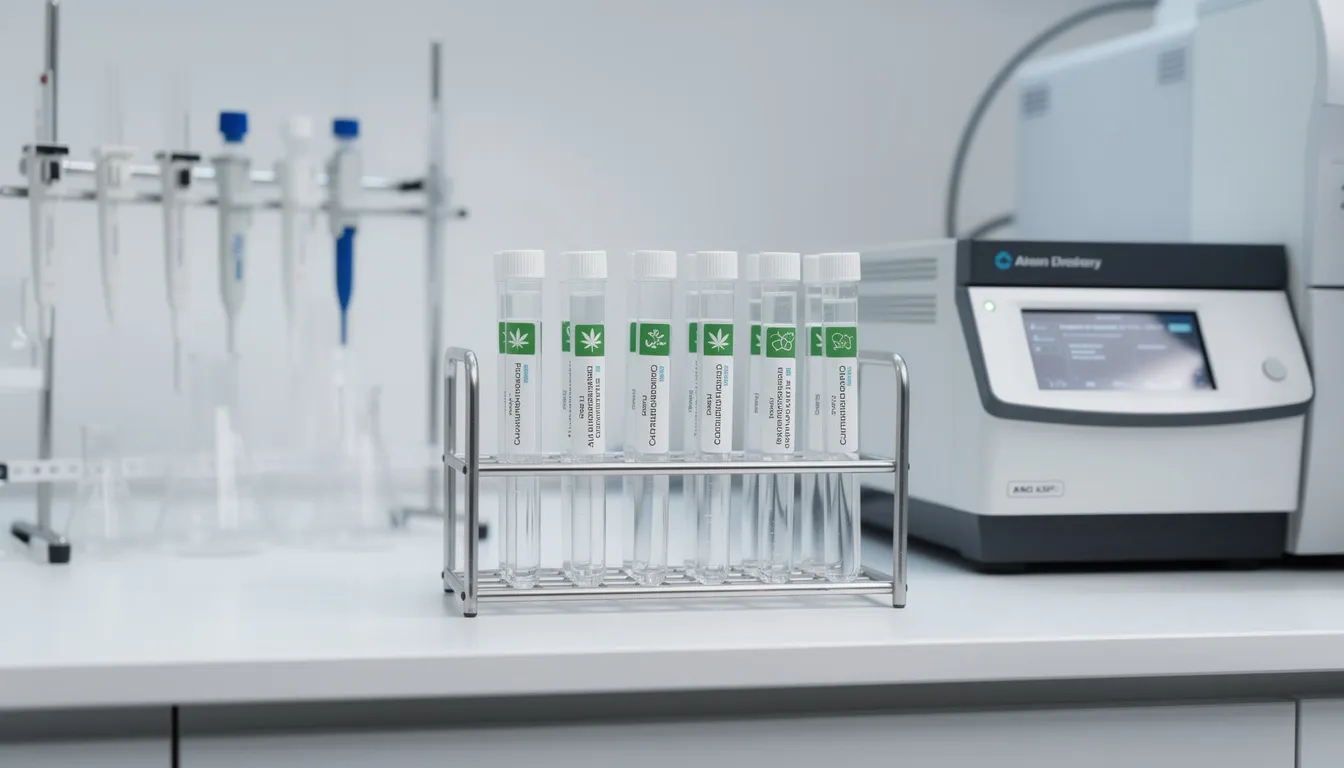
Modern analytical methods: The standard method for the quantitative determination of cannabinoids is liquid chromatography with tandem mass spectrometry (LC-MS/MS or LC-ESI-MS/MS). This technique enables:
-
Simultaneous determination of Δ9‑THC, Δ8‑THC, THCA, CBD, CBDA and other cannabinoids
-
Very low detection limits (ng/ml range)
-
High specificity and accuracy
Quality assurance in laboratories:
-
Use of validated methods with internal standards
-
Calibration series for quantitative results
-
Regular interlaboratory comparisons to verify the quality of analysis
Areas of application:
-
Verification of compliance with EU maximum levels in food
-
Quality control in medicinal cannabis
-
Novel food approval process
-
Forensic analyses (blood, urine, hair)
THC can be detected in the body in: blood, urine, saliva, hair
Due to its fat solubility, THC and its metabolites remain detectable in the body for significantly longer than many other drugs. This has important implications for traffic stops and occupational health examinations.
Detection times according to consumption patterns:
|
matrix |
Occasional consumption |
Regular consumption |
Chronic continuous consumption |
|---|---|---|---|
|
Blood (THC) |
6–24 hours |
1–3 days |
Up to 1 week |
|
Urine (THC-COOH) |
2–4 days |
1–2 weeks |
4–12 weeks |
|
saliva |
12–24 hours |
1–3 days |
Several days |
|
Hair |
Months |
Months |
Months |
Special features of the different testing methods:
-
Blood test : Gold standard for acute consumption, detects THC directly, legally relevant value for road traffic
-
Urine test : Detects the metabolite THC-COOH, also indicates consumption from the distant past.
-
Saliva/sweat test : Rapid tests for recent consumption, often used as a preliminary test during police checks.
-
Hair analysis : Enables tracing over months, used for MPU (Medical-Psychological Assessment) and proof of abstinence.
Important to understand: A positive test result does not automatically mean that the effects of drugs are currently being used. In particular, urine tests often also detect consumption that occurred days or weeks ago.
THC in road traffic: limits, controls and consequences
THC impairs driving ability by slowing reactions, reducing attention, and disrupting coordination. Therefore, cannabis use in connection with road traffic is strictly regulated.
Current limit values in Germany (since August 2024):
|
group of people |
THC limit (blood serum) |
|---|---|
|
Adults aged 21 and over |
3.5 ng/ml |
|
New drivers (probationary period) |
1.0 ng/ml |
|
Drivers under 21 years of age |
1.0 ng/ml |
Procedure of a traffic stop:
-
Suspicion check : The police first check for signs of impairment (driving behavior, eyesight, speech, coordination)
-
Preliminary test : In case of suspicion, use rapid urine or saliva tests.
-
Blood test : In case of a positive preliminary test or strong suspicion, a blood sample will be taken as ordered by a doctor.
-
Laboratory analysis : The blood test result serves as legally admissible evidence.
Consequences of exceeding the limit:
More information about the Legal consequences and effects of HHC consumption while driving You can find them in our comprehensive guide.
-
Administrative offense punishable by a fine (usually 500–1,500 euros)
-
Points in Flensburg
-
Driving ban (1–3 months)
-
Information to the driver's license office
-
Possible order for a medical-psychological assessment (MPU)
The consequences are significantly worse if alcohol is involved (mixed consumption) or in the event of an accident.
How long after consuming a car should you wait before driving? Recommended waiting periods
The individual rate at which THC is broken down varies greatly and depends on several factors:
-
Amount consumed and THC content of the product
-
Frequency of consumption (tolerance development, fat tissue storage)
-
Body fat percentage and metabolic rate
-
Method of consumption (inhalation vs. oral ingestion)
Recommended waiting times (forensic professional societies):
|
Consumption patterns |
Minimal waiting time |
Recommended waiting time |
|---|---|---|
|
One-time/occasional consumption |
6–8 hours |
At least 12 hours |
|
Consumption of stronger products/edibles |
12 hours |
24 hours or more |
|
Regular consumption |
Several days |
Individual testing |
|
Daily continuous consumption |
Weeks |
Abstinence + control |
Important instructions:
-
Special caution is advised when consuming edibles, as their delayed and prolonged effects are difficult to predict.
-
For products of unknown strength, the waiting time should be generously calculated.
-
For regular, daily users, safe participation in road traffic is often only realistic after several weeks of abstinence.
-
When in doubt: Do not drive or perform a self-test beforehand.
MPU, hair samples & long-term consequences of THC in traffic
Driving under the influence of THC can have far-reaching consequences for your driver's license, going beyond the immediate fine.
Information to the driver's license authority: Following a violation, the driver's license authority is automatically informed and checks the driver's fitness to operate motor vehicles. Possible measures include:
-
Order for a medical report
-
Order for a medical-psychological assessment (MPU)
-
Driving licence revoked if the expert opinion is negative
When is a medical-psychological assessment (MPU) ordered?
-
In case of repeated violations
-
During a journey with clear signs of impairment
-
In cases of suspected regular cannabis use (at (There are legal options for medical applications )
-
When mixed with alcohol
Hair analysis as proof of abstinence: Head hair grows on average about 1 cm per month. A 6 cm sample can therefore reflect consumption over the past six months. This analysis is frequently required in the MPU (Medical-Psychological Assessment) procedure to prove claimed abstinence.
Other possible consequences:
-
Criminal consequences for accidents under the influence of drugs
-
Problems with car insurance (reduction or denial of benefits)
-
Significant costs (MPU: 400–700 euros, abstinence program: several hundred euros, lawyer)
Medical Cannabis & Road Traffic
Patients who are prescribed medical cannabis by a doctor generally fall under the so-called medication privilege according to § 24a of the German Road Traffic Act (StVG). However, this does not mean free passage.
Requirements for the drug privilege:
-
Valid medical prescription for medicinal cannabis
-
Take as directed by a doctor.
-
No subjective or objective impairment of driving ability
When the privilege does not apply:
-
In case of subjective feelings of intoxication or impairment
-
In case of noticeable signs of failure
-
When taking higher doses than prescribed
-
In the event of an accident involving THC-related impairment
In these cases, the same criminal and insurance consequences apply as for recreational consumers.
Recommendations for patients:
-
At the start of therapy, first test your own reaction in a safe environment.
-
Before starting your journey, critically check for any impairments.
-
Discuss your fitness to drive with your doctor.
-
Carry a certificate confirming compliance with the regulation.
Safety, prevention & responsible use of THC
Responsible use of THC requires knowledge of the risks and adherence to some basic safety recommendations.
Basic protection recommendations:
-
Dosage : Start with low doses, especially with unfamiliar products or edibles.
-
Avoid mixing substances: Combining with alcohol or other substances is not recommended – this significantly increases the risks.
-
Risk groups : No consumption during pregnancy, breastfeeding and adolescence
-
Mental health : Seek medical advice if you have a mental illness or a family history of psychosis.
-
Driving : Do not drive under the influence of THC – not even the following day after heavy consumption.
If you are unsure, seek professional advice:
-
Doctors and addiction counseling centers for health-related questions
-
Lawyers for legal matters (driving license, criminal law)
-
Occupational physician for questions regarding workplace safety
Conclusion: THC is a substance with both therapeutic potential and real risks. Medical applications for chronic pain, nausea, or spasticity demonstrate that cannabinoids can have a legitimate place in modern medicine. At the same time, the risks to addiction, mental health, and road safety should not be underestimated.
The new regulations in Germany, in effect since 2024, create a legal framework that strengthens personal responsibility but also sets clear requirements – especially in road traffic. Informed, responsible decisions require knowledge of all aspects: Effects , risks, verifiability and legal consequences.
This article provides an update on the most important facts about THC – from its chemistry to the availability of medical products. However, it does not replace individual consultation. For specific questions regarding health, legal matters, or consumption, please consult relevant professionals.
Share:
CBD Effects: How Cannabidiol Really Works (Study Results 2024/2025)
Cannabis for sleep disorders: Opportunities, risks, and proper use