

H4CBD: Effects, risks, legality & differences to CBD
Reading time: approx. 18 minutes
Introduction
This article is for anyone who wants comprehensive and up-to-date information about H4CBD – from beginners to experienced cannabinoid users. Here you will learn everything you need to know about H4CBD, its effects, risks, legal status, and the differences between it and classic CBD. H4CBD, also known as hexahydrocannabidiol, is a hydrogenated version of CBD – a semi-synthetic derivative created by adding four hydrogen atoms to the conventional CBD molecule. This modification fundamentally alters the structure and, consequently, its effects on the body.
The most important facts at a glance:
-
According to laboratory studies, H4CBD shows a significantly stronger binding affinity to CB1 receptors than regular CBD.
-
Mild psychoactive effects are possible, but not comparable to THC.
-
As of 2024, the research situation is still very incomplete – large human studies are lacking.
-
In the EU, and specifically in Germany, Austria and Switzerland, H4CBD exists in a legal gray area.
Safety notice: Due to limited research, careful dosing is strongly recommended. People with pre-existing medical conditions, pregnant women, breastfeeding mothers, and young people under 18 should refrain from using this product. This information is not a substitute for medical advice.

What exactly is H4CBD?
Definition and chemical structure
H4CBD is a synthetic cannabinoid created by adding four hydrogen atoms to the CBD molecule. It does not occur naturally in the plant but is produced in a laboratory through the hydrogenation of CBD. Its chemical structure therefore differs significantly from natural CBD, resulting in altered properties and effects.
Production and differentiation from natural cannabinoids
Although scientists synthesized H4CBD in the lab as early as the 1940s – Alexander R. Todd and his team first produced it in 1940 through catalytic hydrogenation – this compound only appeared on the market in consumer products around 2021/2022. The growing interest in alternative cannabinoids has given this trend a significant boost.
An important difference to CBD: H4CBD does not occur naturally in the cannabis plant. Although minimal traces are found in hemp seeds, these are so small that extraction would be uneconomical. Therefore, H4CBD is considered a semi-synthetic compound – the starting material (CBD) comes from the plant, but is chemically modified in the laboratory.
What does hydrogenation mean chemically?
Hydrogenation is a chemical process in which hydrogen is added to the double bonds of a molecule. A familiar everyday example: The production of margarine from liquid vegetable oils works according to the same principle.
In H4CBD, the two carbon-carbon double bonds in the limonene part of the CBD molecule are converted into single bonds. Imagine the CBD molecule has certain "kinks" – hydrogenation smooths these out. The molecule becomes more stable and changes its shape, polarity, and interaction with the body.
The resulting molecular formula is C21H34O2 with a molecular mass of 318.501 g/mol. Unlike natural CBD extraction using CO₂ or alcohol, the production of H4CBD requires controlled laboratory conditions and specialized equipment.
Current state of research on H4CBD
H4CBD is a synthetic cannabinoid produced by hydrogenating CBD. While CBD is well-researched, extensive scientific data on the efficacy and safety of H4CBD is still lacking. Research on H4CBD remains very limited, and many of its potential benefits are not yet fully understood.
Now that the chemical basics have been clarified, we will look at how H4CBD works in the body.
H4CBD and the endocannabinoid system: How does it work in the body?
An overview of the endocannabinoid system (ECS).
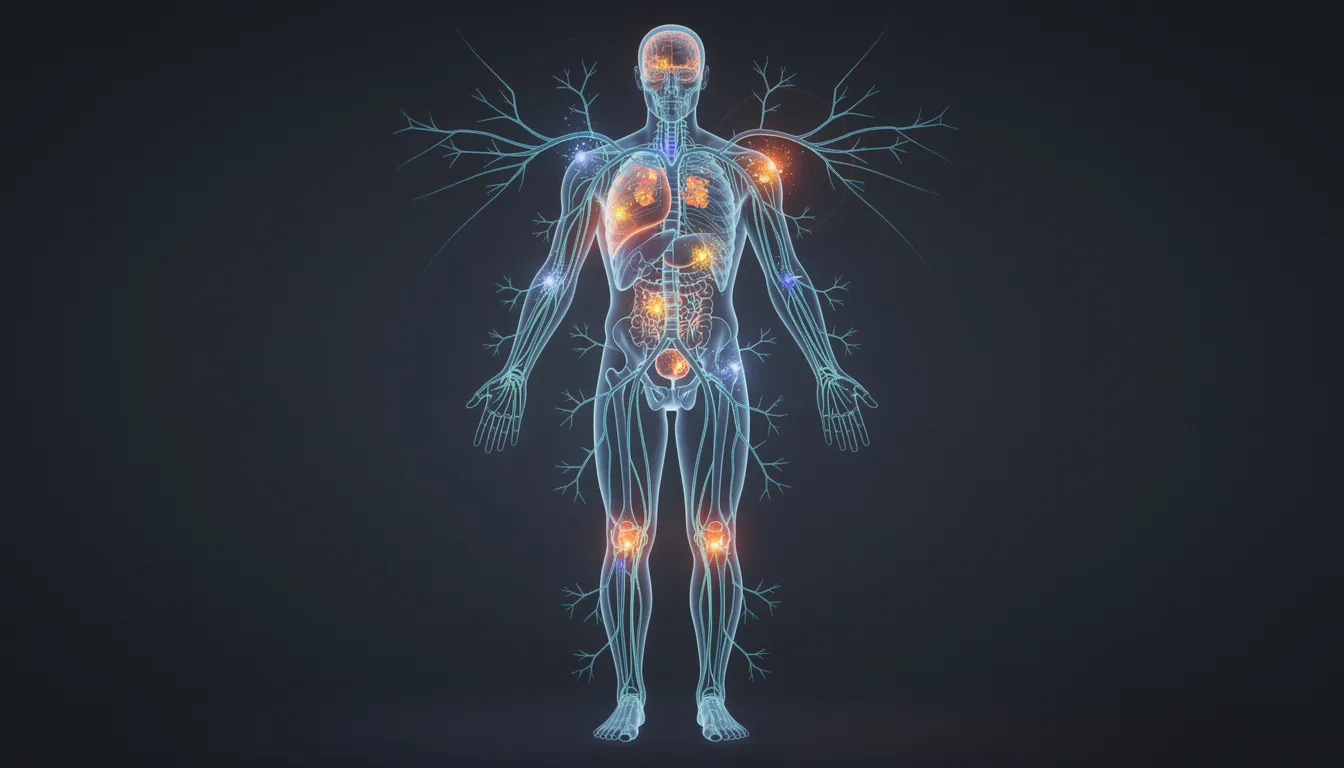
The endocannabinoid system (ECS) is a natural signaling system involved in regulating mood, pain perception, appetite, sleep, and immune function. It consists of two main types of receptors: CB1 receptors, which are predominantly found in the brain and central nervous system, and CB2 receptors, which are mainly found in the immune system and peripheral tissues.
Binding affinity and mechanism of action of H4CBD
Herein lies the crucial difference between H4CBD and conventional CBD: While CBD has only a weak, indirect effect on CB1 receptors, older in-vitro studies indicate that H4CBD shows a significantly higher affinity for these receptors. A groundbreaking study from 2006 observed that hydrogenated CBD could exhibit up to 100 times stronger binding to CB1 receptors than regular CBD.
Additionally, H4CBD is said to act on CB2 receptors, which could potentially enhance anti-inflammatory effects. This combination explains why some users report stronger and slightly altered effects.
Important caveat: These findings are largely based on animal models, test tube studies, and structural analogies to HHC and THC – not on large-scale human studies. The actual bioavailability, the resulting metabolites, and potential long-term effects in humans have so far been scarcely investigated.
Now that you know how H4CBD works in the body, a comparison with classic CBD follows.
H4CBD vs. CBD: Key Differences and Similarities
Similarities
-
Both originally come from the hemp plant
-
Similar user reviews on relaxation and stress reduction
-
Potential influence on sleep quality and pain perception
-
No strong intoxicating effect like with THC
-
They are often offered in similar product forms (oils, vapes, edibles)
Differences
CBD:
-
Naturally occurring in the cannabis plant
-
Weak affinity for CB1 receptors
-
Non-psychoactive
-
Researched for decades with extensive study data
-
Clear legal status in many countries
-
Widely available, also in pharmacies
H4CBD:
-
Semi-synthetically produced by hydrogenation
-
Significantly stronger CB1 binding (according to lab data)
-
Mild psychoactive effects possible
-
Barely researched, minimal human studies
-
Legal grey area in the EU
-
Primarily available through online shops
Regarding the question of potency
The often-cited claim that H4CBD is “100 times stronger than CBD” requires clarification. This figure refers to laboratory studies of CB1 receptor binding under controlled conditions – it does not mean that you need 100 times less H4CBD to achieve the same effect.
In everyday life, such laboratory values rarely translate directly into subjective effects. Factors such as bioavailability, individual metabolic differences, and the method of administration play a significant role. Realistic estimates suggest a subjective effect that is 3 to 10 times stronger – not 100 times stronger.
Practically relevant differences
|
aspect |
CBD |
H4CBD |
|---|---|---|
|
scope |
Everyday life, wellness, medical |
Experimental, niche product |
|
Product availability |
Very high |
Restricted |
|
Price level |
Moderate |
Tendency higher |
|
Retail outlets |
Pharmacies, health food stores, online |
Primarily online shops |
|
State of research |
Extensive |
Minimal |
Now that the differences between H4CBD and CBD have been clarified, let's take a look at the related cannabinoids HHC and THC.
H4CBD, HHC & THC: Related, but not identical cannabinoids
The world of cannabinoids can be confusing, especially when similar-sounding names appear. HHC and H4CBD are both hydrogenated cannabinoids, but they are derived from different starting compounds:
-
HHC (Hexahydrocannabinol) = hydrogenated THC
-
H4CBD (Hexahydrocannabidiol) = hydrogenated CBD
This difference is fundamental. Since HHC is derived from THC, it retains its basic psychoactive properties – albeit in a milder form. H4CBD, on the other hand, is based on the non-intoxicating CBD, which is why its psychoactive effects are significantly weaker.
Typical user reports compared
H4CBD: Users often describe the effects as "strong CBD plus mild euphoria" or a "calming heaviness." The effects are frequently compared to physical sensations similar to a nicotine rush or the effects of caffeine—stimulating but not intoxicating.
HHC: It is typically characterized as a “gentle THC-light” – with a noticeable but milder psychoactive effect than classic THC.
Be careful with terminology.
H4CBD is sometimes mistakenly marketed under names like PHC, THD, or HHCBD. This confusion in nomenclature makes it difficult for consumers to know exactly what they are buying. PHC, for example, is actually produced by the hydrogenation of THC and is therefore a different cannabinoid with psychoactive effects.
Neither of these substances – neither H4CBD nor HHC – has been as thoroughly researched as classic THC or CBD. In particular, reliable data regarding long-term effects is completely lacking.
In the next section you will learn about the potential effects of H4CBD according to current knowledge.
Potential effects of H4CBD
Important note beforehand: All effects listed here are based on preliminary data. Sources include animal studies, older laboratory data from the 1940s to 1970s, and anecdotal reports from users up to 2024. None of these effects have been supported by large, controlled human studies.
Possible positive effects according to user reports
-
Increased relaxation: Many users report a greater subjective relaxation compared to regular CBD.
-
Anti-inflammatory effect: The higher CB2 activity could enhance anti-inflammatory effects.
-
Pain relief: Individual reports suggest relief from chronic pain, migraines, or muscle tension.
-
Mild euphoria: Mild mood enhancement without the "high" of THC
-
Metabolic effects: Early indications of a possible influence on glucose metabolism and weight in metabolic syndrome (very preliminary data)
-
Improved sleep quality: According to current findings, H4CBD can improve sleep quality.
-
Anxiety reduction and stress relief: H4CBD aims to promote relaxation, pain relief, anxiety reduction, and improved sleep quality.
What H4CBD is not
As of 2024, there are no approved medical indications for H4CBD – neither from the EMA in Europe nor from the FDA in the USA. No H4CBD product is approved as a drug.
A clear warning: H4CBD is not a substitute for medically prescribed medication. A doctor should always be consulted for serious health problems. Claims regarding the healing properties of H4CBD are not evidence-based and should be critically examined.
In the next section, we will discuss the possible side effects and risks of H4CBD.
Side effects & risks of H4CBD
Safety notice: Since no large-scale human studies exist, any risk can only be roughly estimated. The following information is based on user reports, analogies to related cannabinoids, and theoretical considerations.
Most important documented side effects and risks
According to current findings, H4CBD can have the following side effects and risks:
-
Fatigue, dizziness and drowsiness
-
Dry mouth
-
Red eyes
-
Slight drop in blood pressure
-
Inner restlessness, anxiety, palpitations (at higher doses or in sensitive individuals)
-
nausea
-
The safety of H4CBD has not yet been fully researched, and there are many open questions regarding its properties and applications.
-
The use of H4CBD should be approached with caution, as the potential risks have not yet been sufficiently investigated.
Acutely reported side effects
-
Fatigue and drowsiness
-
dizziness
-
Dry mouth
-
Red eyes
-
Slight drop in blood pressure
Drug interactions
H4CBD is likely metabolized – similarly to CBD – via liver enzymes, particularly CYP3A4 and CYP2C19. This implies potential interactions with:
-
Antidepressants (SSRIs, SNRIs)
-
Antiepileptics
-
Blood thinners (warfarin, Marcumar)
-
Benzodiazepines
-
Certain heart medications
-
Immunosuppressants
Anyone who regularly takes medication should definitely seek medical advice before consuming H4CBD.
Risks associated with chronic or high-dose consumption
-
Tolerance development: Possibly, but not definitively investigated.
-
Psychological dependence: Theoretically possible, no data available
-
Psychoses/Anxiety Disorders: There is a theoretical risk for genetically vulnerable individuals – this hypothesis is based on analogies to THC and is not specifically proven for H4CBD.
Groups of people who should avoid H4CBD
-
Pregnant women and breastfeeding mothers
-
Persons under 18 years of age
-
People with serious cardiovascular diseases
-
People with liver problems
-
People with a history of psychiatry (especially psychoses, severe anxiety disorders)
-
People without consulting a doctor about chronic illnesses
H4CBD compared to synthetic cannabinoids (e.g. “Spice”)
An important point to note: Although H4CBD is chemically modified, its structure is much closer to natural CBD than fully synthetic designer drugs like "Spice" or the JWH series.
This distinction is relevant because:
-
Fully synthetic cannabinoids often have unpredictable and dangerous effects.
-
Severe intoxications and deaths are primarily associated with fully synthetic substances.
-
No comparable cases have been documented for H4CBD to date.
Nevertheless, it's important to remember that even semi-synthetic cannabinoids can have unpredictable effects. Small structural changes to the molecule can trigger significant effects in the brain. H4CBD is neither a "legal high" nor "completely harmless CBD"—the truth lies somewhere in between.
In the next section you will learn more about the classification of H4CBD in comparison to natural and synthetic cannabinoids.
Natural vs. synthetic cannabinoids
Definitions
Natural cannabinoids: Compounds that occur directly in the cannabis plant and can be extracted from it – for example, CBD, THC, CBG, CBC or CBN.
Synthetic cannabinoids: Molecules completely newly developed in the laboratory that do not occur in nature (e.g. Spice, K2, JWH compounds).
Semi-synthetic cannabinoids: Natural raw materials that are chemically modified. H4CBD falls into this category – the starting material is plant-based CBD that is modified through hydrogenation.
Advantages and disadvantages at a glance
Natural cannabinoids (CBD, THC, CBG):
Advantages:
-
Extensive data set
-
Long history of use
-
Clearer legislation
-
Mostly milder, predictable effects
-
Established quality standards
Disadvantages:
-
Limited effectiveness
-
Regulatory restrictions on THC
Synthetic/semi-synthetic cannabinoids (H4CBD, HHC):
Advantages:
-
Potentially stronger or more targeted effects
-
Circumvention of certain legal restrictions
-
New effect profiles are possible
Disadvantages:
-
Significant uncertainty in toxicology
-
Unknown long-term effects
-
Potential interactions unclear
Recommendation for beginners: High-quality CBD oil from EU hemp with a current laboratory certificate is typically the safer choice than new derivatives like H4CBD.
In the next section, we will examine the legal situation of H4CBD in German-speaking countries.
Legality of H4CBD in Germany, Austria & Switzerland
Important NOTE: The legal situation regarding novel cannabinoids is dynamic and subject to change at any time. The following information reflects the status as of 2024 – current national regulations should always be checked before purchasing. For more information on the differences between specific cannabinoids such as... 10-OH-HHC and HHCP Anyone who wants to learn more can find additional information at Weed for Friends.
Germany
As of 2024, H4CBD is not explicitly listed in the German Narcotics Act (BtMG) or the New Psychoactive Substances Act (NpSG). However, this does not automatically mean it is legal. If you would like to learn more about the differences and potency of similar cannabinoids, read our comparison. HHCPM vs. HHC – Which cannabinoid is stronger?
Relevant legal aspects: More information about HHCA – The new cannabinoid, its effects, applications and legal framework can be found here .
-
H4CBD could be classified as a "novel food", which would prevent its legal marketing as a food supplement without approval.
-
Some authorities might consider H4CBD to be “analogous to THC” to examine what legal risks this poses for retailers and consumers.
-
The labeling and advertising of H4CBD products exists in a gray area.
Austria
Austria pursues a restrictive practice regarding new cannabinoids :
-
The Narcotics Act covers many derivatives, but the distinction is not always clear.
-
H4CBD products are often declared as "collectibles" or "not for consumption" in online shops.
-
The purchase and possession for personal use is handled differently.
Switzerland
Switzerland has different THC limits than the EU (1% instead of 0.2-0.3%), which complicates the situation – especially when buying cannabis. HHC products .
-
H4CBD is not clearly regulated by law.
-
The classification varies depending on the type of product (flavoring product, E-liquid , raw material)
-
Different interpretations may apply at the cantonal level.
General recommendation
Each H4CBD product should be accompanied by a Certificate of Analysis (COA) containing the following information:
-
Identification of H4CBD
-
THC content (should be below the limit)
-
Testing for heavy metals and solvent residues
-
Certification by an independent laboratory
H4CBD & Drug Tests
Standard urine tests primarily target THC metabolites (THC-COOH) and likely do not specifically detect H4CBD itself. However:
-
The metabolism of H4CBD is barely researched.
-
It cannot be ruled out that certain degradation products may lead to cross-reactions.
-
Some H4CBD products may contain traces of THC. For more information, see [link to relevant information]. PHC cannabinoids You can find them here.
Clear recommendation: People at regular risk of drug testing (workplace, driver's license checks, competitive athletes) should avoid H4CBD as a precaution. The risk of a false-positive test or THC residue in the product is incalculable.
The next section provides an overview of the different H4CBD products, dosage and quality criteria.
H4CBD Products: Forms, Dosage & Quality
Available product types
-
H4CBD vapes and cartridges:
-
Rapid onset of action (within minutes)
-
Higher peak effect
-
Shorter duration of effect
-
Risks from inhalation
-
-
H4CBD Gummies and Edibles:
-
Delayed onset of action (30-90 minutes)
-
Longer-lasting effect
-
Discreet intake
-
More difficult to dose
-
-
Oils and tinctures:
-
Sublingual application (under the tongue)
-
Improved dosing control
-
Average onset of action (15-45 minutes)
-
Versatile application
-
-
Other products:
-
Capsules (precise dosage, slow onset)
-
Topical products (local application)
-
H4CBD distillate for self-dosing (for experienced users only)
-
Flowers with H4CBD coating (variable quality)
-
Dosage recommendations
Since no official dosage guidelines exist, the following precautions apply:
For first-time users:
-
Start with very low doses (2-5 mg H4CBD)
-
Wait at least 24 hours between doses.
-
Increase dose slowly after several days
-
Carefully test individual tolerance
Onset of action depending on dosage form
|
method |
Onset of effect |
Length of time |
|---|---|---|
|
inhalation |
1-5 minutes |
1-3 hours |
|
Sublingual |
15-45 minutes |
4-6 hours |
|
Oral (Edibles) |
30-90 minutes |
6-8 hours |
Quality criteria when buying
Must be present:
-
Current laboratory certificate (COA) from an independent laboratory
-
Proof of identity for H4CBD
-
THC content analysis
-
Testing for heavy metals and solvent residues
-
Clear indication of the active ingredient content per unit
You can recognize reputable providers by: For example, you will find High-quality THCA products at Weedforfriends .
-
Transparent company address within the EU
-
Accessible customer service
-
Longer market presence (not just for a few weeks)
-
Realistic product descriptions
-
No exaggerated health claims
Warning signs – stay away from:
-
Missing or incomplete laboratory certificates
-
sensational advertising promises (“100x stronger than CBD”, “guaranteed legal high”)
-
Unclear active ingredient content
-
Strikingly low prices
-
Missing contact information
-
“Shopping cart pressure” through fake availability information
Important to know: There are currently hardly any official quality standards specifically for H4CBD in the EU. Personal responsibility and critical selection of different cannabinoids are therefore crucial. 10-OH-THC vs. THC are crucial. All prices include VAT.
In the next section you will learn for whom H4CBD or CBD is more suitable.
H4CBD or CBD – which is more suitable for whom?
The decision between H4CBD, CBD and HHC-A depends on several factors:
Classic CBD recommended for: – Learn more about THC-free cannabis and its properties .
-
Cautious users and beginners
-
Older people
-
People with pre-existing conditions
-
People who value legal clarity
-
Anyone who wants to rely on evidence-based products
-
Users who value pharmacy availability
H4CBD as a possible option for:
-
Experienced cannabinoid users
-
People who already respond well to CBD
-
Users who would like to test a stronger or different nuance of the effect
-
People who are aware of the legal and health uncertainties
The following generally applies: Neither CBD nor H4CBD should replace medical treatment. Consulting a specialist is always recommended for chronic conditions. H4CBD offers interesting benefits, particularly for well-being, but is not a medical alternative.
In the next section, we will answer the most frequently asked questions about H4CBD .
FAQs about H4CBD
Does H4CBD make you high?
H4CBD can produce mild to moderate psychoactive effects, which are significantly weaker than those of THC or HHC. Many users describe a mild euphoria or a feeling of physical relaxation. Whether and how strongly these effects occur depends heavily on the dose and individual sensitivity. Most users would not describe H4CBD as "intoxicating" in the classic sense.
Is H4CBD really 100 times stronger than CBD?
This frequently cited figure originates from laboratory studies on CB1 receptor binding and refers to the molecule's affinity for the receptor – not to the subjectively experienced effect. In everyday life, this by no means implies that 1 mg of H4CBD has the same effect as 100 mg of CBD. Realistic estimates suggest a 3- to 10-fold increase in the subjective effect, highly dependent on individual factors.
Can H4CBD help with falling asleep?
Anecdotal reports from users suggest that H4CBD may have a relaxing effect and make it easier to fall asleep – similar to CBD. However, there are no scientifically robust clinical studies on this question. Anyone experiencing sleep problems should consult a doctor instead of relying on insufficiently researched substances.
Is H4CBD suitable for pets? More information on current developments in the cannabis market in Germany can be found in our article on the Cannabis Trends 2025 .
No, this is strongly discouraged. There is absolutely no safety data available for the use of CBD in animals. Metabolism and receptor distribution differ significantly between humans and animals. Only specially developed and tested CBD products should be used for pets – and even then, only after consulting a veterinarian. For humans, however, there are currently various legal alternatives to THC, such as... 10-OH-HHC , however, whose use and legal status should be carefully examined.
Can I drive after consuming H4CBD?
This is not recommended. Even though H4CBD is not as strongly psychoactive as THC, mild intoxicating effects can impair reaction time. It is advisable to wait at least several hours after consumption. Furthermore, there is a legal risk: If abnormalities are detected, a blood test could be ordered, the result of which is unpredictable. When in doubt: Do not drive.
Where can I buy H4CBD products?
H4CBD products are primarily available through specialized online shops. You generally won't find these varieties in pharmacies or health food stores. When purchasing, pay attention to the quality criteria mentioned above and only order from suppliers with a complete aroma and ingredient profile as well as transparent laboratory analyses.
What variants of H4CBD are there?
H4CBD is primarily available in one form, but is processed into various product variations. Sometimes you'll find names like H4-CBD or H4 CBD – these refer to the same chemical. Pay close attention to the exact product description and don't be confused by similar-sounding names like PHC or HHCBD.

In the concluding summary, we summarize the most important findings on H4CBD.
Conclusion: Why H4CBD is (still) not a full CBD substitute
H4CBD is undoubtedly an exciting cannabinoid that has attracted increasing interest in recent years. The hydrogenated version of CBD promises stronger effects while maintaining a mild psychoactive potential. an alternative for those who find regular CBD too weak .
However, the reality is sobering: As of 2024, the evidence-based data on efficacy, safety, and long-term effects is extremely weak. The few existing studies mostly date back to the 1940s or are purely laboratory studies without any connection to human application. The effects on the body from regular use are simply unknown.
For most users, classic CBD therefore remains the safer and more legally stable option. It is better researched, more widely available, and subject to clearer quality standards. Those who are already successfully using CBD have little reason to switch to a less understood derivative – or can alternatively... THC gummies and read about their legal and health-related specifics.
H4CBD should only be considered by informed, experienced consumers who are fully aware of the legal and health uncertainties. Unlike established cannabinoids, this is still experimental territory.
Final recommendation: Always consult a doctor if you have health problems. Cannabinoids – whether CBD, H4CBD, or others – are not medications and should only be used responsibly and with realistic expectations. Research on H4CBD is still in its early stages; until reliable human studies are available, caution is the wiser choice.
Share:
Difference between THC and CBD – effects, legal and electoral law
CBN: An overview of the effects, benefits, and applications of cannabinol