
More than 80 percent of all growers face the challenge of finding the right method for cultivating cannabis. Whether indoors, outdoors, or in a greenhouse – each option brings its own unique opportunities and risks, significantly impacting not only yield and quality, but also legal compliance and costs. Those who want to successfully cultivate cannabis in Germany, Austria, or Switzerland benefit from understanding key differences and the latest developments in order to avoid common mistakes and unnecessary effort.
Table of contents
- Cannabis cultivation explained: Indoor, outdoor, greenhouse
- Differences in climate, light, costs
- Legal framework in Central Europe
- Risks, misleading information and typical mistakes
- Alternative cultivation methods and variety selection
Key findings
| Point | Details |
|---|---|
| Cultivation methods | There are three main methods for growing cannabis: indoor, outdoor and greenhouse, each with its own advantages and disadvantages. |
| Climatic influences | The choice of cultivation method should take into account the climatic conditions and the legal framework of the region. |
| Energy consumption | Indoor cultivation has high energy consumption, while outdoor cultivation is more cost-effective but weather-dependent. |
| Legal framework | Find out about local laws, especially regarding the permitted number of plants and possession limits for cannabis. |
Cannabis cultivation explained: Indoor, outdoor, greenhouse
Cannabis cultivation is a complex art with various methods, each with its own advantages and disadvantages. In Central Europe, growers generally have three main cultivation methods available: indoor, outdoor, and greenhouse. The choice of the right method depends on various factors, such as climate, available space, legal regulations, and individual goals.
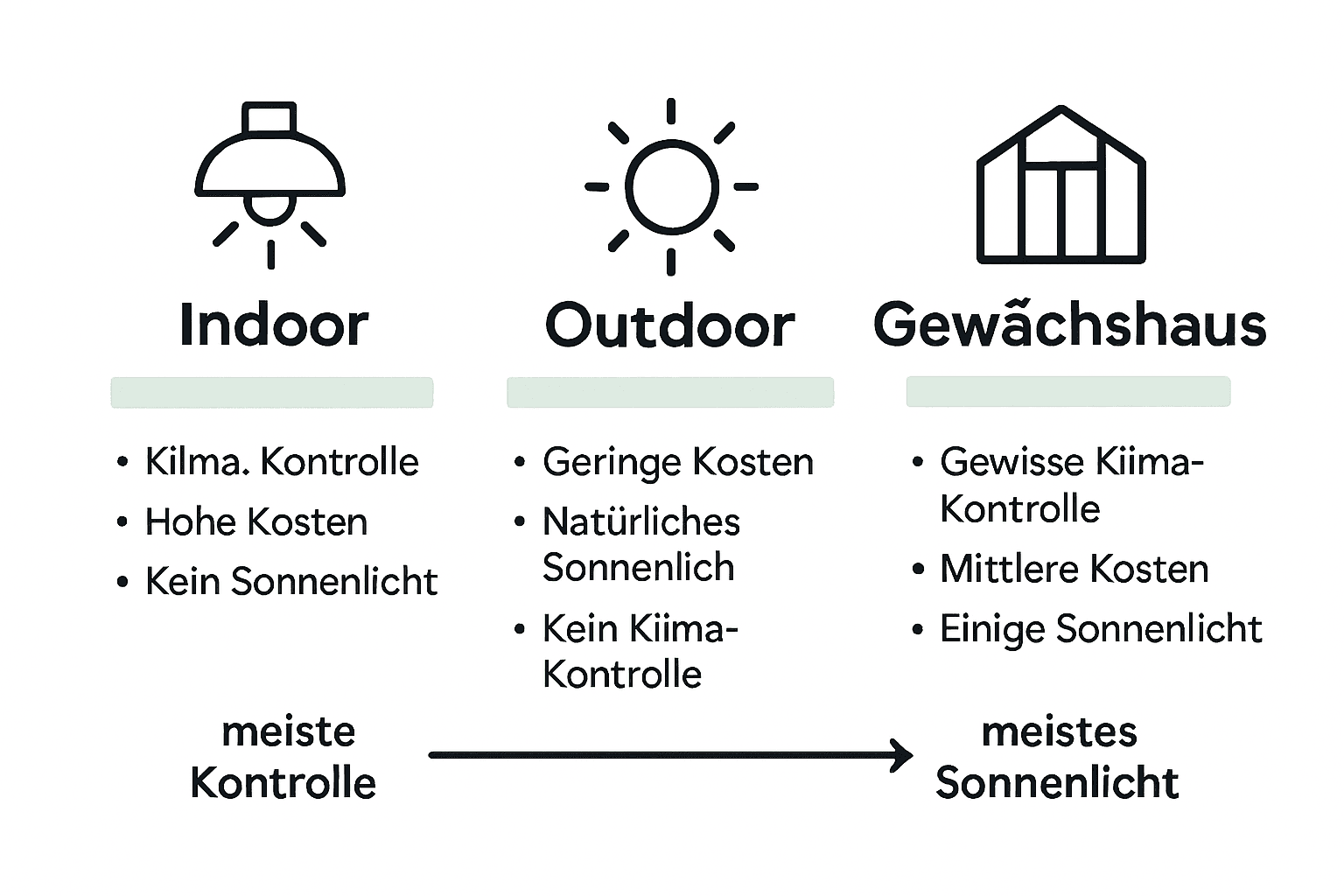
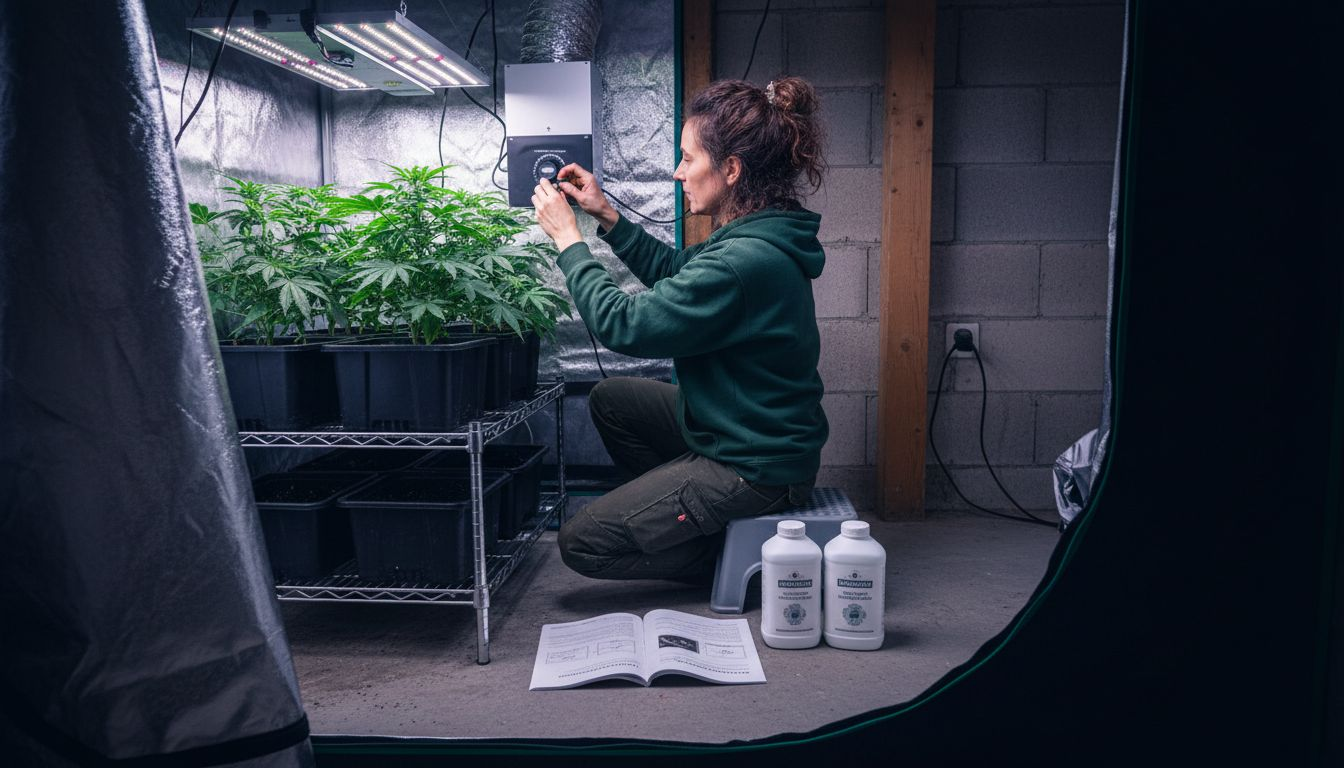
Indoor cultivation gives growers complete control over environmental conditions. Artificial lighting, precise climate control, and protected spaces allow for consistent quality and multiple harvests per year. LED lamps and modern ventilation systems make this growing method particularly efficient. Cannabis legalization can bring complex legal issues , which is why indoor growers must pay special attention to discretion and security.
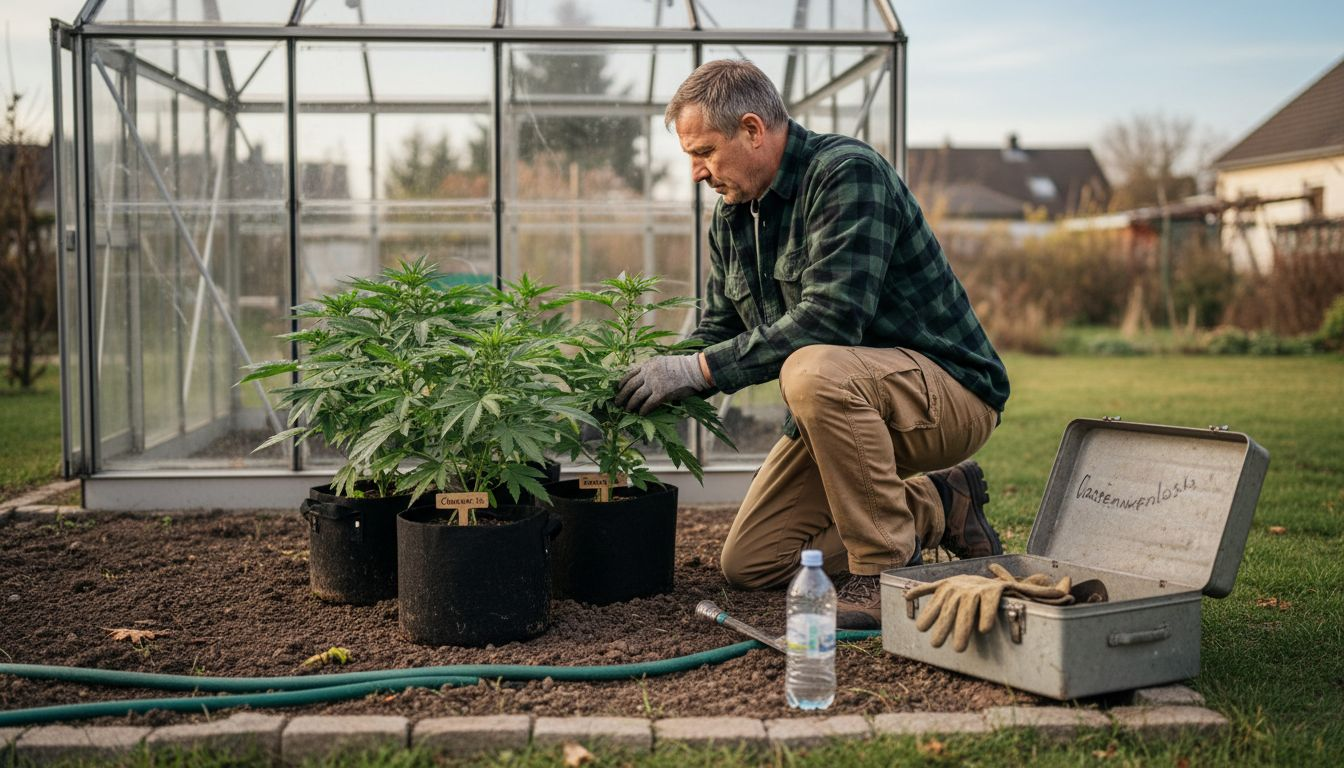
Outdoor cultivation utilizes natural conditions and is the most traditional method. In Central Europe, this means a growing season between May and October, depending on sunshine and temperature. This method is cost-effective because it uses natural resources. However, plants are exposed to extreme weather and potential pests. The advantage: completely organic cultivation without artificial energy costs.
Greenhouse cultivation combines the advantages of indoor and outdoor growing. Protected spaces with partial natural sunlight allow for longer growing seasons and better plant protection. Modern greenhouses utilize technologies such as automatic irrigation systems and controlled ventilation.
The following table clearly presents the most important differences and special features of the three main cultivation methods:
| feature | Indoor | Outdoor | greenhouse |
|---|---|---|---|
| Control over climate | Complete | Small amount | Partially |
| Number of possible harvests | Several times a year | One season per year | 1–2 season(s) per year |
| Energy consumption | Very high | Very low | Medium |
| Start-up costs | High | Low | Medium |
| Protection against pests | Very high | Low | High |
| discretion | Very good (in planning) | Small amount | Medium to good |
| Closeness to nature | Small amount | High | Medium |
Pro tip for growing method : Start with indoor cultivation if you're looking for control and discretion. The learning curve is gentler, and you can perfect your technique in a protected environment before trying more complex growing methods.
Differences in climate, light, costs
Cannabis cultivation varies greatly in terms of climate, light conditions, and cost structure. Each cultivation method presents specific challenges and opportunities that must be carefully weighed against each other.
Climatic conditions play a crucial role in cannabis production. The ecological footprint of indoor cannabis cultivation is significantly higher than that of outdoor cultivation . While indoor cultivation creates a constant environment, it consumes considerably more energy. An indoor grow can produce between 2,300 and 5,200 kg of CO2 equivalents per kilogram of dried flowers – equivalent to driving a car up to 20,000 kilometers.
Growing methods differ fundamentally depending on lighting conditions . Outdoor grows utilize natural sunlight, minimizing energy costs. Indoor setups require artificial lighting systems, typically LEDs or high-pressure sodium lamps, which result in high electricity bills. Greenhouse cultivation offers an interesting middle ground, combining natural and artificial lighting to optimize energy efficiency and plant growth.
Cost structures vary considerably between methods. Indoor grows require significant initial investments in lighting, climate control, and ventilation systems. Outdoor growing is more cost-effective but weather-dependent. Greenhouses represent a compromise, offering moderate investment costs and longer growing seasons.
Pro tip for economics : Calculate your energy costs precisely before you start growing. A precise budget and efficient technologies can significantly reduce your production costs and improve the sustainability of your cannabis grow.
Legal framework in Central Europe
Cannabis cultivation in Central Europe is a complex legal landscape with varying regulations and restrictions. The legal framework differs between countries and requires careful attention to local regulations.
The Consumer Cannabis Act (KCanG) marks a significant turning point in German cannabis legislation . Since April 1, 2024, adults have been allowed to cultivate up to three female cannabis plants in their own homes and possess up to 25 grams in public. This regulation creates a clear legal framework for private cannabis cultivation.
The legal consequences should not be underestimated. Violations of the law can constitute both administrative offenses and criminal acts , with potential sanctions such as fines of up to €30,000, as well as monetary penalties and imprisonment. Possession of more than 25 grams of cannabis in public, for example, can lead to significant legal repercussions.
In other Central European countries, such as Austria and Switzerland, significantly more restrictive regulations exist. While Germany pursues a more progressive approach, cannabis cultivation and consumption remain largely illegal in neighboring countries. Growers must therefore be thoroughly familiar with and adhere to the specific national laws.
Pro tip for legal certainty : Stay informed about current legal developments and, if in doubt, consult a lawyer specializing in cannabis law. Legal education is the best protection against unintentional violations.
Risks, misleading information and typical mistakes
Growing cannabis is a complex undertaking fraught with numerous pitfalls and challenges. Inexperienced growers risk making serious mistakes due to a lack of knowledge and unrealistic expectations, potentially jeopardizing the entire harvest.
Common beginner mistakes primarily involve underestimating the necessary expertise. Many novices believe cannabis is an easy-to-care-for plant that will thrive without any problems. In reality, successful cultivation requires precise control of factors such as humidity, light intensity, nutrient supply, and temperature. Insufficient attention to these aspects quickly leads to stunted growth or even total crop failure.
Another critical area of error is genetics and strain selection . Not every cannabis strain is equally suitable for every growing location and cultivation method. Choosing the wrong genetics can mean that plants are not adapted to local climatic conditions or do not optimally progress through certain growth phases. Furthermore, strains vary considerably in terms of flowering time, yield expectation, and cannabinoid profile.
Risks also exist in the area of legal compliance . Even seemingly clear legal regulations can contain pitfalls. Growers must consider not only the number of permitted plants, but also aspects such as visibility, odor, and potential conflicts with neighbors. Ignoring these aspects can lead to legal consequences that extend far beyond simply losing plants.
Pro tip for minimizing risk : Invest time in further education and exchanging ideas with experienced growers. Online forums, specialist books, and grow courses can help you avoid typical beginner mistakes and significantly increase your chances of a successful harvest.
Alternative cultivation methods and variety selection
Cannabis cultivation offers a fascinating variety of methods and strains that go far beyond classic indoor and outdoor cultivation. Modern growers are increasingly experimenting with innovative techniques that optimize yield, quality, and sustainability.
Alternative cultivation methods include hydroponic and aeroponic systems, which grow plants without traditional soil. Hydroponics uses nutrient-rich water solutions, while aeroponics allows the roots to grow freely in the air and provides them with a fine mist of water. These methods enable more precise nutrient delivery, faster growth, and higher yields with less water consumption.
Strain selection is crucial for success. Modern cannabis genetics differ fundamentally in growth behavior, cannabinoid profile, and cultivation characteristics. Autoflowering varieties, for example, flower independently of light cycles, making them ideal for beginners and compact growing spaces. Feminized seeds guarantee female plants and eliminate the risk of male plants that could compromise the harvest.
Another exciting alternative is vertical farming , where plants are cultivated one above the other in multi-tiered systems. This method maximizes space utilization and is particularly suitable for limited spaces such as apartments or small greenhouses. Vertical systems utilize modular shelves with integrated LED lighting and automated irrigation systems.
The following overview explains alternative cultivation methods and their advantages for different needs:
| method | Brief description | Main advantage |
|---|---|---|
| Hydroponics | Roots grow in nutrient solution | Precise nutrient control |
| Aeroponics | The roots hang freely and are sprayed. | Rapid growth, little water |
| Vertical cultivation | Plants are stacked on shelves. | Maximum space utilization |
| Autoflower genetics | Blooms independently of the light cycle | Ideal for beginners |
Pro tip for strain selection : Carefully research the characteristics of different cannabis strains and choose varieties that suit your specific growing conditions and consumption goals. Start with robust, less demanding varieties and gradually increase your expertise.
Find the perfect complement to your cannabis cultivation in Central Europe
Choosing the right cultivation method presents many growers with challenges such as energy consumption, legal compliance, and optimal plant quality. Whether indoor cultivation with complete control, outdoor cultivation with natural resources, or innovative greenhouse cultivation – every method requires expertise and the right support. With high-quality, lab-tested products from Weedforfriends, you can specifically improve your grow quality and intensify your experience.

Benefit from our wide selection of premium cannabinoids, perfectly tailored to the diverse needs of your cannabis grow. Whether you're seeking discretion or prioritizing sustainability, at Weedforfriends you'll find vapes, flowers, and CBD oils from Germany for enhanced enjoyment and relaxation. Get started now, optimize your growing process, and discover how the right products can make all the difference. Visit us today and experience how your harvest can become even better.
Frequently Asked Questions
Which cultivation method is best suited for beginners?
Indoor cultivation is ideal for beginners as it offers complete control over environmental conditions, which facilitates technical development in a protected environment.
How do the light conditions differ when growing cannabis?
Outdoor cultivation utilizes natural sunlight, minimizing energy costs, while indoor cultivation requires artificial lighting, resulting in higher electricity bills. Greenhouses combine both approaches and offer an interesting solution.
What risks are associated with growing cannabis?
The most common risks include legal problems, incorrect variety selection, and underestimating the necessary skills. Improper care can lead to crop losses.
How can I choose the right cannabis strain?
Carefully research the characteristics of different cannabis strains to choose those that suit your growing conditions and consumption goals, especially regarding light, nutrients, and climate.
Share:
How to take CBD edibles: How to achieve the perfect enjoyment
Side effects of CBD – What consumers need to know