

Around 60 percent of German cannabis users now pay close attention to the purity and quality of extracts used in vapes or edibles. Those seeking high-quality cannabinoids quickly face the question of the best extraction method. Different processes determine the potency, flavor, and safety of the final product – this knowledge helps in making informed decisions when buying or consuming cannabis.
Table of contents
- What are the extraction methods for cannabis?
- Solvent-based methods and differences
- Solvent-free processes and their added value
- Comparison: Potency, purity, and taste
- Risks, safety and legal requirements in Germany
Key findings
| Point | Details |
|---|---|
| Extraction methods are crucial for the quality of cannabis products. | Different methods significantly influence the potency, purity, and taste of the extracts. |
| CO2 extraction is considered the highest quality method. | It offers high purity and no toxic residues, but high equipment costs. |
| Solvent-free processes are gaining in popularity. | These methods are safer and preserve the natural flavors, but often offer lower yields. |
| Safety standards are strictly regulated in Germany. | It is essential to pay attention to laboratory analyses to ensure the quality and safety of the cannabis extracts. |
What are the extraction methods for cannabis?
Extraction methods are technical processes used to isolate valuable cannabinoids and terpenes from the cannabis plant. The goal is to obtain highly concentrated and pure products containing specific active ingredients such as THC or CBD. These methods enable a precise and efficient separation of the desired components from plant material.
The most important extraction methods encompass various techniques using different solvents and physical processes. These include solvent extraction with methods such as CO2 or ethanol , mechanical separation techniques like sieving, and advanced technologies such as steam distillation. Each method has specific advantages and disadvantages regarding yield, purity, and preservation of valuable plant molecules.
For example, CO2 extraction uses pure carbon dioxide under high pressure to gently dissolve cannabinoids. This method is considered particularly clean and precise because no toxic solvent residues are produced. Ethanol-based extraction, on the other hand, allows for the extraction of a wide range of active ingredients but carries the risk of contamination.
Pro tip: When buying cannabis extracts, always look for laboratory analyses and purity certificates to ensure the quality and safety of the products.
Below is a comparative overview of the most important extraction methods for cannabis:
| method | type | Advantages | Disadvantages |
|---|---|---|---|
| CO2 extraction | solvent-based | High purity, no residues | Expensive equipment |
| Ethanol extraction | solvent-based | Fast method, economical | Possible solvent residues |
| Butane extraction (BHO) | solvent-based | Very high yield | High risk of explosion |
| Rosin Press | Solvent-free | Natural taste, safe | Lower yield |
| Sieving/Mechanical | Solvent-free | Simple, no chemicals | Low concentration |
Solvent-based methods and differences
Solvent-based extraction methods are crucial techniques for isolating cannabinoids, employing various chemical substances to extract the valuable active ingredients from the cannabis plant. These methods vary in efficiency and purity , with each technique having specific advantages and disadvantages.
CO2 extraction is considered particularly high-quality and environmentally friendly. This method uses supercritical carbon dioxide under high pressure to extract cannabinoids precisely and without impurities. Ethanol extraction is a more cost-effective alternative that works quickly and efficiently, but carries a higher risk of solvent residues. Butane extraction (BHO) allows for very efficient active ingredient recovery, but requires specialized safety equipment and professional facilities.
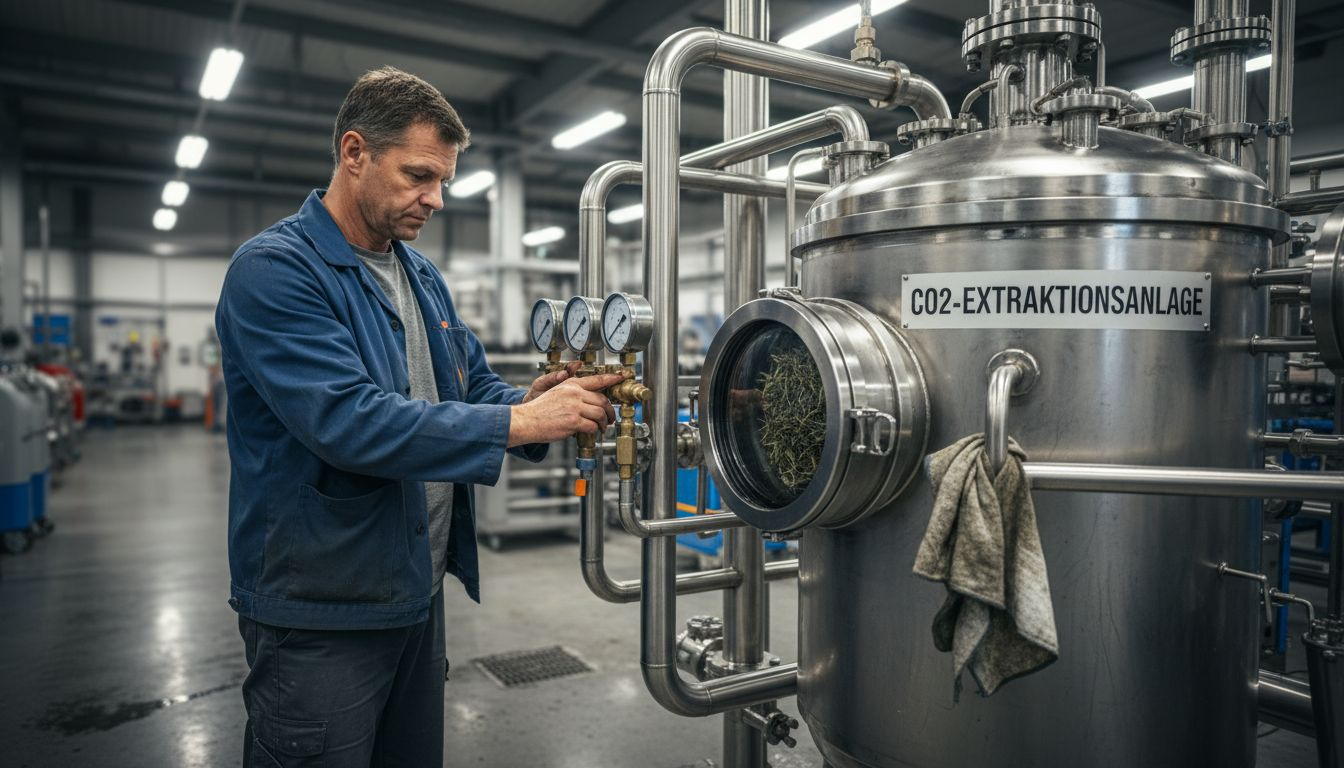
Each extraction method has characteristic properties: CO2 extraction is known for its purity, ethanol extraction for its cost-effectiveness, and butane extraction for its high yield. The choice of method depends on various factors such as desired product quality, cost, and safety requirements. Industrial manufacturers carefully weigh these aspects against each other to produce optimal cannabis extracts.
Pro tip: Before buying cannabis extracts, always find out about the extraction method used to better assess quality and purity.
Solvent-free processes and their added value
Solvent-free extraction methods are gaining increasing importance in the cannabis industry, as they represent a pure and natural alternative to chemical extraction methods. Rosin-press technology enables the gentle extraction of cannabinoids through the use of purely mechanical pressure and controlled heat.
Mechanical extraction works on a simple yet effective principle: Dried and pressed cannabis flowers are compressed under high pressure between two heated plates. This breaks open the trichomes, and the resins and active ingredients are extracted. The main advantage of this method lies in the purity of the extract—no additional chemicals are used, thus preserving all natural aromas and terpenes.
Compared to solvent-based techniques, the rosin technique offers significant advantages. It is not only safer but also enables higher-quality extraction. Home users and small-scale producers particularly appreciate this method because it is cost-effective, easy to use, and completely transparent. The quality of the final product remains fully controllable, without any risks associated with chemical residues.
Pro tip: When buying rosin extracts, look for a uniform, amber-colored consistency as a sign of high-quality processing.
Comparison: Potency, purity, and taste
The quality of cannabis extracts can be assessed based on three key criteria: potency, purity, and flavor. Different extraction methods significantly influence these properties , with each technique bringing its own specific advantages and disadvantages.
The potency of an extract is defined by the concentration of cannabinoids, particularly THC and CBD. CO2 extraction methods often allow for the most precise concentration of active ingredients, while mechanical methods such as rosin pressing tend to preserve more natural active ingredient profiles. Crucially, the extraction technique must be able to fully and gently extract the valuable active ingredients without compromising their molecular integrity.
Purity and flavor depend directly on the extraction method. Solvent-free methods typically guarantee the purest extracts, as no chemical residues are produced. Aroma quality is significantly influenced by the preservation of the original terpenes. Ethanol and CO2 extractions can preserve terpenes to varying degrees, while mechanical methods often retain the most original flavor profiles.
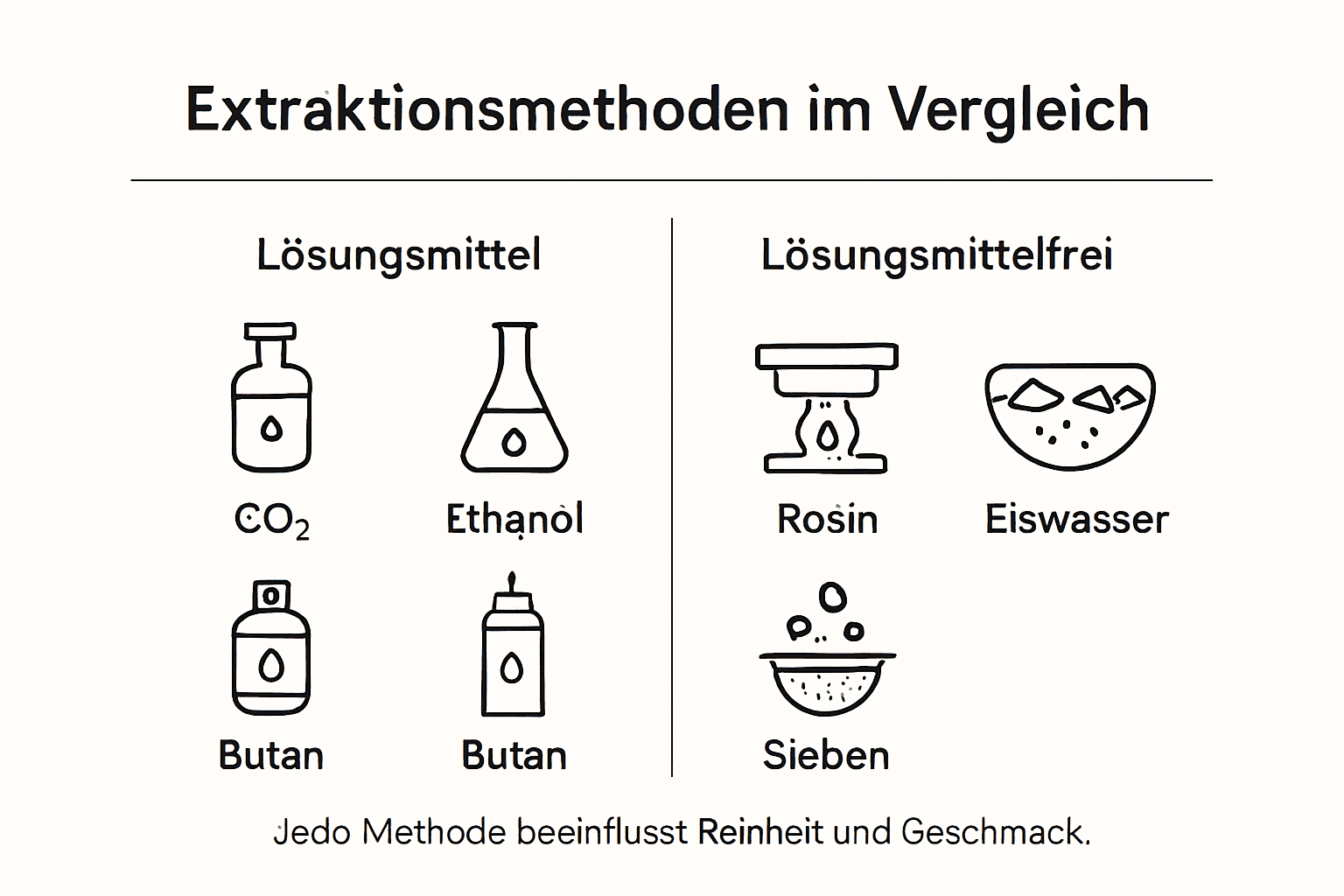
Pro tip: When buying cannabis extracts, look for transparent manufacturing information and laboratory analyses that document potency, purity, and terpene profile in detail.
This overview shows how extraction methods influence key quality aspects:
| criteria | Highest potency | Ultimate purity | Most natural taste |
|---|---|---|---|
| CO2 | Very high | High (without residues) | Partially preserved |
| Ethanol | High | Agent (residues possible) | Less terpene-rich |
| Rosin Press | Medium | Very high (no solvent) | Very pronounced |
Risks, safety and legal requirements in Germany
The legalization of cannabis in Germany requires strict safety standards for cannabinoid extraction. The legal framework is complex and aims to guarantee consumer protection and product quality.
The production of cannabis extracts in Germany is subject to particularly strict safety regulations. Critical safety aspects include the control of solvents such as butane, the use of which is only permitted in certified facilities. The risk of explosions and chemical residues makes professional production processes essential. Laboratory analyses must verify purity and the absence of contaminants to guarantee safety for human health.
The Narcotics Act and pharmaceutical guidelines define precise requirements for cannabis extracts. Medical products are subject to additional quality controls, including decarboxylation, winterization, and comprehensive active ingredient analyses. For consumers, this means a guarantee of high-quality and safe cannabis products.
Pro tip: When buying cannabis extracts, always request a full laboratory analysis that documents purity, active ingredient content, and absence of contaminants.
Discover the world of high-quality cannabis extracts for an unparalleled experience of pleasure.
Choosing the right extraction method determines the purity, potency, and flavor of your cannabis product. At Weedforfriends, we understand this challenge and rely on lab-tested premium cannabinoids, which guarantee the highest quality through meticulous extraction processes. Whether you prefer clean, natural aromas or are looking for particularly potent active ingredient concentrates – our selection offers the perfect experience for every need.

Dive into our selection of vapes, flowers, and CBD oils and experience cannabis enjoyment on a whole new level. Trust in our proven safety and genuine product transparency, so you can enjoy yourself with complete peace of mind. Start your quality journey with Weedforfriends today and learn all about our extraction methods and their effects directly from us. Don't miss out on the chance for pure quality made in Germany!
Frequently Asked Questions
What are the main methods for extracting cannabis?
The most important extraction methods for cannabis are CO2 extraction, ethanol extraction, butane extraction (BHO), rosin pressing, and mechanical sieving. Each method has its specific advantages and disadvantages in terms of yield and purity.
Which extraction method offers the highest purity?
CO2 extraction is considered one of the purest methods, as it works without toxic solvents and enables high purity without chemical residues.
How does the extraction method affect the potency of a cannabis extract?
The potency of an extract depends on the chosen extraction method. CO2 extraction generally results in a higher concentration of cannabinoids, while mechanical methods are often more natural but may have lower potencies.
What are the advantages of solvent-free extraction methods?
Solvent-free processes such as the rosin press technique preserve the natural aromas and terpenes of the cannabis plant, offer higher purity, and ensure that no chemical residues are present.
Recommendation
- Top cannabinoid flowers – expert comparison 2025 – Weedforfriends
- THCA: Function, effects and differences to THC - What is tetrahydrocannabinolic acid? – Weedforfriends
- Cannabis Legalization: Legal Smoking and Cannabis in Germany - The Future of Legalization – Weedforfriends
- CBG9 Effects: All about the new cannabis wonder – Weedforfriends
Share:
CBD Oil for Dogs: Benefits, Dosage and Important Information for Owners
10-OH-HHC: Effects, Legality & 10-OH-HHC Vapes 2025