
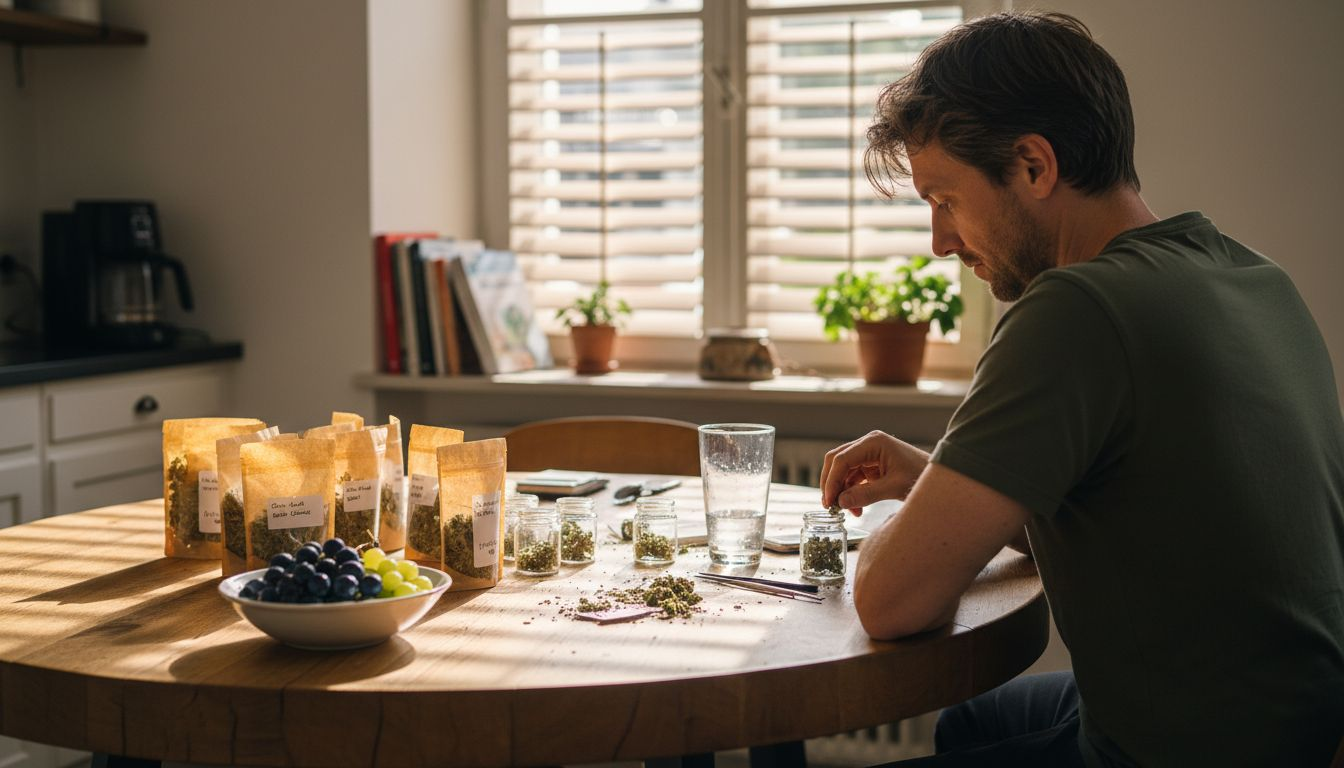
More than 140 different cannabinoids form a complex network that is becoming increasingly exciting for many cannabis enthusiasts in Germany. Those who don't simply enjoy a single strain, but instead deliberately combine THC, CBD, and CBG, can experience the so-called entourage effect , which often significantly intensifies the experience. With new cannabinoids like CBG9 and advanced technology, you have the opportunity to take your personal enjoyment and relaxation potential to a new level.
Table of contents
- What does combining cannabinoids mean?
- Main types and their interplay
- Mechanisms of action and the entourage effect
- Legal situation for combination products in Germany
- Risks, side effects and dosage errors
- Comparison of single active ingredients vs. combination
Key findings
| Point | Details |
|---|---|
| Combination of cannabinoids | The combination of different cannabinoids can create synergistic effects that improve the user experience. |
| Entourage effect | The entourage effect describes how cannabinoids and terpenes interact and mutually enhance their effects. |
| Legal framework | Since April 1, 2024, the possession and consumption of cannabis has been legal under certain conditions, opening up new perspectives for cannabinoid combinations. |
| Risks and dosage | Inexperienced users should start with low doses and pay attention to individual reactions to avoid unwanted effects. |
What does combining cannabinoids mean?
Cannabinoid combinations involve the targeted blending of different cannabinoid types to achieve an optimized and synergistic effect. Instead of consuming just a single cannabinoid, enthusiasts utilize the complex interactions between various active ingredients such as THC, CBD, and CBG to create an enhanced experience.
The basic idea behind combining cannabinoids lies in the so-called entourage effect , in which different cannabinoids and terpenes interact and mutually enhance their individual properties. New cannabis compounds like CBG9, for example, show interesting potential that can be further amplified through targeted combinations.
While traditional forms of consumption often focused on a single cannabinoid, modern cannabinoid combinations open up entirely new dimensions of enjoyment and effect. Different cannabinoids can complement each other: while THC produces psychoactive effects, CBD can have a calming effect and minimize unwanted side effects.
Pro tip: Always start your cannabinoid combinations with low doses and carefully observe how your body reacts to the different active ingredients.
Main types and their interplay
The world of cannabinoids is a complex ecosystem with over 140 different substances, each possessing unique properties and effects. Cannabinoid research has shown that THC, CBD, CBG, and CBC, in particular, play central roles in this system.
The main types can be broadly divided into two categories: psychoactive and non-psychoactive cannabinoids. THC (tetrahydrocannabinol) is one of the psychoactive representatives and produces the well-known high, while CBD (cannabidiol), CBG (cannabigerol) and CBC (cannabichromene) tend to have more therapeutic and regulatory functions.

The interplay of these cannabinoids follows the so-called entourage effect, in which different active ingredients work synergistically. CBD, for example, can mitigate the psychoactive effects of THC, while CBG possesses anti-inflammatory and potentially neuroprotective properties. These complex interactions make targeted combinations so interesting for enthusiasts and researchers.
Here is an overview of the most important cannabinoid types and their respective properties:
| Cannabinoid | Effect | Synergy potential |
|---|---|---|
| THC | Psychoactive, euphoric | Increased effect, dominates consumption effect |
| CBD | Relaxing, anxiety-relieving | Mitigates THC effects, harmonizes the overall effect |
| CBG | Anti-inflammatory, neuroprotective | Complements therapeutic aspects |
| CBC | Promotes regulation, improves mood | Can subtly enhance the overall effect |
Pro tip: Experiment carefully with different cannabinoid combinations and pay attention to your body's individual reactions.
Mechanisms of action and the entourage effect
The entourage effect is a fascinating phenomenon in cannabinoid research, in which various substances in the cannabis plant interact synergistically. Investigating the entourage effect reveals that the interaction between cannabinoids, terpenes, and other plant compounds is more complex than previously thought.
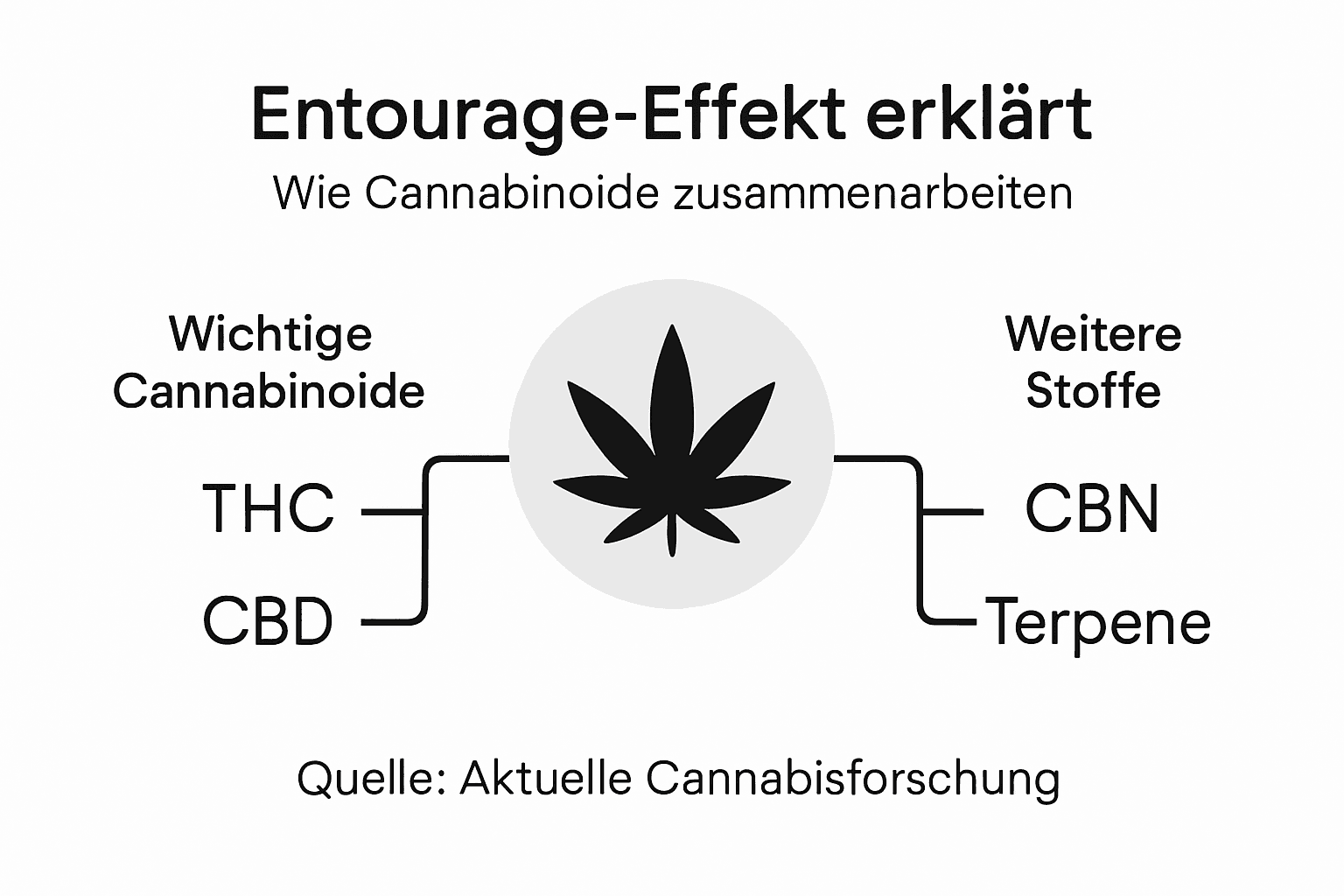
At a biochemical level, the cannabinoid receptors CB1 and CB2 play a central role. THC binds directly to CB1 receptors and produces psychoactive effects, while CBD acts as an antagonist and modulates this binding. This allosteric modulation can reduce the undesirable side effects of THC and balance the overall effect.
The interactions between different cannabinoids are extremely complex. Terpenes such as myrcene, limonene, or linalool can further influence the effects by altering the permeability of cell membranes, thus affecting the absorption and distribution of cannabinoids in the body. These subtle mechanisms make each cannabinoid combination a unique experience.
Pro tip: When choosing your individual cannabinoid combination, pay attention to the quality and composition of the active ingredients to optimally utilize the entourage effect.
Legal situation for combination products in Germany
The new cannabis law has fundamentally changed the legal situation for cannabis and cannabinoid products in Germany. Since April 1, 2024, possession and consumption are legal for adults under certain conditions, opening up new possibilities for cannabinoid combinations.
However, combination products are subject to strict regulations. Cannabinoid mixtures must adhere to legal requirements: Pure cannabis products of controlled quality are permitted, while mixtures with prohibited additives remain illegal. The quantities sold are precisely regulated to ensure the protection of minors and public health.
The law clearly distinguishes between different types of cannabinoids. Products containing THC are subject to stricter controls than CBD products. For combination products, this means that each mixture must be individually tested and approved. Private growers' associations are permitted to cultivate up to three plants, and the production of combination products must adhere to precise quality standards.
Pro tip: Before using any cannabinoid combination, be sure to check the current legal regulations, as the legal situation can change quickly.
Risks, side effects and dosage errors
When combining cannabinoids, enthusiasts must be especially careful with potent substances . Each individual mixture can cause unexpected interactions, ranging from mild drowsiness to intense psychoactive experiences.
The most common risks associated with cannabinoid combinations include overdose, adverse drug interactions, and individual intolerances. Psychological side effects can include anxiety, paranoia, or temporary disorientation, while physical reactions may include dizziness, rapid heartbeat, or nausea. Combinations with high THC content are particularly critical, as improper dosing can lead to intense states of intoxication.
Dosage errors often arise from a lack of knowledge regarding individual drug concentrations. Important factors such as body weight, metabolism, tolerance, and pre-existing health conditions influence tolerability. Inexperienced users frequently underestimate the complexity of cannabinoid blends and the importance of precise, gradual dose adjustment.
Pro tip: Start with minimal doses and increase slowly to systematically explore individual tolerance and effect.
Comparison of single active ingredients vs. combination
Recent cannabinoid research reveals complex differences between single active ingredients and combination preparations. Isolated cannabinoids such as pure THC or CBD offer predictable and controllable effects, while combinations utilize the so-called entourage effect.
Single active ingredients offer the advantage of precise dosing and clearly defined effect profiles. THC, for example, produces defined psychoactive effects, while CBD has anxiolytic and anti-inflammatory properties. Combined cannabinoids, on the other hand, can subtly modulate these effects: CBD can dampen the psychoactive effects of THC, while terpenes such as myrcene or limonene open up additional therapeutic dimensions.
Research suggests that combinations often offer better tolerability and broader effects. While single active ingredients produce targeted effects, combined cannabinoids can deliver more holistic results. This makes them particularly appealing to enthusiasts seeking nuanced and personalized experiences.
The following table summarizes the differences between single active ingredients and cannabinoid combinations:
| aspect | single active ingredient | combination |
|---|---|---|
| Dosage control | Very precise is possible | More complex, mutual influence |
| Effect profile | Clear and predictable | Multifaceted, individual entourage effect |
| Side effects | Clearly distinguishable | Potentially minimized, but also new risks. |
| Target audience | Therapeutically focused | Enthusiasts and users seeking nuance |
Pro tip: Experiment gradually with different cannabinoid combinations and document your individual experiences and reactions.
Discover the power of the cannabinoid combination for your optimal experience.
The challenge of combining cannabinoids lies in finding the perfect balance between potency and tolerability. Many users desire greater enjoyment while simultaneously experiencing the targeted development of the individual properties of THC, CBD, CBG, and other active ingredients. Only in this way can you experience the coveted entourage effect, which elevates your cannabis experience to a whole new level. At Weedforfriends, we offer precisely this diversity and quality with our meticulously lab-tested products.
Benefit from a wide selection of premium cannabinoids such as the best 10-OH-HHC flowers or high-quality CBN products , which are ideal for combining and perfectly support your individual needs.

Start your personal experiment now and experience how carefully crafted cannabinoid blends enhance your relaxation and well-being. Visit Weedforfriends and secure your premium selection for unparalleled enjoyment and effects. Begin today with the optimal combination and feel the difference!
Frequently Asked Questions
What are cannabinoids and why should you combine them?
Cannabinoids are chemical compounds found in the cannabis plant that have various effects on the body. The combination of cannabinoids can lead to a more intense experience, utilizing the so-called entourage effect, where the effects of the individual cannabinoids work together.
How does the entourage effect work?
The entourage effect describes the synergistic action of different cannabinoids and terpenes, which together can create a more harmonious and effective experience. For example, CBD can mitigate the psychoactive effects of THC while simultaneously enhancing its therapeutic properties.
Which cannabinoid combinations are recommended?
Various combinations can be tested depending on the desired effects. A common combination is THC with CBD, as CBD can counteract the unwanted side effects of THC. CBG and CBC can also have positive synergistic effects with THC and CBD.
How should I start with the dosage of combined cannabinoids?
It is advisable to start with low doses and carefully observe the effects. Gradually increasing the dose allows for better adaptation to individual tolerance and promotes a pleasant experience.
Recommendation
- CBG9: What is CBG9, its origins, effects, uses and buying recommendations – Weedforfriends
- THCA: Function, effects and differences to THC - What is tetrahydrocannabinolic acid? – Weedforfriends
- CBG9 Effects: All about the new cannabis wonder – Weedforfriends
- Top cannabinoid flowers – expert comparison 2025 – Weedforfriends
Share:
Combining multiple CBD products: A guide for optimal effect
Enhance the effects of cannabinoids: Achieve an intense consumer experience