
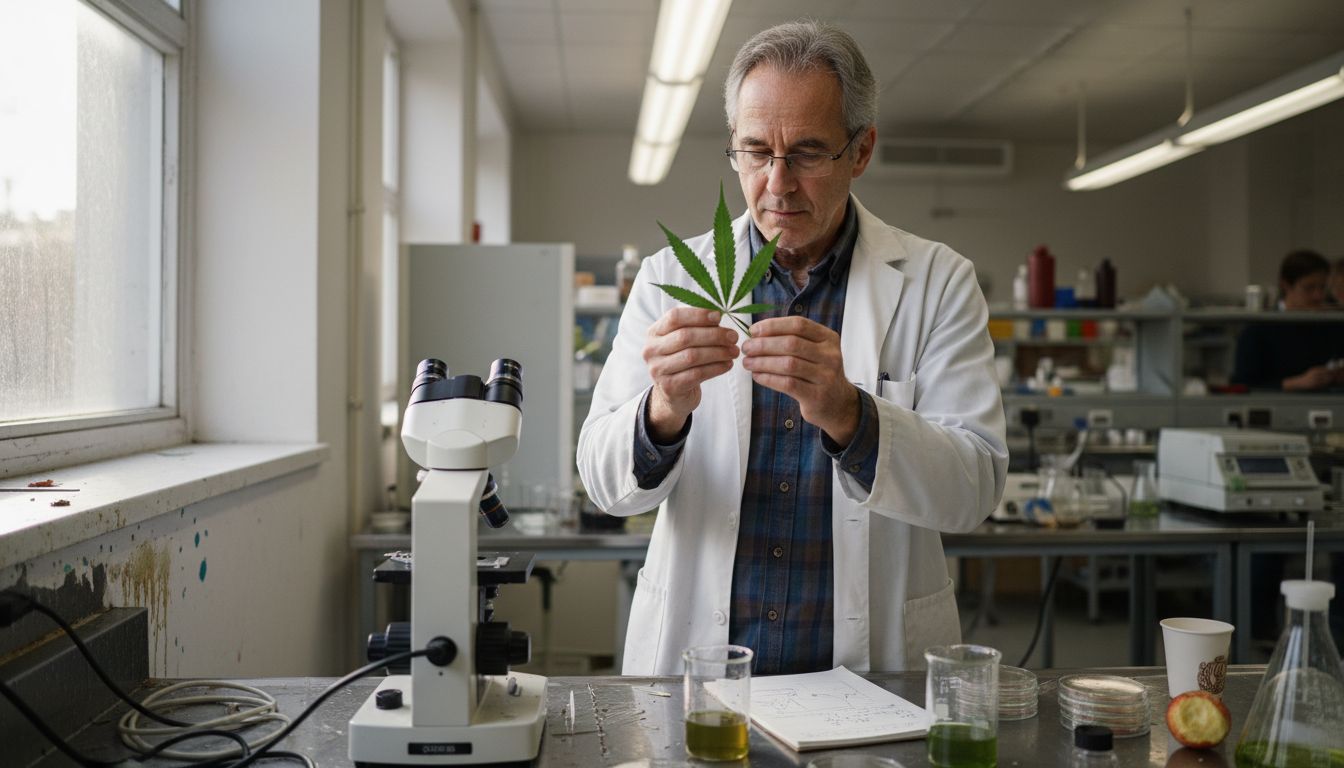
Over 100 different cannabinoids have already been discovered in the hemp plant, yet few people know how profoundly these substances can affect our bodies. Their influence on the body's own endocannabinoid system shapes important processes such as sleep, pain perception, and the immune system. This overview helps to unlock the fascinating world of cannabinoids, highlights differences such as those between CBD and THC, and explains the key legal considerations in Germany and Europe.
Table of contents
Key findings
| Point | Details |
| Cannabinoids and the endocannabinoid system | Cannabinoids interact with the endocannabinoid system, which consists of the CB1 and CB2 receptors and regulates numerous physiological processes. |
| Main types of cannabinoids | The most important cannabinoids, including THC, CBD, CBG and CBN, each have different chemical structures and effects on the human body. |
| Legal situation in Germany | Since April 1, 2024, possession of small amounts of cannabis has been legal for adults under certain conditions, with the rules varying from state to state. |
| Therapeutic use and risks | Cannabinoids offer potential to alleviate various symptoms, however, dosage and individual health are crucial for safe use. |
Understanding Cannabinoids: Definition and System
Cannobinoids are complex chemical compounds found in the hemp plant that interact in a fascinating way with the human body. These biochemical molecules interact precisely with the endocannabinoid system, a highly sensitive communication network within our organism.
The endocannabinoid system itself consists of two primary receptors: CB1 and CB2 . These receptors are distributed throughout various tissues and organs and play a crucial role in regulating numerous physiological processes. CB1 receptors are mainly located in the central nervous system, while CB2 receptors are predominantly located in the immune system.
Cannabinoids are fundamentally divided into two main categories: phytocannabinoids and endocannabinoids . Phytocannabinoids, such as THC and CBD, come directly from the hemp plant, while endocannabinoids are produced by the body itself.The diversity of cannabinoids allows for a complex and nuanced interaction with our nervous system.
Science has already identified over 100 different cannabinoids, each possessing unique properties and potential effects. These molecules do not act in isolation, but rather synergistically – a phenomenon known as the “entourage effect.” The entourage effect describes how different cannabinoids can work together to produce a more potent and nuanced effect.
Main types: CBD, THC, CBG, CBN compared
The four main cannabinoids – CBD, THC, CBG, and CBN – differ fundamentally in their chemical structure and biological effects. THC (tetrahydrocannabinol) is the best-known psychoactive cannabinoid, responsible for the characteristic high, while CBD (cannabidiol) is non-psychoactive and primarily possesses therapeutic properties.

CBG (cannabigerol) is considered a precursor to many other cannabinoids and is often referred to as the "mother of all cannabinoids." It is produced in the early growth phase of the hemp plant and later transforms into other cannabinoid variants. H4CBD offers interesting variations in its effects and intensity.
CBN (cannabinol) is produced when THC is broken down through oxidation and aging. It exhibits significantly weaker psychoactive properties than THC and is often associated with sedative effects. The effects of CBN are particularly interesting for people seeking relaxation and improved sleep.
Each of these cannabinoids interacts uniquely with our endocannabinoid system and can trigger different physiological responses. Their effects range from stress reduction and pain relief to potential anti-inflammatory properties. The individual combination and dosage ultimately determine the specific effect profile.

Understanding mechanisms of action and receptor interaction
Cannabinoid receptors form the core of our complex endocannabinoid system. The CB1 and CB2 cannabinoid receptors play a crucial role in mediating biological signals in the human body. While CB1 receptors are predominantly concentrated in the central nervous system and brain, CB2 receptors are mainly found in immune cells and peripheral tissues.
The interaction between cannabinoids and these receptors functions like a precise lock-and-key principle. When cannabinoids bind to the receptors, they trigger specific biochemical reactions that modulate various physiological processes. CBG9, for example, demonstrates particularly interesting interaction patterns with these receptors.
Each type of cannabinoid interacts differently with the endocannabinoid system. THC, for example, binds strongly to CB1 receptors and causes psychoactive effects, while CBD exhibits a more complex, modulating effect. These differentiated interaction mechanisms explain the diverse and individually varying effects of cannabinoids.
Receptor interaction is not static, but dynamic and context-dependent. Factors such as dosage, individual biochemistry, and the simultaneous presence of other cannabinoids influence the overall effect. This synergistic effect, also known as the "entourage effect," underscores the complexity and interplay of various cannabinoid molecules in our bodies.
Legal situation in Germany & Europe
The legal landscape surrounding cannabis in Germany is currently undergoing a significant transformation. Cannabis legalization is taking concrete form, with progressive changes that envision a controlled release for adults. Since April 1, 2024, the possession and consumption of small amounts of cannabis has been legal for individuals over 18 years of age under certain conditions.
Legal frameworks vary significantly between different European countries. While Germany pursues a more liberal approach, countries like the Netherlands and Portugal introduced progressive cannabis regulations earlier. Human-to-human cannabis (HHC) operates in a legal gray area , the interpretation of which often depends on regional authorities.
For consumers, this means a complex legal situation. A maximum of 25 grams is permitted for private use, along with the cultivation of up to three plants per household and controlled purchase from licensed retailers. It is important to note that trade and distribution are subject to strict regulations, and consumption in public remains largely prohibited.
International developments show an increasing trend towards the decriminalization and controlled legalization of cannabis. In Germany, THC could potentially be fully legalized in the future , which would have far-reaching social and economic implications. However, consumers must always carefully observe the current legal regulations and be aware of regional differences.
Application, benefits and risks in everyday life
Cannabinoids offer diverse applications in both medical and everyday life. They can alleviate symptoms such as chronic pain, muscle spasms, and nausea, although their effects depend heavily on dosage and individual biochemistry. Medical applications include the treatment of multiple sclerosis, epilepsy, and anxiety disorders.
Cannabinoids interact in complex ways with the endocannabinoid system , which explains their therapeutic potential. THC, for example, can stimulate appetite and reduce pain, while CBD has anti-inflammatory and anxiolytic properties. However, driving under the influence of cannabinoids carries legal risks .
The risks vary depending on the cannabinoid and method of consumption. Possible side effects can include dizziness, dry mouth, increased heart rate, and temporary cognitive impairment. Special caution is advised for individuals with pre-existing medical conditions, pregnant women, and people with a history of psychiatric disorders.
For safe use, experts recommend a gradual dosage, medical consultation, and consideration of individual health factors. Choosing the right cannabinoid combination and dosage requires knowledge and sensitivity to one's own body's reaction.
Discover the world of premium cannabinoids for your individual well-being
The diversity and complexity of cannabinoids presents many with the challenge of finding the right active ingredients for relaxation, pain relief, or improved sleep. Trust in the lab-tested quality of Weedforfriends and experience the effects of various cannabinoids such as CBD, CBG, or even special variants like H4CBD in pure, carefully manufactured products from Germany.
Start your personal journey to greater balance and enjoyment now with our premium selection of vapes, flowers, edibles, and CBD oils. Learn more about our range at Weedforfriends and ensure genuine quality for an intense and responsible experience. Take the opportunity to explore the effects of different cannabinoids with products that meet the highest standards, such as H4CBD varieties or CBG9 products. Your perfect relaxation is just a click away.
Frequently Asked Questions
What are cannabinoids?
Cannabinoids are complex chemical compounds found in the hemp plant that interact with the human endocannabinoid system. They can have various effects on the body.
What is the difference between CBD and THC?
CBD (cannabidiol) is not psychoactive and has primarily therapeutic properties, while THC (tetrahydrocannabinol) produces psychoactive effects and is responsible for the 'high' feeling.
How do cannabinoids interact with the endocannabinoid system?
Cannabinoids bind to specific receptors in the endocannabinoid system (CB1 and CB2), which mediates biological signals in the body and regulates various physiological processes.
What therapeutic benefits do cannabinoids have?
Cannabinoids can alleviate symptoms such as chronic pain, anxiety, and nausea. They also exhibit anti-inflammatory properties and are used in medicine to treat certain conditions.
Share:
10-OH-HHC Verbot in Deutschland
CBD Vapes for Beginners: Start Safely and Enjoy