

More than 100 different cannabinoids have already been discovered in cannabis plants. Many consumers are surprised by how strongly individual compounds like THC or CBD can affect well-being and daily life. A basic understanding of these active ingredients makes it easier to choose the right product and avoid risks. This introduction provides you with practical basic knowledge about cannabinoids and shows you what to look for when comparing and evaluating them.
Table of contents
- Step 1: Prepare yourself with basic knowledge about cannabinoids
- Step 2: Analyze lab reports and product labels correctly
- Step 3: Compare different cannabinoid profiles with each other
- Step 4: Choose the appropriate profile for your desired experience.
- Step 5: Test and evaluate the effect independently
Summary
| Key point | Explanation |
|---|---|
| 1. Build up basic knowledge about cannabinoids | Understand the differences between psychoactive and non-psychoactive cannabinoids in order to understand their effects. |
| 2. Correctly analyze laboratory reports | Pay attention to cannabinoid content, THC/CBD ratio, and purity to assess quality. |
| 3. Compare cannabinoid profiles | Compare properties such as spectrum of action and concentration to understand individual needs. |
| 4. Select a suitable profile | Choose cannabinoid products based on desired effects and take personal health factors into account. |
| 5. Test the effect yourself | Document experiences objectively to better understand and individually assess effects. |
Step 1: Prepare yourself with basic knowledge about cannabinoids
The world of cannabinoids is complex and fascinating. In this section, you will acquire fundamental knowledge that will help you better understand cannabis and its active ingredients. The Federal Ministry of Health offers comprehensive prevention materials containing important information on the physiological effects of cannabinoids.
To build a solid foundation of knowledge, you should first familiarize yourself with the main cannabinoid groups. The primary categories are psychoactive and non-psychoactive cannabinoids. Among the best-known psychoactive representatives are THC and CBN, while CBD and CBG are considered non-psychoactive. Each cannabinoid interacts uniquely with our endocannabinoid system and can trigger different effects in the body.
Here you can see a comparison of key cannabinoids and their properties:
| Cannabinoid | Psychoactivity | Typical effects | Medical potential |
|---|---|---|---|
| THC | High | Euphoric, appetizing | Pain therapy, nausea |
| CBD | No | Relaxing, anxiety-relieving | Epilepsy, inflammation |
| CBG | No | Mood-lifting, focusing | Gut health, pain |
| CBN | Light | Mildly sedating, relaxing | Sleep disorders |
Pro tip: Begin your cannabinoid journey with patience and curiosity. Gather information from reputable sources and be aware that the individual effects of cannabinoids can vary from person to person.
Step 2: Analyze lab reports and product labels correctly
Understanding cannabinoid profiles depends heavily on the correct interpretation of lab reports. This section will teach you what to look for when analyzing product labels and lab results. Lab reports from cannabinoid manufacturers provide valuable insights into quality and composition.

When reviewing a professional lab report, you should first pay attention to the following key elements: the total concentration of cannabinoids, the THC to CBD ratio, any potential contaminants, and the test results for heavy metals or pesticides. Pay particular attention to the percentage of individual cannabinoids such as THC, CBD, and CBG, and their ratios to each other. This information will help you assess the potential effects and quality of the product.
The following table provides a structured overview of evaluation criteria for laboratory reports of cannabinoid products:
| criterion | Meaning | Notice for consumers |
|---|---|---|
| Cannabinoid content | Determines the effectiveness | Pay attention to precise percentage figures. |
| THC/CBD ratio | Influence on effect | Choose according to the desired effect. |
| purity | Product safety | Check the certificate of analysis for impurities |
| Test results for pollutants | Protection from risks | Exclude residues such as pesticides |
Pro tip: Don't just trust the numbers on the label. Always demand to see the complete laboratory report and compare the results from different independent laboratories to verify the reliability of the analysis data.
Step 3: Compare different cannabinoid profiles with each other
Now you will learn how to systematically and thoroughly compare different cannabinoid profiles. The overview of 125 identified cannabinoids provides an excellent basis for a comprehensive comparison.
When comparing the profiles of different cannabinoids, first consider their individual properties such as spectrum of effects, concentration, and interaction potential. Important comparison criteria include the activation of various receptors in the endocannabinoid system, psychoactivity, and potential therapeutic effects. Pay particular attention to the ratio of primary and secondary cannabinoids and their mutual potentiation or attenuation.
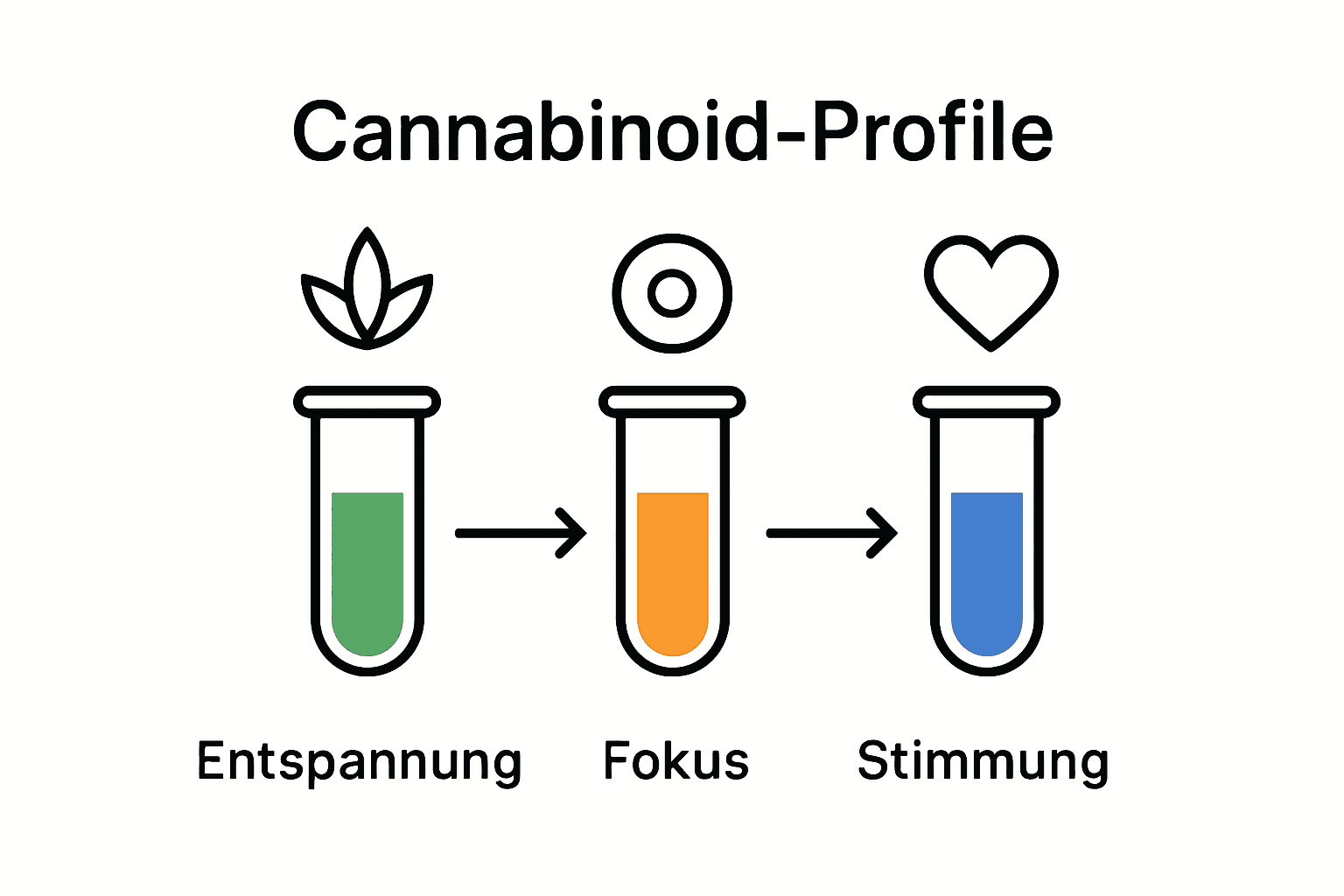
Pro tip: Create a personal comparison chart of the most important cannabinoids and note their specific properties. This will help you keep track and identify the cannabinoid profiles that are most relevant to you.
Step 4: Choose the appropriate profile for your desired experience.
In this section, you'll learn how to select the right cannabinoid profile for your individual needs. The scientific findings on cannabinoid effects and indications provide excellent guidance for your decision.
Choosing the perfect cannabinoid profile depends on various factors, such as your desired effect: relaxation, focus, or regeneration. Psychoactive cannabinoids like THC are better suited for intense experiences, while CBD variants are more focused on relaxation and balance. Always consider your individual constitution and any pre-existing medical conditions.
Pro tip: Start with low-dose products and increase slowly. Document your experiences in a personal cannabis diary and pay attention to your individual reactions.
Step 5: Test and evaluate the effect independently
Now you will learn how to systematically and safely evaluate the effects of cannabinoids yourself. Official information materials on cannabis and cannabinoids as medicine offer important guidance for your self-monitoring.
When analyzing the effects, consider various aspects such as physical reactions, mood changes, level of relaxation, and concentration. Document your experiences in detail in a log. Pay attention to factors such as dosage, timing of intake, individual constitution, and environmental conditions. Honest and neutral self-assessment without bias is crucial.
Pro tip: Develop a standardized observation form with different evaluation categories. This will allow you to record your individual cannabinoid experiences objectively and in a structured manner.
Understand your cannabinoid profile and discover premium quality for your experience.
The challenge of using cannabinoids often lies in choosing the right ones and using them safely. Many users want to know how to understand lab reports and which profile best suits their needs. This is precisely where our support comes in. At Weedforfriends, you'll find lab-tested premium cannabinoids from Germany that will help you experience their individual effects clearly and safely.
Start your journey of discovery now with clearly understandable product information and genuine proof of quality. Whether you're looking for vapes, flowers, edibles, or CBD oils – we offer transparent lab analyses directly on our website. Take advantage of this opportunity and find your perfect cannabinoid profile at Weedforfriends. Achieve your goals effectively with reliable knowledge and premium products.
Frequently Asked Questions
How can I understand the effects of different cannabinoids?
You can understand the effects of different cannabinoids by learning the differences between psychoactive and non-psychoactive cannabinoids. Start by creating an overview of the most important cannabinoids, such as THC, CBD, and CBG, and note their specific effects.
What do I need to consider when analyzing laboratory reports for cannabinoid products?
When analyzing lab reports, pay attention to the cannabinoid content, the THC/CBD ratio, and any potential contaminants. Compare different reports and ensure the information is presented transparently.
How do I effectively compare different cannabinoid profiles?
Compare different cannabinoid profiles by analyzing their properties such as psychoactivity and medicinal potential. Create a personal spreadsheet to systematically record all relevant information and filter out the cannabinoids that interest you.
How do I choose the right cannabinoid profile for my needs?
Choose the right cannabinoid profile by considering your desired effects, such as relaxation or focus. Try products with different cannabinoid combinations to find out what works best for you.
How can I independently test and evaluate the effects of cannabinoids?
You can test the effects of cannabinoids yourself by taking detailed notes on your physical and emotional reactions. Develop an observation chart to systematically analyze the effects and identify patterns in your response.
What role does the endocannabinoid system play in the effects of cannabinoids?
The endocannabinoid system plays a crucial role in the effects of cannabinoids, as it regulates the interaction between cannabinoids and our bodily processes. Learn about the different receptors in this system and which cannabinoids activate or modulate them.
Recommendation
- CBG9: What is CBG9, its origins, effects, uses and buying recommendations – Weedforfriends
- CBG9 Effects: All about the new cannabis wonder – Weedforfriends
- CBG9 Effects: All about the new cannabis wonder – Weedforfriends
- THCA: Function, effects and differences to THC - What is tetrahydrocannabinolic acid? – Weedforfriends
Share:
7 Premium Cannabinoid Characteristics Every Stoner Should Know
Relaxation with Cannabis Workflow: Your Guide to Relaxation