

Nearly one in three cannabis users in Germany wonders: What's really behind organic and synthetic cannabinoids? The selection on the market is constantly growing, but transparency and safety aren't always top priorities. Those who value genuine enjoyment and lasting relaxation will learn here what truly matters when it comes to the origin and laboratory analysis of high-quality products.
Table of contents
- What are bio- and synthetic cannabinoids?
- Types and production of both cannabinoid forms
- Effects and characteristics in direct comparison
- Legal regulations in Germany 2026
- Risks, laboratory testing and product safety
- Avoid common mistakes when buying cannabinoids
Key findings
| Point | Details |
|---|---|
| Organic cannabinoids are of natural origin | These are extracted directly from the cannabis plant and offer a balanced spectrum of active ingredients. |
| Synthetic cannabinoids are laboratory-produced | They are often stronger and more unpredictable in their effects, which poses additional risks. |
| Laboratory analyses are crucial for product safety | Consumers should only choose products with transparent certificates of analysis to minimize risks. |
| Pay attention to origin and quality | Informed consumers should always check the quality and origin of cannabinoid products. |
What are bio- and synthetic cannabinoids?
Cannabis is a complex ecosystem of active compounds that can be divided into two basic categories: biological and synthetic cannabinoids. These substances differ fundamentally in their origin, composition, and mode of action.
Natural or organic cannabinoids are extracted directly from the cannabis plant and contain a complex mixture of compounds such as THC and CBD. These organic cannabinoids originate directly from the plant and have a natural composition that has developed over centuries of plant evolution. They contain a balanced spectrum of active ingredients that work synergistically.
Synthetic cannabinoids, on the other hand, are artificially produced in the laboratory. These chemically engineered substances mimic the molecular structure of natural cannabinoids but are synthesized entirely under controlled conditions. Scientists often develop these compounds with the aim of achieving specific medicinal effects or enhancing certain properties.
Pro tip: When choosing cannabinoid products, always look for transparent information about their origin and laboratory analyses to ensure quality and safety.
Types and production of both cannabinoid forms
Cannabinoids can be divided into three main categories: natural, synthetic, and semi-synthetic cannabinoids. Each of these categories has specific manufacturing methods and properties that make it unique.
Natural cannabinoids are produced directly through the metabolism of the cannabis plant and are extracted from various parts of the plant, such as flowers and leaves. These cannabinoids are classified into seven main structural groups, with THC and CBD being the most well-known. The extraction process includes methods such as CO2 extraction, ethanol extraction, or cold pressing, all designed to gently extract the valuable active ingredients.
Synthetic cannabinoids are produced entirely in the laboratory by artificially replicating chemical compounds. These substances mimic the molecular structure of natural cannabinoids but are synthesized under controlled conditions. Semi-synthetic cannabinoids represent an intermediate category, where natural cannabinoids are chemically modified to develop new properties.

To better understand the differences, the following table provides a structured overview of natural, synthetic, and semi-synthetic cannabinoids:
| category | Origin & Extraction | Typical characteristics |
|---|---|---|
| Natural cannabinoids | Extracted directly from the cannabis plant | Natural spectrum of active ingredients, mild |
| Synthetic cannabinoids | Completely chemically synthesized in the laboratory | Very strong effect, difficult to dose |
| Semi-synthetic cannabinoids | Modification of natural cannabinoids | Tailored effect, targeted optimization |
Pro tip: Always find out about the origin and manufacturing method of cannabinoid products to better assess their quality and safety.
Effects and characteristics in direct comparison
A comparison between natural and synthetic cannabinoids reveals significant differences in effects, safety, and physiological interaction. These nuances are crucial for consumers and researchers alike.
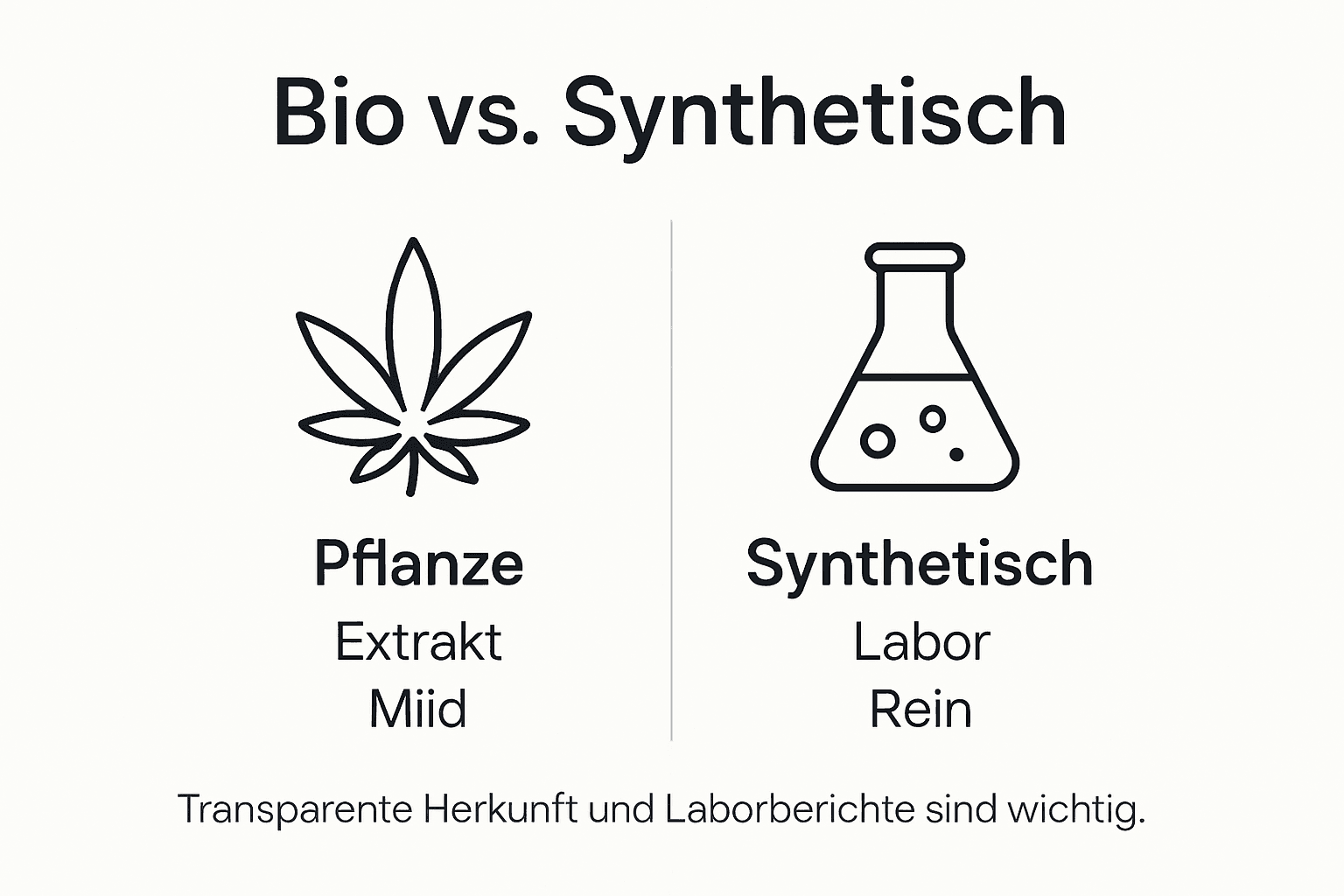
Natural cannabinoids are characterized by a balanced and mild effect profile. Their effects are generally more predictable and gentler than synthetic versions. They usually contain a natural mixture of various active ingredients that work synergistically, a phenomenon known as the "entourage effect." For example, the presence of CBD dampens the psychoactive intensity of THC.
Synthetic cannabinoids, on the other hand, can have a significantly more intense and unpredictable effect. Scientific studies show that these artificial compounds are sometimes many times stronger than natural cannabinoids . This poses considerable risks, as the dosage is more difficult to control and unexpected side effects can occur. The potential for addiction and the risk of negative health consequences are demonstrably higher with synthetic cannabinoids.
Pro tip: When choosing cannabinoid products, always select variants from natural sources and ensure transparent proof of origin.
Legal regulations in Germany 2026
The legal landscape for cannabinoids in Germany is complex and dynamic. Since cannabis legalization in 2024, the legal framework for various forms of cannabinoids has changed significantly.
Synthetic cannabinoids remain subject to strict legal regulations enshrined in narcotics legislation. This legislation aims to minimize potential health risks and prevent the trade in untested substances. While natural cannabinoids are increasingly being liberalized, synthetic variants remain heavily regulated due to their unpredictable effects.
Legislation is continuously updated to include new substances and active ingredients. Medically developed synthetic cannabinoids can receive exemptions if they meet strict safety and quality standards. For consumers, this sends a clear message: only tested and approved products are legal and safe to consume.
Pro tip: Regularly inform yourself about current legal changes and consult legal experts if in doubt.
Risks, laboratory testing and product safety
The safety of cannabinoid products is a crucial aspect for consumers. While natural cannabinoids already undergo extensive testing, synthetic versions pose a significantly greater challenge.
The risks of synthetic cannabinoids are significant and often difficult to assess. Unexpected side effects such as rapid heartbeat, anxiety, and mental disorders can occur. Their composition is frequently uncontrolled and opaque, which massively increases the health risks. Laboratory testing therefore plays a crucial role in minimizing these dangers.
Professional laboratory analyses are essential to ensure product safety. Standardized testing procedures must identify impurities, active ingredient concentrations, and potential health risks. Consumers should only use products that come with transparent certificates of analysis and have been tested by independent laboratories.
The following table summarizes the main risks and the importance of laboratory analysis for cannabinoid products:
| Type of risk | Typical trigger | Importance of laboratory analysis |
|---|---|---|
| Undesirable side effects | Synthetic cannabinoids | Identification of additional hazards |
| Contamination with pollutants | Improper manufacturing | Testing for residues and toxins |
| Unclear active ingredient concentration | Missing declaration | Ensuring correct dosage |
Pro tip: Request the laboratory analysis report for every cannabinoid product and carefully check the origin and active ingredient composition.
Avoid common mistakes when buying cannabinoids
There are numerous pitfalls to be aware of when buying cannabinoid products, and consumers should be aware of and avoid them. An informed and cautious approach is key to a safe and satisfying experience.
Origin as a potential source of error : Many buyers don't pay enough attention to the origin and quality of products. Comparing different cannabinoid qualities can be crucial for making a safe choice . Be sure to look for transparent manufacturer information, laboratory analyses, and certificates of origin. Cheap products without traceable origins often pose incalculable health risks.
Another common mistake is disregarding individual tolerance. Not everyone's body reacts the same way to cannabinoids. Synthetic varieties can cause particularly unpredictable side effects. Therefore, always start with low doses and observe your reaction. If in doubt, consult a healthcare professional who can provide personalized advice.
Pro tip: Document your personal experiences with different cannabinoid products in a health diary to accurately record tolerability and effects.
Discover safe and natural premium cannabinoids for your well-being
The choice between organic and synthetic cannabinoids presents many with the challenge of optimally combining efficacy and safety. They desire products with a clear origin and verifiable quality, free from unpredictable side effects. This is precisely where our range of laboratory-tested premium cannabinoids comes in.

Trust in fully transparent origin and tested safety for all our cannabinoid products . Our selection of vapes, flowers, edibles, and CBD oils from Germany offers you an intense experience with a mild and pleasant effect profile. Benefit from the entourage effect of genuine natural ingredients and avoid the risk factors of synthetic alternatives. Start your safe journey to greater enjoyment and relaxation today at Weedforfriends. Discover your personal premium product now, meeting the highest standards and offering maximum transparency.
Frequently Asked Questions
What are the main differences between organic cannabinoids and synthetic cannabinoids?
Organic cannabinoids come directly from the cannabis plant and offer a diverse spectrum of active ingredients, while synthetic cannabinoids are artificially produced in the laboratory and often exhibit more intense and unpredictable effects.
What risks are associated with synthetic cannabinoids?
Synthetic cannabinoids can cause unexpected side effects such as rapid heartbeat, anxiety, or mental disorders. Furthermore, they have a higher potential for addiction and are more difficult to control dosage.
How can I verify the safety of cannabinoid products?
Safety can be ensured through laboratory analyses. When purchasing, look for transparent certificates of analysis that check for impurities, active ingredient concentrations, and potential health risks.
Why should I prefer natural cannabinoids?
Natural cannabinoids offer a balanced and mild effect profile that often has a predictable outcome. They benefit from the so-called "entourage effect," in which the various ingredients work synergistically together.
Recommendation
- CBG9: What is CBG9, its origins, effects, uses and buying recommendations – Weedforfriends
- CBG9 Effects: All about the new cannabis wonder – Weedforfriends
- H4CBD: Everything you need to know – effects, uses, legality – Weedforfriends
- CBD and driving: Allowed or forbidden? Driving with CBD, THC & cannabis – Weedforfriends
Share:
10-OH-HHC: Effects, Legality & 10-OH-HHC Vapes 2025
THP420: Your comprehensive guide to effects, products and legal aspects in Germany